Magnum

873 - 1
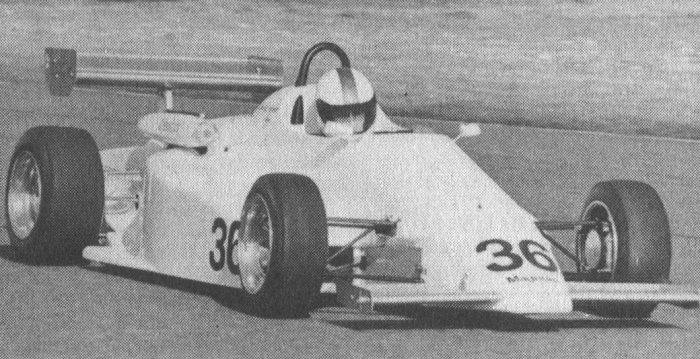
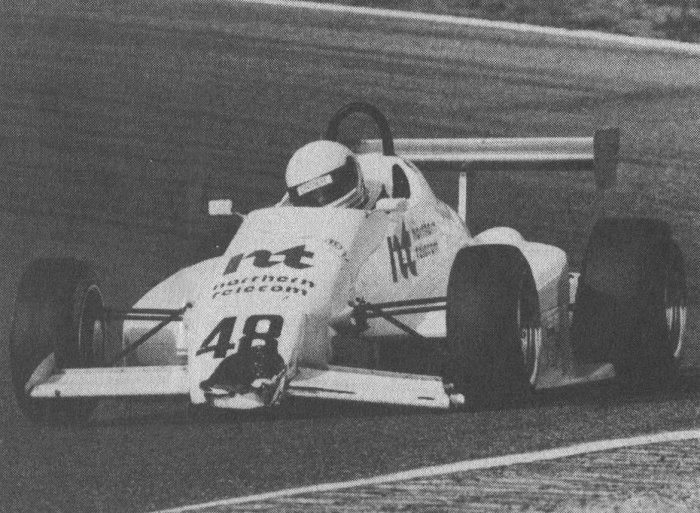
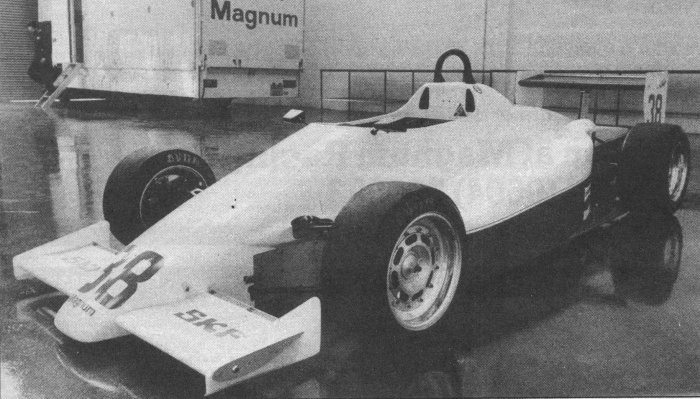
The Magnum 873.

Magnum

The first Magnum, the 813 (and the F Atlantic), version were produced by Northampton’s Automotive Designs Ltd but from the 823 onwards they were the the work of Magnum Racing Cars, the company formed by John Robinson. Magnum always had an excellent reputation for both the quality of their designs and the standard of workmanship and for several years they seemed on the brink of a breakthrough into the Ralt and then Reynard dominated formula. Sadly it was not to be and in 1987 Magnum ceased producing F3 racing cars.

1981

The 813 started life as a Len Bailey design for a F1 Theodore that never saw the light of day. Automotive Designs took the whole thing over in mid 1980, modified the car for F3 and produced the first chassis in autumn of the same year. The chassis featured a narrow tub for maximum sidepod width, suspension was inboard with the rear spring/dampers sitting over the gearbox. The fuel was housed between the driver and engine and Toyota-power was used.

1982

The 823 was a reworked version of the 813 and initially results were disappointing but a lot of work saw it improving a David Leslie took a sixth place at Silverstone at the end of June. Later in the year an understandably frustrated Leslie left to drive a Ralt RT3 which stopped any further progress.

1983

833
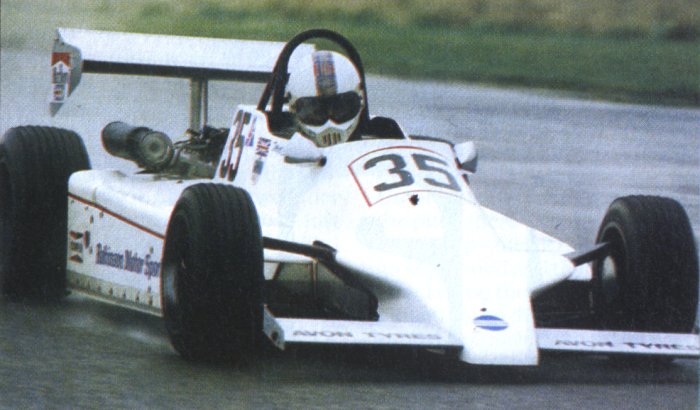
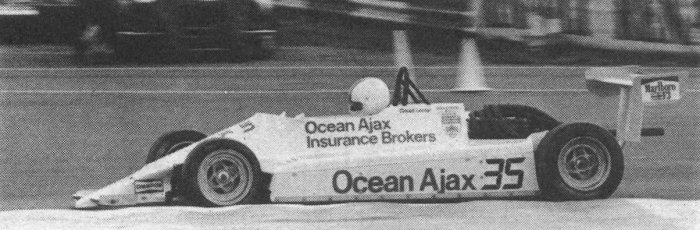
David Leslie with the 833.
833a
David Leslie at Silverstone with the 833.

1984

843
Cor Euser in the 843.

1985

853 - 1
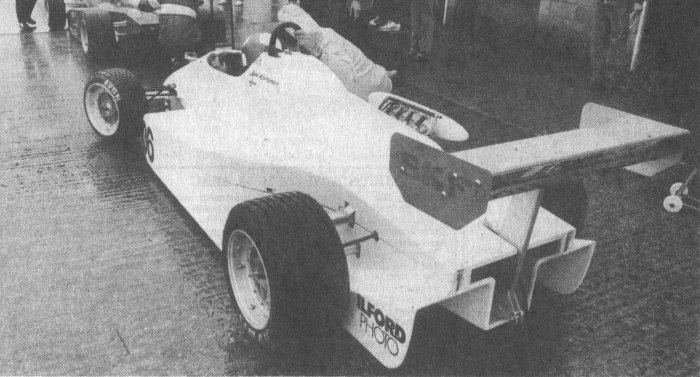
The rear of the 853.
853a - 1
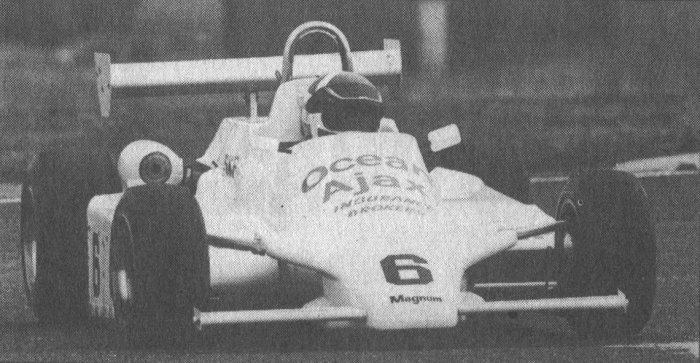
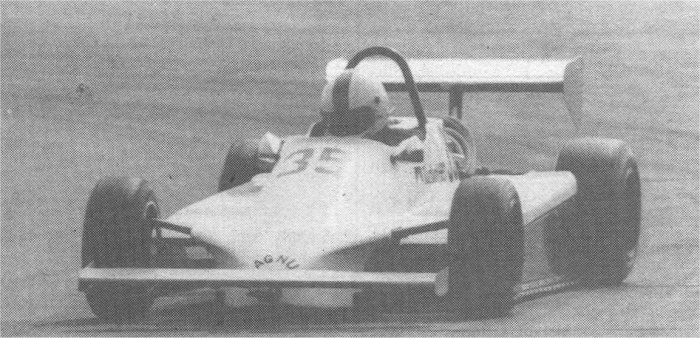
The 853 out on the track.
853b - 1
Cor Euser in his battered 853.
The 853 was a new design for the new flat-bottomed regulations and it used a logical development of the tub of the previous year’s 843. The chassis used aluminium sheets over honeycomb bulkheads to give a combination of strength and rigidity. At the rear there was a tubular steel frame that acted as an engine bay. The front suspension employed pushrods to operate the inboard springs and Koni dampers. At the rear rockers, hanging from sandwich plates, operate the dampers which were installed on top of the gearbox, lower wishbones take care of the bottom location. Magnesium uprights were fitted all round, also made of magnesium was the steering rack. The fuel and oil tanks sit between the driver and engine with an oil cooler in the left hand sidepod. Unfortunately the two Finns who drove the cars early season weren’t very good and their frequent offs soon exhausted their budgets. Paul Jackson carried out a lot of mid-season testing which made a big difference and at the end of the year Cor Euser took pole and fourth place at Zandvoort showing what might have been.

1986

863 - 1
The sleek lines of the 863.
The 863 looked very different to the 853 but it was still considered to be an evolutionary design. Now the chassis was composed of an aluminium honeycomb with four cast magnesium bulkheads in the footwell and the dash area which was claimed to give a “massive increase in torsional rigidity” as well as increased driver safety. Pushrod suspension was fitted front and rear operating Koni gas-filled dampers. The bodywork and rear wing were totally redesigned to give the highest levels of downforce with the flat bottom now fitted.

1987

873d
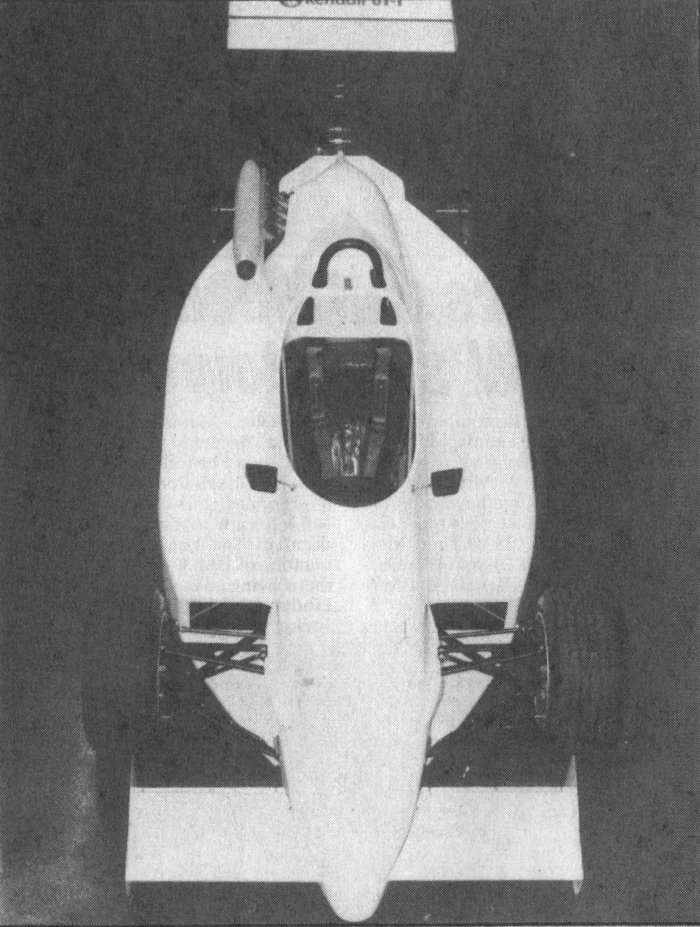
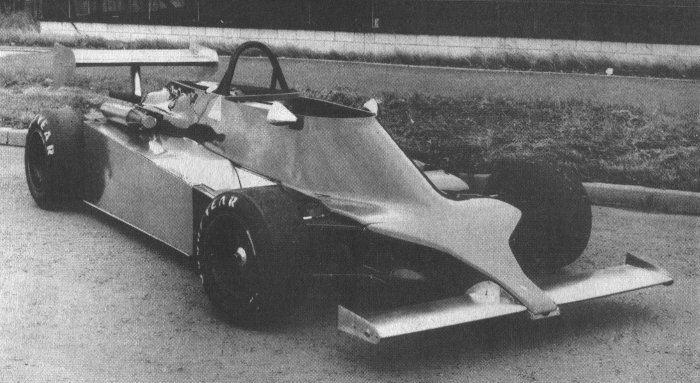
A top view of the 873.
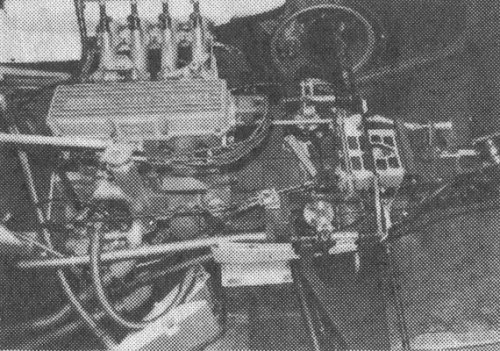
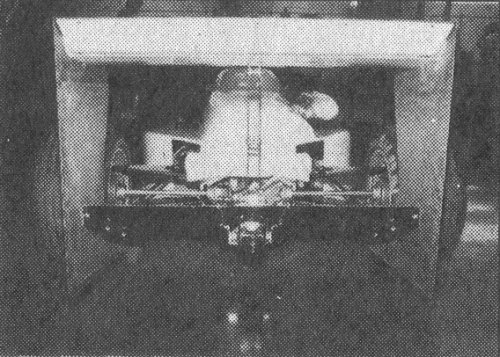
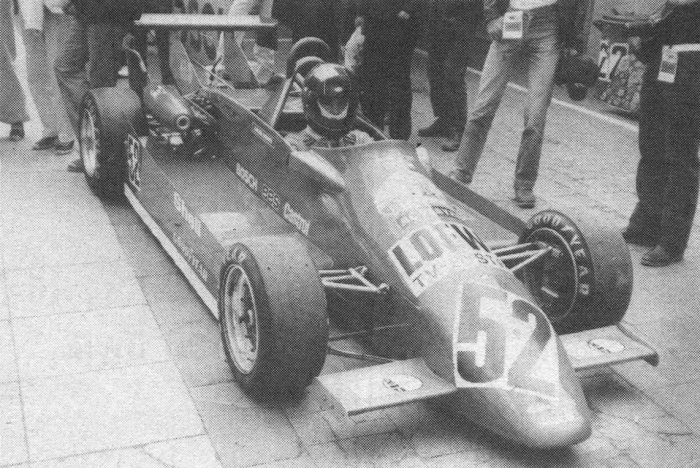
The engine/rear suspension of the 873. The 873 rear wing and diffuser. Yet another evolutionary design, the major change was a switch to a Staffs Silent Gear gearbox in the interests of increased torsional rigidity, reduced friction and more compact size. The dampers were now located either side of the gearbox instead of on top to allow a flatter engine cover to be fitted. Newly fabricated uprights and revised rear suspension were also employed. A narrower nose was fitted to increase the front wing area. The whole car was reckoned to be 20kgs lighter than the 863. Despite all the work that went into the new design the 873 never appeared at the races.
873a - 1
The engine/rear suspension of the 873.
873b
The 873 rear wing and diffuser.

Drivers

813
The first Magnum, the 813, with its unusual narrow nose.
823
David Leslie in his 823.
John Robinson came up with a fresh design for the 833 and together with his three sons they produced a very effective package despite running on a very small budget. Suspension was based on that of the earlier cars although all new and continued to use the near-horizontal rear springs mounted above the gearbox. The new tub was built from honeycomb and was much narrower than that of the 823 in order to give the maximum venturi size. Most importantly the whole car underwent a substantial weight reduction to put it right on the minimum limit. One unique feature for F3 was that a Quaife differential was used in the transmission. The car showed promise from the start although it lacked development due to financial constraints. Fresh sponsorship midway through the year allowed some testing and development and Leslie put the car on the front row at Silverstone three times, his best finish was a third at Oulton Park in September. In addition three fourth spots gave Leslie seventh in the British championship.
The 843 scored Magnum’s only F3 win when Bo Martinsson won twice including a first at Anderstorp. Sadly he was then thrown out of the Swedish championship for failing to present his car at scrutineering. The car itself was a modified and generally tidied up 833. Cor Euser drove the works car in the UK and despite trying hard his only result was a sixth at Magnum’s favourite circuit, Silverstone.

1981

1982
823
David Leslie.

1983
833
Cor Euser, David Leslie.

1984
843
Cor Euser, Bo Martinsson.

833
Mikael “Micko” Nordlander.

1985
853
Cor Euser, Paul Jackson, Jari Koiranen, Reima Soderman.

1986
853
Mark Goddard, Don Hardman.

863
Fulton Haight.

1987

Druid

Druid

Roger Andreason decided on the construction of a F3 car as an extension to his race preparation business, Andreason Racing and Tuning Ltd based in Eastleigh in Hampshire. The aim was to produce an easy to drive car that wouldn’t be expensive to run and repair.

1977

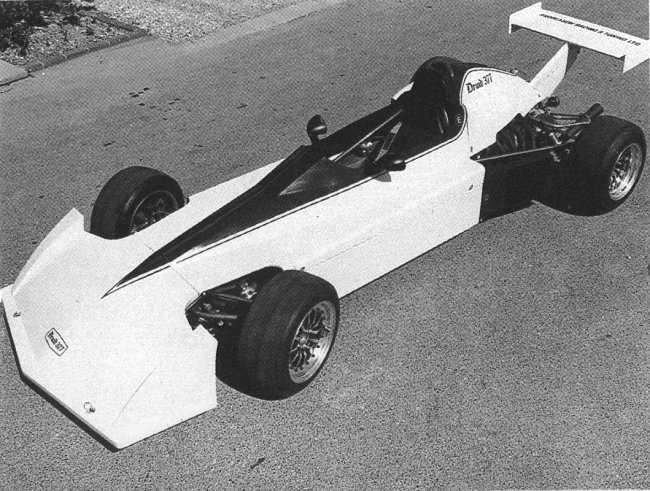
The 377 was based on the original design for the Royale RP23 that was never built, Rory Byrne the current Ferrari F1 designer laid out the chassis and suspension design. When taken over by Druid Roger Andreason and Paul fox completed the detail work and the bodywork. Andreason himself and Davina Galica carried out the initial testing and development. Unfortunately it would not be run by a top team and the advent of ground effect soon meant it would soon retire from the world of F3. The car was rebuilt as a Formula Atlantic car where it run with some success as well as in Formula Libre and a further 2 chassis were built.

Drivers
1977  Roger Andreason?


Druid77
The sleek looking Druid 377 on its announcement.

Maco

Maco

Maco cars were the brainchild of Ernst Maring who was a quite successful F2 and F3 driver in his own right. Maco began by producing Super Vee cars and then with the change in F3 regulations in 1971 Maring decided to enter this class of racing. For the next few years Maco produced a succession of often attractive, competitive cars. They mostly raced in the German Championship with the occasional foray to races like Monaco and Maring seemed to have a knack for landing sponsorship deals that meant they were well financed. They never quite made that final breakthrough and eventually as other marques came up Maco departed the scene.

1971

Appearing right at the end of the 1971 season, the Maco 371 was raced at the Nurburgring in October by Ernst Maring himself.

1972

Two 372s were built for 1972 and raced by Maring and Felix Martin, results were disappointing when up against the more usual March/GRD/Brabhams etc. of the the other runners, reliability was also a problem and there were a number of retirements.

1973

Once again several cars (at least 4) were constructed for use in the German F3 rounds, they had several reasonable results including a win at Niederstetten.

1974

The Maco 374 apparently resembled a GRD and was powered initially by a Nova-Ford twin-cam unit. Ernst Maring himself was the main driver and managed a few promising outings.

1975

At the beginning of the season the more individually styled 375 was powered by a Nova-Ford twin-cam unit but the switch to Toyota power was soon made although occasionally a BMW engine was used. Maring himself was the most successful Maco driver with with 2nd places at the Nurburgring, Ulm and three times at Hockenheim.

1976

The 376 was a tidied up version of the 375 and results weren’t so easy to come by as manufacturers like Ralt and March began to dominate. Best finishes were a second place each at the Nurburgring for Maring and Korten although a few other top 6 places were achieved.

1977

The 1977 car was a cosmetically enhanced version of the 376, lower engine cover, ducted radiators etc. Results were reasonable with Niggemeier and Korten going well in the German championship with Korten getting a 2nd and 3rd as well as a 4th in the European Championship round at the Nurburgring. For this year the change was made to the improving BMW engine.

1978

Although a new car was produced for 1978 results for the 378 weren’t good, Korten managed a 5th in heat in a Euro round at Zolder. For this year Maco seemed to have reverted to Toyota power.

1979

For 1979 Ernst Maring returned to the driving seat in the Toyota powered 379 and managed 4th place in the German Championship. Best result of the season was probably the 6th place finish in the final round of the European Championship at Kassel-Calden in October.

1980

Ernst Maring took part in the last few 1980 races in the new 381 winning a non-championship race at Hockenheim amongst a very average field. Into 1981 the car was very much a midfield runner, the only highlight being a seventh at Siegerland in a German Championship event. The 381 would seem to be Maco’s swansong in F3 racing.

Drivers

1971
371
Ernst Maring.

1972
372
Ernst Maring, Felix Martin.

371
Paul Fischer.

1973 373
Bernd Heuer, Ernst Maring, Felix Martin, Erhard Miltz.

1974 374
Bernd Heuer, Ernst Maring, Erhard Miltz.

1975
374
Bernd Heuer, Thomas von Löwis, Erhard Miltz

375
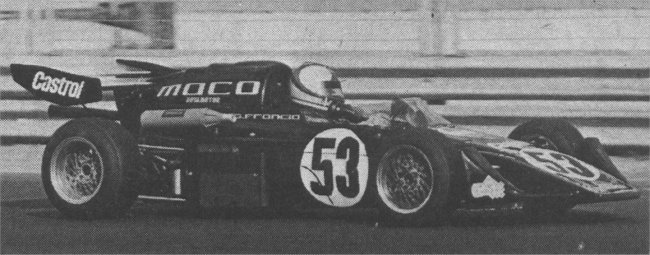
Giorgio Francia, Dieter Kern, Jürgen Krüger, Sommer von Löwis, Manfred Möhr, Ernst Maring, H. Schechenge, Marc Surer.

1976
376
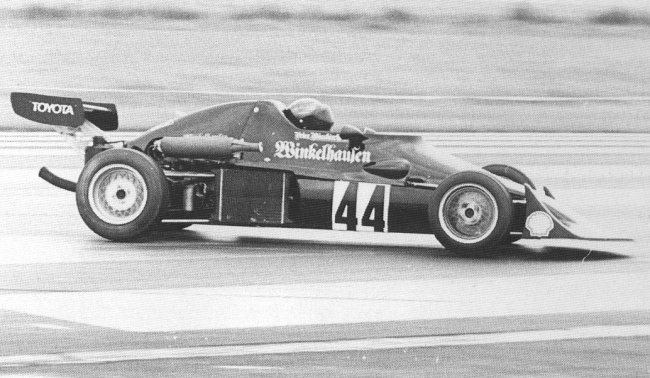
Jochen Dauer, Dieter Kern, Manfred Leppke, Kennerth Persson, Peter Wisskirchen.

375
Bernd Heuer, Roland Saier.

1977
376B
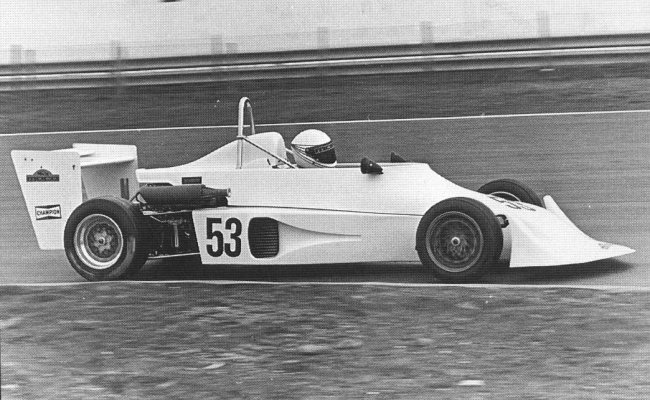
Dieter Kern, Michael Korten.

376
Rudi Niggemeier.

1978
378
Michael Korten.

376
Frank Jelenski.

1979 379
Ernst Maring.

1980
381
Ernst Maring.

378
Thomas Holert.

377
Karl-Heinz Soll.

375
Peter Rössler.

?
Klaus Hansert, Willi Hüsgen.

1981

381
Helmut Bross, Lothar Büchler, Miguel Muniz-Rizo, Marcus Simeon, Dieter Strietzel, Jan Thoelke.

?
Klaus Hansert, Willi Hüsgen, Georg Lorenz.

1982
381
Jürgen Kurze.

?
Willi Hüsgen.

1983 ?
Willi Hüsgen.

1984 ?
Klaus Lepp.

1984
381
Peter Rössler.

?
Klaus Lepp.

1984 ?
Klaus Lepp.

Maco75
Giorgio Francia in a 375 at the Nurburgring.
Maco76
The Maco 376 driven by Peter Wisskirchen.
Maco
Michael Korten showing the attractive lines of the 376B in 1977.

de Sanctis

desanctis66
Jonathan Williams winning at Monza in 1966.

de Sanctis

Based in Rome the De Sanctis family, father Gino and son Lucio, ran a large FIAT dealership and towards the end of the 1950s Lucio De Sanctis began competing in Formula Junior in a car of his own design. By 1959 the De Sanctis was the car to beat in Italy with their tubular space frame, coil and wishbone front suspension and swing-axle at the rear. However when they came up against cars powered by the Ford 105E engine or the BMC “A” series, their FIAT engines would not prove to be man enough for the job. In the 1960s they continued with Brabham influenced, Ford powered F Junior and F3 cars and Jonathan Williams in particular went very well in them.

1964

The first F3 de Sanctis continued on from their run of quite successful F Junior cars. Their lead driver was the pseudonymous “Geki” and he proved the de Sanctis to be very quick at the traditional Monza slipstreaming blinds winning four times there during the year as well as taking one other victory.

1965

Development for 1965 seems to have been minimal and it showed with “Geki” only winning twice during the course of the year. At least one car appeared powered by a Lancia engine.
desanctis64
"Tiger" waits on the grid for the start of the 1964 Gran Premio Lotteria at Monza.
desanctis
"Geki" in the 1965 De Sanctis F3 at Monza.

1966

A new car was introduced for 1966 with a modified version of the earlier spaceframe chassis utilising double wishbone suspension at the front and a lower wishbone/top link with twin radius rods set up at the rear. Power came from a Ford Cosworth MAE engine, the gearbox was a Colotti-modified VW four-speed unit with variable ratios. The new car was obviously at home on the fast Italian tracks with Jonathan Williams dominating the season winning 10 out of 16 races and securing the Italian Constructors Championship (albeit only for Italian built cars) for de Sanctis.

1967

Development for 1965 seems to have been minimal and it showed with “Geki” only winning twice during the course of the year. At least one car appeared powered by a Lancia engine.
desanctis66a
The rather spindly looking chassis of the 1966 car.
desanctis67
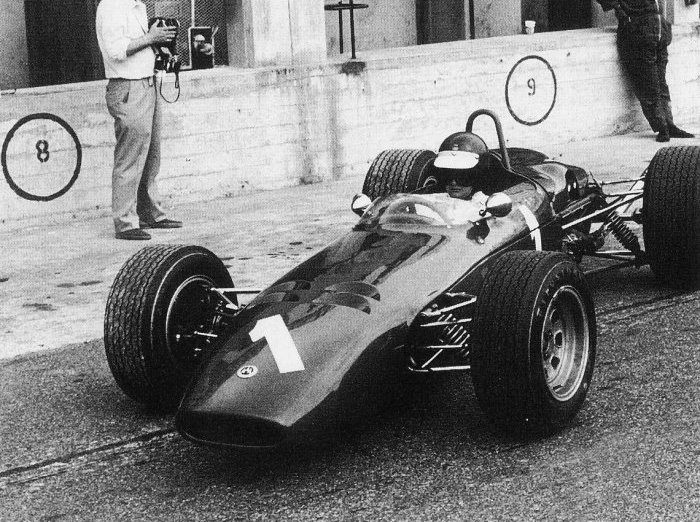
Jonathan Williams leaves the pits in the 1967 car.
desanctis67a
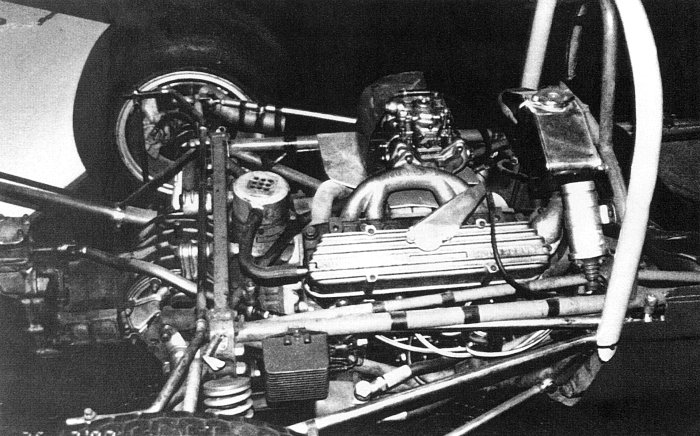
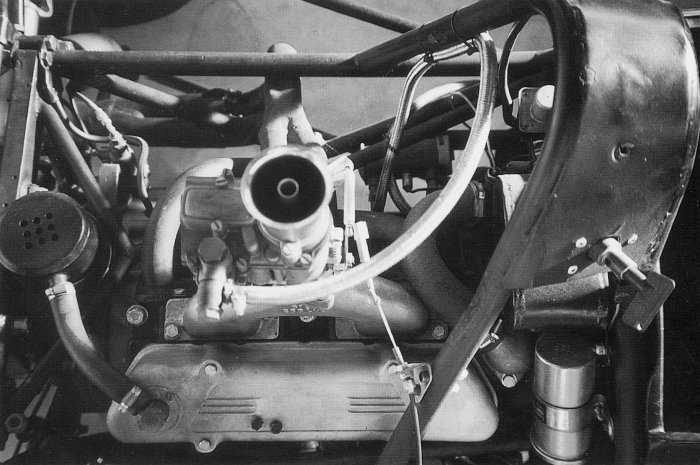
The Weber-equipped engine installation in the 1967 car.

1968

Some concerted effort went into improving the car for 1968 and results improved but the car to have in Italy was the Tecno. For 1969 de Sanctis marked time with few results of any consequence although Claudio Francisci won races at Monza and Vallelunga.

1969

It was further revisions for 1969 as the car moved further away from it’s Brabham heritage, aluminium panelling was used in an effort to stiffen the chassis and de Sanctis cast their own magnesium front uprights. Results were generally disappointing with no wins during the year.
desanctis68
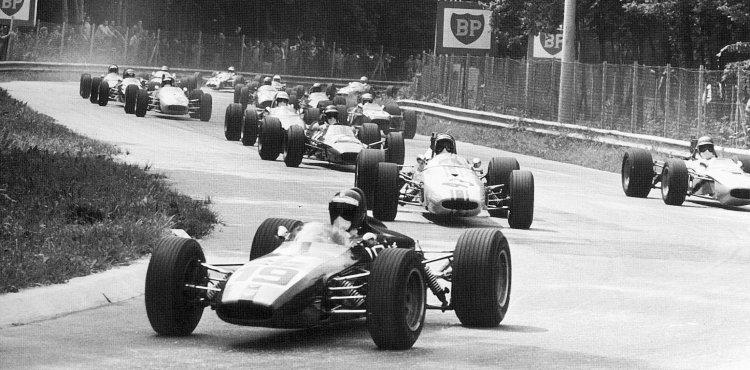
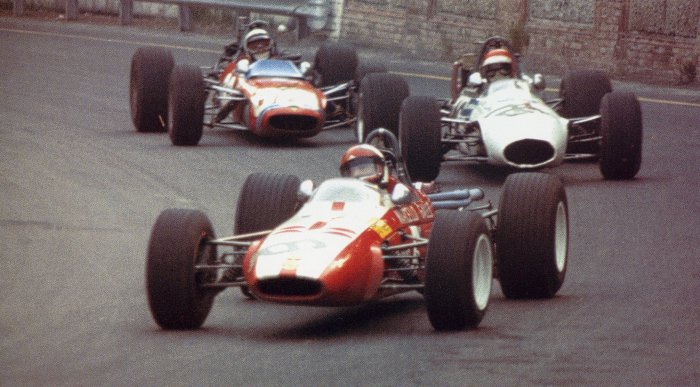
onathan Williams leads the field in the Coppa Fina at Monza, he finished second.
desanctis69
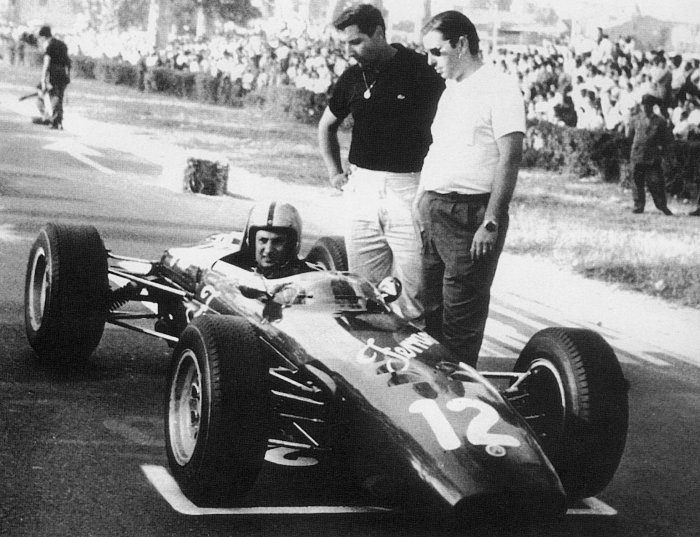
Claudio Francisci waits on the grid in the 1969 De Sanctis.
desanctis69a
The downdraft Ford engine fitted to the 1969 car.

1970

Some concerted effort went into improving the car for 1968 and results improved but the car to have in Italy was the Tecno. For 1969 de Sanctis marked time with few results of any consequence although Claudio Francisci won races at Monza and Vallelunga.

1971

The De Sanctis name appeared a few times on the grid in early season Italian F3 races but it does not appear that they were new cars, rather they were older 1-litre cars uprated with 1600cc engines. However later in the year a 1600cc car did appear in the UK at some late season races were it ran in the lower half of the field.

Drivers

1964 Giovanni Ballico-Lay, Sergio Bettoja, André Durantou, Corrado Ferlaino, “Miro Gay”, “Geki” (Giacomo Russo), “Tiger” (Romano Perdomi).

1965 Massimo de Antoni, Franco Bernabei, Mario Casoni, Carlo Facetti, “Geki” (Giacomo Russo), Francesco Godia, Dino Marniga, Otelli Rinaldi, Nestor Salerno, “Tiger” (Romano Perdomi).

1966 Giorgio Alberti, Giovanni Alberti, Walter Froldi, Ignazio Giunti, Marco Macciantelli, Antonio Maglione, Giuseppe Piazzi, Otello Rinaldi, “Tiger” (Romano Perdomi), Jonathan Williams.

1967
Giovanni Alberti, Marino Benagli, Franco Bernabei, Jorge Cupeiro, Claudio Francisci, “Geki” (Giacomo Russo), Salvatore Genovese, “Gero” (Cristiano Del Balzo), Antonio Maglione, Carlos Martin, Manfred Möhr, Luigi Petri, Sverrir Thoroddsson, “Tiger” (Romano Perdomi), Jonathan Williams.

1968 Giovanni Alberti, “Droopy”, Jürg Dubler, Carlo Franchi, Claudio Francisci, Giancarlo Gagliardi, “Gero” (Cristiano Del Balzo), Luigi Petri, Pino Pica, Jonathan Williams.

1969 Claudio Francisci, “Gero” (Cristiano Del Balzo).

1970 Yuri Andreyev, Marcello Gallo, Ré.

1971 Sandro Cinotti, Carlo Franchi.
desanctis70
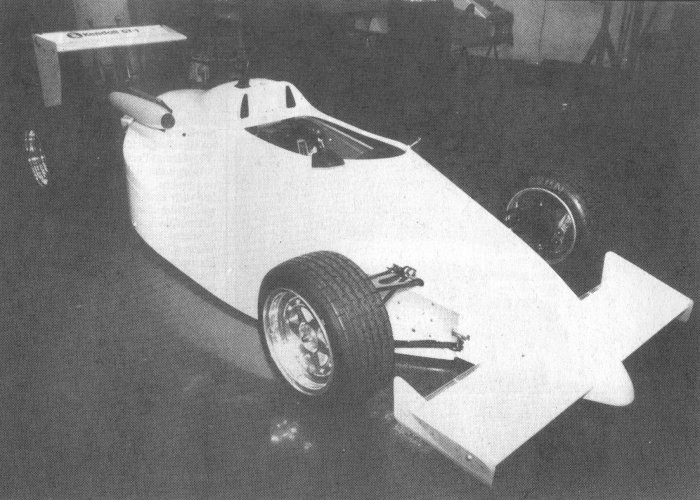
Marcello Gallo heads the group during the 1970 Trofeo Shell at Imola.
Derichs

Derichs77
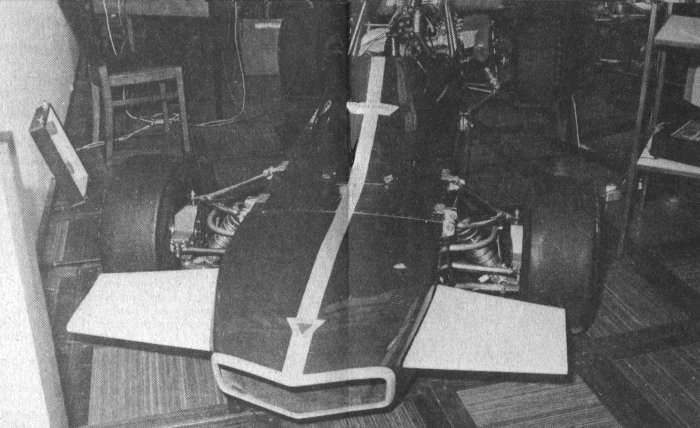
Probably a D37, note the unusual rollhoop.

Derichs

Germany’s only F3 constructor of the early 1980s, Erwin Derichs constructed a number of distinctive looking if generally not too competitive cars. They were built to contest the German F3 series and cars were being produced up until 1984

1974

A singleton D34 chassis was run in the German F3 series for Hans Hargarten, it used a Ford engine and was never very competitive, the best result was a third place in a poor field at Salzburg.

1975

Erwin Derichs ran his own Ford powered car in the German F3 championship, it wasn’t very competitive and recorded no top 6 finishes.

1976

At least two cars were built for 1976, designated the D36 one was fitted with a BMW engine the other with a Ford. Results were poor in the German F3 championship with a best finish of tenth, taken by Derichs himself.

1977

Erwin Derichs ran his own Ford powered car in the German F3 championship, it wasn’t very competitive and recorded no top 6 finishes.
Derichs
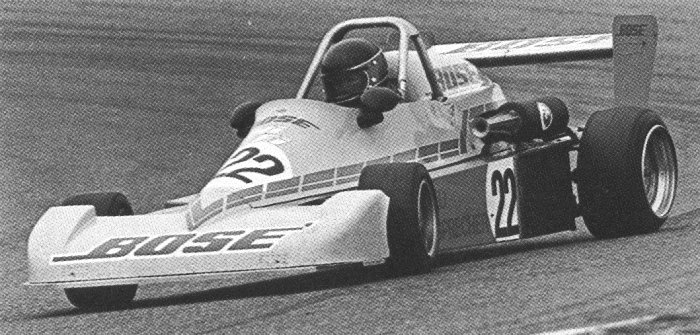
Erwin Derichs with his D37.

1978

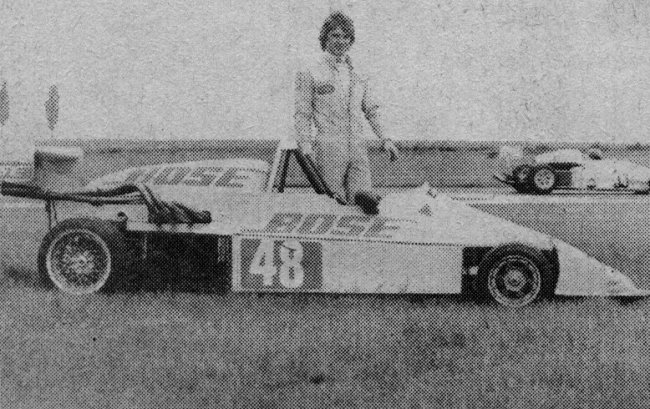
Derichs continued using the D37 in the Bose team (which seems to have been the works team) for 1978 results were generally poor although Peter Kroeber won a non-championship race with a small field on the short Nurburgring. Kroeber also took another three top six finishes during the season, all in non-championship events.

1979

Once again it was the D37 that was used by the Bose team and Peter Kroeber who again had some good finishes in non-championship races.

1980

Derichs continued using the D37 in the Bose team (which seems to have been the works team) for 1978 results were generally poor although Peter Kroeber won a non-championship race with a small field on the short Nurburgring. Kroeber also took another three top six finishes during the season, all in non-championship events.

1981

Once again it was the D37 that was used by the Bose team and Peter Kroeber who again had some good finishes in non-championship races.

1982

Derichs continued using the D37 in the Bose team (which seems to have been the works team) for 1978 results were generally poor although Peter Kroeber won a non-championship race with a small field on the short Nurburgring. Kroeber also took another three top six finishes during the season, all in non-championship events.

1983

Once again it was the D37 that was used by the Bose team and Peter Kroeber who again had some good finishes in non-championship races.
Derichs82
Front suspension detail showing the pushrods and top mounted dampers.

1984

Derichs continued using the D37 in the Bose team (which seems to have been the works team) for 1978 results were generally poor although Peter Kroeber won a non-championship race with a small field on the short Nurburgring. Kroeber also took another three top six finishes during the season, all in non-championship events.

1985

Once again it was the D37 that was used by the Bose team and Peter Kroeber who again had some good finishes in non-championship races.

Drivers
1974 Hans Hargarten.

1975
D34
Hans Hargarten.

D35
Erwin Derichs, Romain Feitler.

1976
D35
Peter Bonk.

D36
Erwin Derichs, Olaf Höhn, Manfred Leppke.

1977
D37
Herbert Bürgmayr, Peter Kroeber.

D36
Arno Derichs. Erwin Derichs, Jürgen Schlich.

D35
Peter Bonk.

1978
D37
Heinz Beißler, Arno Derichs, Olaf Höhn, Henning Hagenbauer, Peter Kroeber, Jürgen Schlich, Hannelore Werner.

D36
Konrad Heberer.

D35
Peter Bonk.

1979
D37
Arno Derichs, Frithjof Erpelding, Olaf Höhn, Peter Kroeber.

D36
Konrad Heberer.

D35
Peter Bonk.

1980
D380
Heinz Beißler, Erwin Derichs, Jürgen Schlich.

D37
Arno Derichs, Jürgen Schlich.

D35
Peter Bonk.

1981
D380
Heinz Beißler, Henning Hagenbauer, Bernd Suckow, Bernd Wicks.

D37
Arno Derichs, Frithjof Erpelding, Helmut Kalenborn.

1982
D382
Jürgen Endres.

D380
Erwin Derichs, Rudi Seher.

D37
Helmut Kalenborn.

1983
D383
Rainer Offenbach.

D37
Pit Bilger.

1984
D385
Pit Bilger, Jürgen von Gartzen, Wolfgang Kaufmann, Bernd Wicks, Manfred Zimmermann.

D37
Pit Bilger, Jürgen von Gartzen.

1985 D385
Klaus-Dieter Hoekel, Bruno Stanjek, Manfred Zimmermann.

1986 D385
Stefan Oberndorfer.

1987 D385
Gerhard Müller.

Derichs84
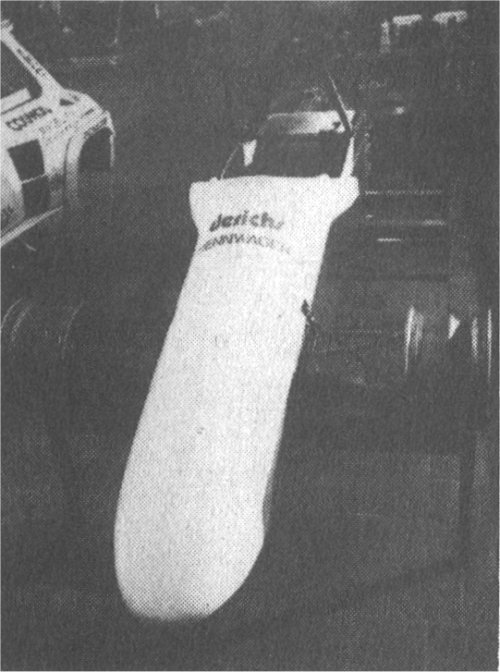
A very poor quality shot of the D384, it seems to have a similar body shape to the D382.
Derichs84a
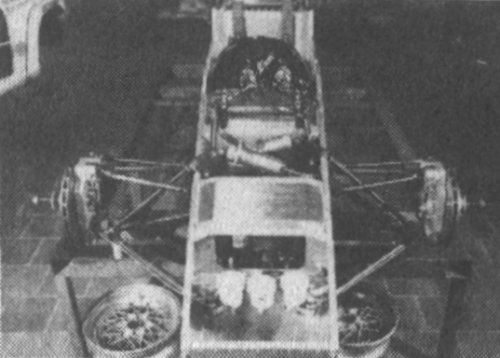
Front suspension detail showing the pushrods and top mounted dampers.

Delta

Delta

Delta first began producing cars for the 1-litre F4 championship in the mid 70s, owned by Glenn Hyatt, their first car was based on the 1973 MRE F3 car. Later they produced the IRF4, designed by Ian Reed, it won the 1975 F4 Championship driven by Fergus Tait. Hyatt then took over the Ray Jessop designed Safir RJO3 after Jessop’s death in 1976, renamed it the Delta, but lack of finances precluded it being run.

1975

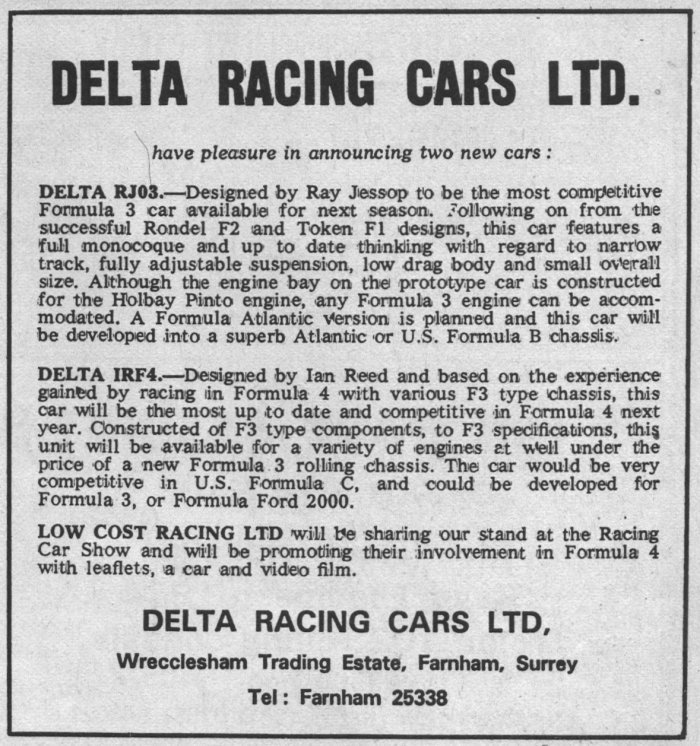
Interestingly a Ray Jessop designed F3 car called the Delta RJ03 that was shown at the 1975 racing Car show. It is very reminiscent of Jessop’s Token F1 car of 1974 which was renamed Safir for a couple of British F1 races in 1975. The Safir F3 (q.v.) car also debuted in 1975 so is this an early version of the Safir? Unfortunately the photograph isn’t clear enough to answer that but allowing that the Safir also had the RJ03 designation it is likely that the Safir is the developed version (with modified bodywork) of this car.

The advert on the left was placed in Autosport and tends to reinforce the above as the Safir was also designed to take the Pinto engine.

Delta75
The Delta at the 1975 Racing Car Show.

Cygnus

cygnus
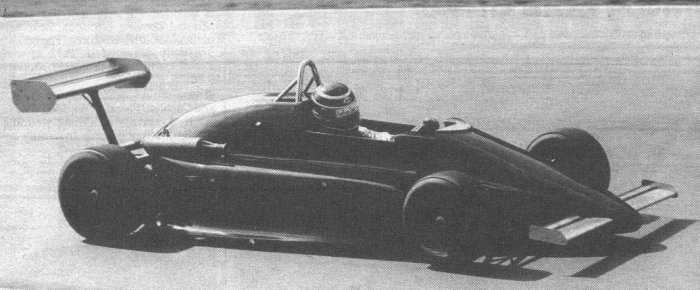
Ian Flux testing the Cygnus at Brands Hatch.

Cygnus

The Cygnus appeared in July/August 1984, it was designed by two men from March, Nick Wasyliw and Rob Gustavsson and built by Paul Vincent in north London. Apparently it had been conceived long before its appearance but that hardy perennial, lack of money, saw its gestation delayed. Ian Flux did a couple of races in it without setting the world alight and for 1985 it had a makeover and became the Roni (q.v.).

1984

The Cygnus had a honeycomb chassis and followed the general ground effect design trends of the mid-eighties. It was certainly a neat looking car and the very experienced Ian Flux felt it was a very promising chassis let down by a poor engine.
cygnusa
Ian Flux racing the Cygnus at Brands Hatch at the end of September.

Ctg

CTG77
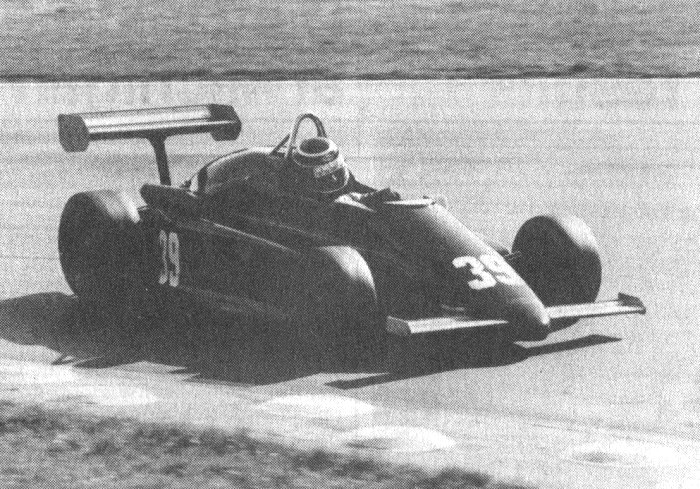
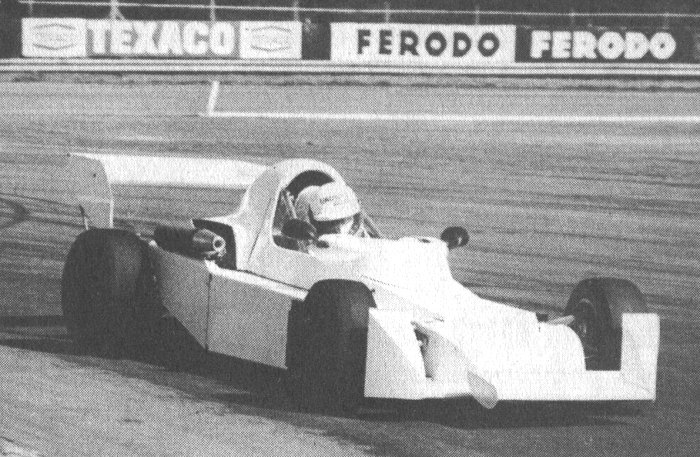
The CTG testing at Silverstone at the end of 1977.

Ctg

CTG was an engineering company founded by Cyril Malem and based in Wimborne in Dorset. They began constructing racing cars in 1971 and from 1972-78 were subcontractors for Chevron as well as building many cars for other people including the monocoque for the 1974 F1 Fittipaldi FD04 and in later years 2 F1 BRM chassis as well as work for Ralt. In 1977 CTG began constructing their own cars for FF 2000 where they won several races with a variety of drivers. In 1976 in conjunction with freelance designer Len Terry and Viking team owner Tore John Helle (who laid out the design parameters) they built 5 Viking F3 cars (see Viking entry) for the Swedish team to compete in European and Swedish F3 races.

1977

The story of the CTG F3 is a little convoluted. By the middle of 1976 the Viking team were in financial trouble and Len Terry and CTG unsuccessfully sought the backing to run 1 or 2 cars at the end of the season. The Viking design was rebuilt in 1977 as a Technic (see Technic entry) with only one qualifying attempt to its name. CTG announced a new F3 car for 1978, the CTG 378, and at the end of 1977 a car was tested that was called a CTG which appears to be the Technic renamed. The 378 did not materialise and CTG disappeared from F3 racing.

Dastle

Mk9
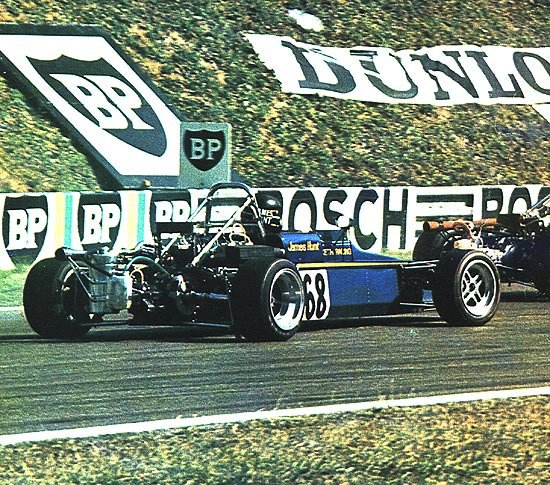
James Hunt in the Dastle Mk 9 at Rouen in 1972

Dastle

Throughout the sixties Geoffrey Rumble’s Dastle company specialised in short-track racing midgets with only a F. Ford car to their name. In 1972 they produced their first F3 car and over the next few years produced a number of models which ran with varying degrees of success. They always seem to be hampered by lack of suffuicient finance to enable them to do enough testing and to ensure they had decent engines. Today the Dastle company is still going strong making raceboxes to transport race cars.

1972

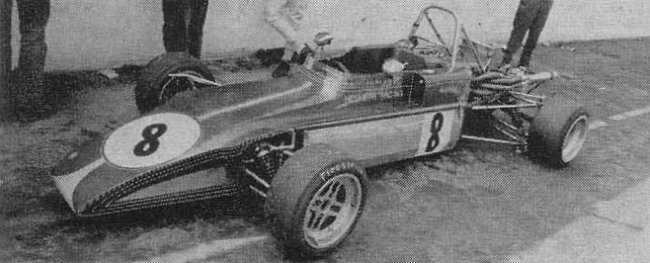
Based around a strong monocoque (note the hefty roll hoop in the pictures) with orthodox suspension, the Mk 9 was designed by Geoff Rumble. Its wide track made it stable through corners but slow in a straight line. Perhaps the Mk9’s greatest claim to fame was that the then newly formed Hesketh team gave the young James Hunt his last F3 races in one. Both James and Bubbles Horsley proved the strength of the tubs with huge accidents at Brands Hatch on the same day.

1973

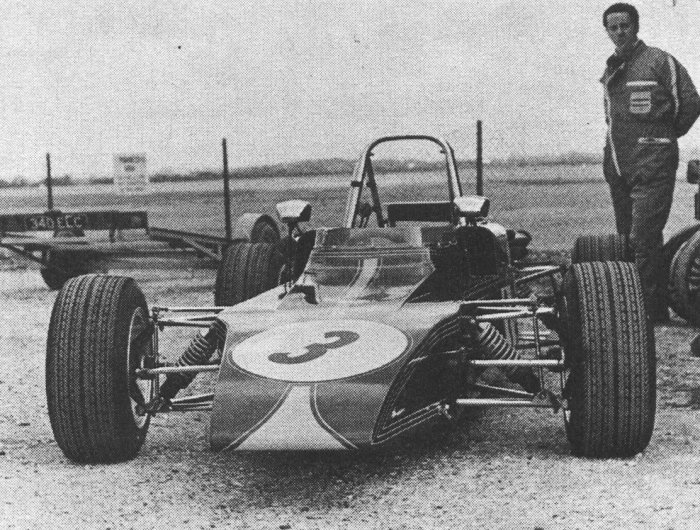
Designed on similar lines to the Mk 9 but with inboard front brakes and a full-width nose the Mk 10 was driven by Barrie Maskell. Despite a lot of development work that took it through to “B” form it was never a genuine front runner and it gained a perhaps unjustified reputation as being poor handling. The best result was an end of season 5th at Thruxton for Maskell
mk9b
The Hesketh entered Dastle Mk 9 at Thruxton.
mk9c
The Mk9 looking very small and tidy.
1973
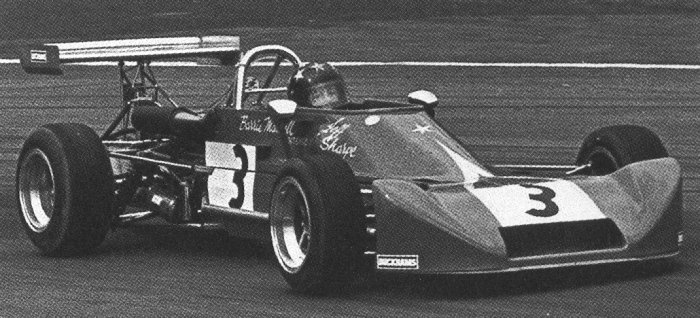
The square lines of the Mk10 are very obvious in this shot of Barrie Maskell.

1974

The Mk10 continued into 1974 where it suffered badly in early season races from an unreliable engine as the switch was made to 2-litre engines. However Dastle persevered and the car was updated to “C” spec for Maskell. Despite only using a 1700 or 1800 cc engine Maskell took an excellent second at Cadwell Park in June and a third in the same month at Snetterton. A fifth at Cadwell in July was the only other result of note.
1974
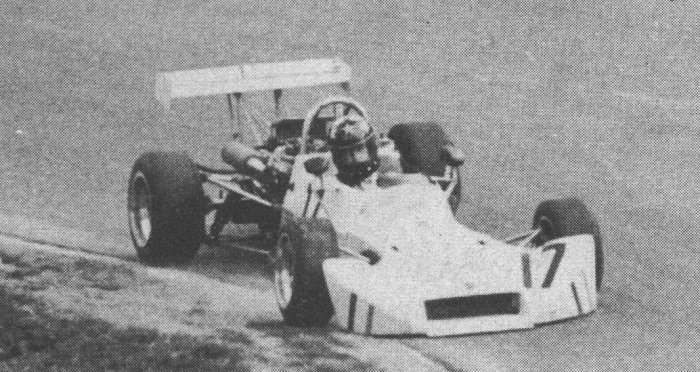
Barrie Maskell in action once again.

1976

In 1976 Barrie Maskell resurrected the Mk10c and finished second in a non-championship race at Mallory Park in a very weak field. The car was, unusually for this time, powered by a twin-cam Ford.

Drivers:
1972 Anthony “Bubbles” Horsley, James Hunt, Steve Thompson.

1973 Barrie Maskell, Norman Pierce.

1974 Barrie Maskell, Norman Pierce.

1975 Barrie Maskell.

1976 Barrie Maskell.

mk10c
Barrie Maskell in the Mk10c at Mallory Park.

Crs-Allegrini

crs1975
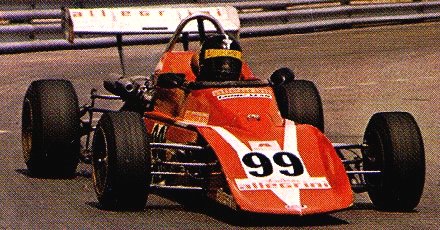
Ghinzani in the CRS with its unusual front nose treatment.

Crs-Allegrini

A one-off chassis for the 1975 Italian F3 championship, the 001 was driven by Piercarlo Ghinzani, it had a narrow track suspension and was powered by the ubiquitous Novamotor Toyota. It was reasonably successful with a 6th place at Varano and a pair of 5ths at Magione and Monza.

Drivers

1975 Piercarlo Ghinzani.