Vixen

vixen1
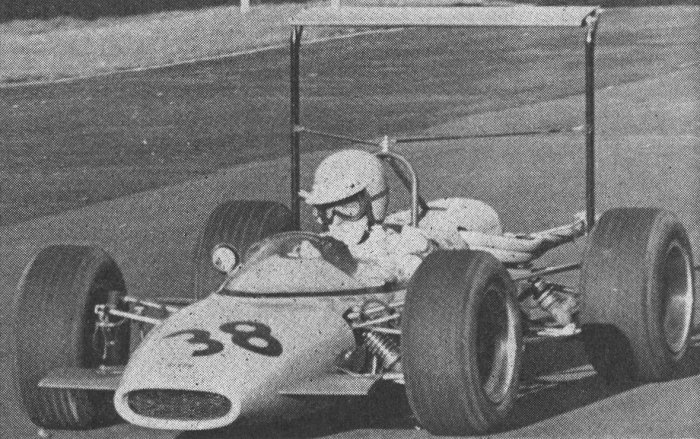
Bernard Unett in the 1968 F4 Vixen.

Vixen

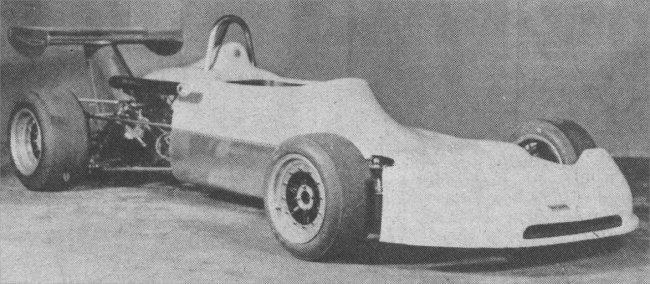
Vixen Cars were based in Cheshunt in Hertfordshire and built cars for the F4 series in the late 1960s. Their 1968 Hillman Imp powered car dominated the BP F4 Championship taking the first 6 places and for 1969 they announced their new F4 car would also be raced in F3. It was to be a spaceframe design with conventional suspension and a wedge shaped body. Vixen stated that they were looking for a top-line team to run it, apparently there were no takers and by July they said the car was nearly ready to race and would be pedalled by a well known F3 driver. There was no indication who the driver was and no record of the car actually taking to the track.

Vista

vista
vista
vista

Vista

The Vista was announced in March 1966, it was designed by ex-Ford prototype engineer Michael Fox and seemingly built by Asquith Bros, Ltd in Dewsbury, Yorkshire. The power-plant was given as a Cosworth-Ford and it was tested by Fox at Croft at the end of May but there is no indication that it ever raced.

Vision

Vision88a
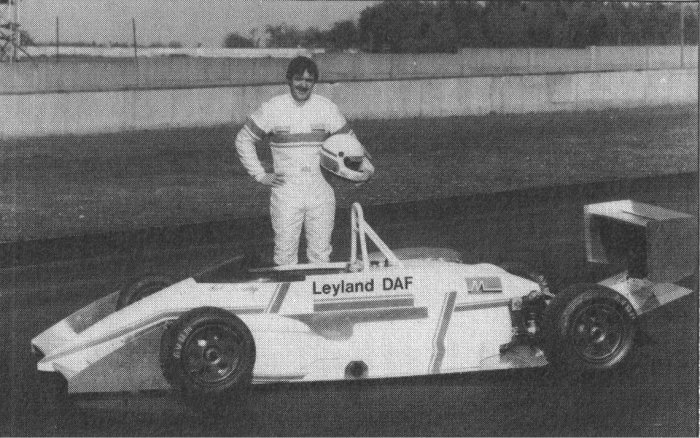
Bob Berridge and the Vision at its announcement.

Vision

Vision was started in 1983 by Paul Gibson in Middlesborough to build Clubman cars, almost immediately Vision started winning and they won the Clubman’s championship in both 1985 and 1986. At the end of 1986 Gibson decided to go F3 racing but it was 1988 before the car was actually built. The very disappointing results achieved meant that in July 1989 Vision went into Receivership and the whole project was sold off and Vision left the world of F3.

1988

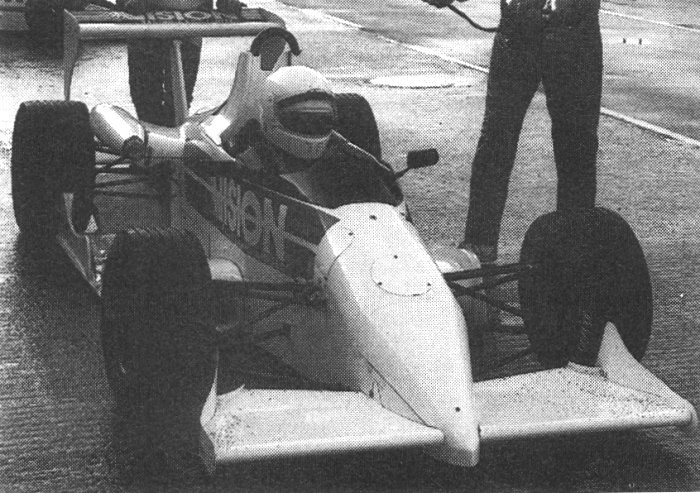
The work of Dave Amey who had worked at the Arrows and Spirit F1 teams the VF3-T88A was designed around a carbonfibre/aluminium honeycomb tub. Suspension was pushrod all round and a TOM’s Toyota engine was fitted. The car was never competitive and many felt it had been over engineered for F3 as it was also designed with F3000 in mind. During the year both Tommy “Slim” Borgudd and Roland Ratzenburger tested the car but it seems they could make it go no better than regular pilot Bob Berridge.
A modified VF3-T89A was built and tested the following year but never raced and the whole project was sold off to be used by someone in Sprinting.

Drivers:
1988 Bob Berridge, Paul Gibson.

Vision88b
Tthe Vision undergoing early season testing.
Vision88
Paul Gibson in the Vision at the end of the season, all of the rear bodywork has been removed.

Viking

viking1
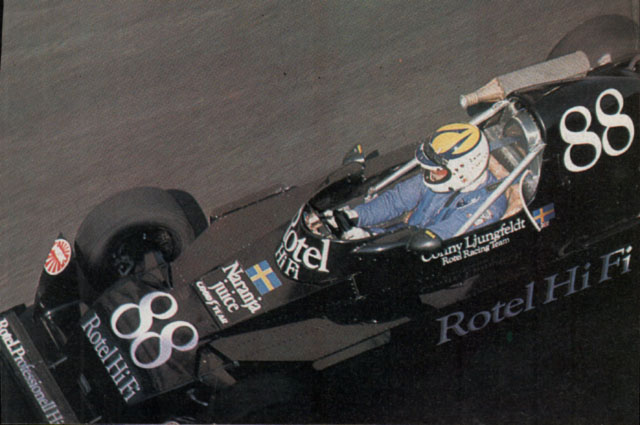
Conny Ljungfeldt's Viking on the streets of Monaco.

Viking

A very interesting entry into the world of F3 racing was the Viking, the car design principals were laid out by team owner Tore John Helle, drawn up by Len Terry and initially built by CTG in Devon whilst the sponsors were Swedish. The, for the time, very advanced aerodynamic design, came from Tore John Helle, working with SAAB Aerodynamicists in Sweden and resulted in a very distinctive and dramatic looking car. Following on from some quality issues in the early builds the entire programme was moved from CTG to Sweden. The Viking used several advanced technologies such as radio live transmitted, dynamic measurements and was one of the first F3 designs to use appreciate the importance of aerodynamic development. Unfortunately just as the cars were showing promise team owner Tore John Helle ran into financial problems and the team were disbanded although Tore John Helle allowed Ljungfeldt to keep racing his car and he managed to keep it going for the remainder of the season by picking up sponsorship here and there. Len Terry rechristened one CTG-built car as a Technic and in 1977 it appeared just once and it was later tested as a CTG (see entries for these manufacturers).

1976

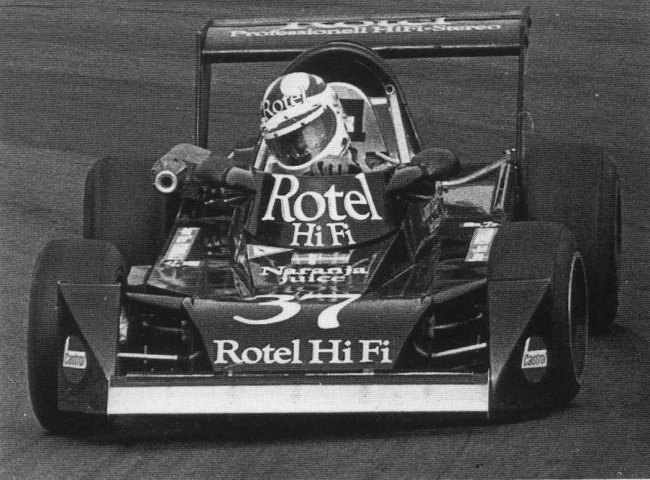
Three TH1As were built for the 1976 season, they had a sheet aluminium monocoque, conventional suspension and were Toyota Novamotor powered. The nose design was unusual with a full width aerofoil and separate deflectors in front of the wheels. a large engine cover was used that swept sharply down to the rear where swept back endplate supports were used to attach the rear wing. Best results were wins for Ljungfeldt at Knutsdorp, Falkenberg and Kinnekulle and a heat win at Monaco. Ljungfeldt won the Swedish Championship.


Drivers
1976 Tommy “Slim” Borgudd, Eje Elgh, Conny Ljungfeldt, Anders Olofsson.

Viking
This shot of the Viking emphasises its unusual lines, Ljungfeldt is the driver.

Van Diemen

Vandiemen92b
Julian Westwood in the RF92.

Van Diemen

Having been such a dominant force in the junior formulae for so many years, it is perhaps surprising that Van Diemen have never had a serious crack at F3. Boss of Van Diemen, Ralph Firman has been involved in racing since the mid 1960s firstly working on brother-in-law Jim Russell’s racing school cars and then preparing other cars including in 1971, Carlos Pace’s F3 car. The first Van Diemen was built in 1973 for Tasmanian driver Ross Ambrose (Van Diemen’s Land being the old name for Tasmania), this Formula Ford chassis was very successful and soon other orders followed. Since then, despite the attention of numerous other manufacturers, Firman’s company have produced a succession of highly competitive machinery (with only the occasional lapse). Van Diemen seem more than happy to remain in their specialised market place.

1976

When Van Diemen took over the ailing GRD F3 concern at the end of 1975 they produced the VG376 which was basically the GRD 375 with improved aerodynamic bodywork. The design however was well past its sell by date and almost no results were achieved except the odd top ten finish by Jac Nelleman, with a best of 4th at Zolder.
1992

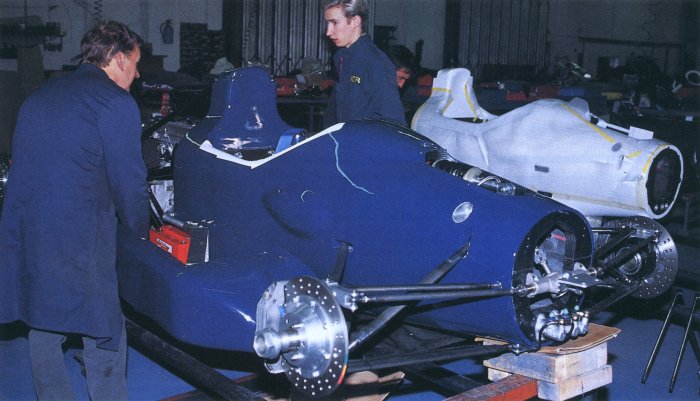
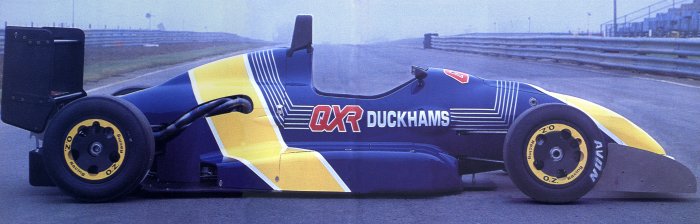
Van Diemen returned to F3 in 1992 with their first composite chassis which was designed by Dave Baldwin and built by Precision Composites, the same company that built the F1 Jordan. The front suspension was unusual in that it utilised a monoshock design to reduce the size of the monocoque. The rear of the car featured a tubular steel engine bay. The RF92 ran reasonably well when Andrew Thorby joined from Ralt to help develop it. Additionally Julian Westwood was bought back from Japan to race it and took a couple of thirds at the end of season races but it obviously wasn’t what Van Diemen wanted and the project was dropped.
The car also raced in Germany and France, driven by Franc ten Wolde in Germany it sat on the front row of the third round of the German Championship but retired early in the race. Results were indifferent after this with mid-grid qualifying at best and the only significant result a 7th at the Avusrennen. At the end of June the car stopped racing, it appeared again in some non-championships a few years later where it sat on the back of the grid. Japanese results were similarly disappointing with a best finish of nineteenth.
There were reports in early 1993 of an Andrew Thorby designed RF93, it was due to have a full length composite tub with a cast oil tank/gearbox module. It never seems to have seen the light of day if it was ever built at all.

Drivers
1976 376
Tommy “Slim” Borgudd, Claude Crespin, Werner Fischer, Günter Hölker, Wolfgang Locher, Jac Nelleman, Gunnar Nordström, Jean-Louis Schlesser, Henrik Spellerberg.

1977 376
Michael Bender.

1992 RF92
“Jules” Boullion, Yukihiro Hane, Russell Ingall, Jason Plato, Tsutomu Shibuya, Julian Westwood, Franc ten Wolde, Hiroharu Yamauchi.

1995 RF92
Kristofer Wozniak.

1996 RF92
Alfred Ehgartner.

1997 RF92
Alfred Ehgartner, Guido Geisler.

Vandiemen76
The Van Diemen VG376 clearly showing its GRD ancestry.
Vandiemen92
The RF92 under construction at the Van Diemen works.
Vandiemen92a
The RF92 in profile.
Vandiemen92c
Early in the season the anhedral front wing (see top of page) was changed for a more conventional one (Jason Plato driving).

Ring

ring
ring
ring

Ring

Sadly no details at all about this car, the PB3, other than it appeared in at least one round of the 1983 European Championship

Drivers

1983
Thierry Heirmann.

Rispal

rispal
rispal

Rispal

Raymond Rispal was a Renault distributor in Bordeaux and his first car was an early F Junior, it had a tubular frame, wishbones and coil springs/dampers based on the Renault Dauphine at the front and the rear suspension used a swing-axle. Not surprisingly, in view of Rispal’s Renault connections, it used a Renault Dauphine engine and transmission which were ideal for a rear-engined design. In 1964 a Rispal, still using a Renault engine and driven by Raymond Rispal appeared irregularly in the French Championship claiming a few top ten finishes although usually several laps adrift in generally not very strong fields. For 1965 the Rispal was only seen three times and results were poor as the fields became stronger. Whether the car that was seen in ’64 and ’65 was an updated version of the F Junior car or a new model isn’t known.

Drivers

1964 Raymond Rispal.

1965 Raymond Rispal.

Roni

t85
Ian Flux testing the Roni.

Roni

The Roni was a revamp of the Cygnus, the Cygnus (q.v.) appeared in July/August 1984, it was designed by two men from March, Nick Wasyliw and Rob Gustavsson and built by Paul Vincent in north London. Apparently it had been conceived long before its appearance but that hardy perennial, lack of money, saw its gestation delayed. Ian Flux did a couple of races in it without setting the world alight. For 1985 the Cygnus was converted to comply with the new flat-bottomed F3 regs and renamed the Roni.

1985

The Roni was the Cygnus tub with new sidepods and a flat bottom, the suspension was revised to take account of these changes. As with the Cygnus Ian Flux did the driving in the couple of races in which it was entered. Sadly, as before, Flux reported the chassis was good but the engine wasn’t and a lack of finance saw the project grind to a halt.

Drivers

1985 Ian Flux.

t85a
Ian Flux waiting to go out onto the track during testing.

Lynx

lynx
lynx
lynx

Lynx

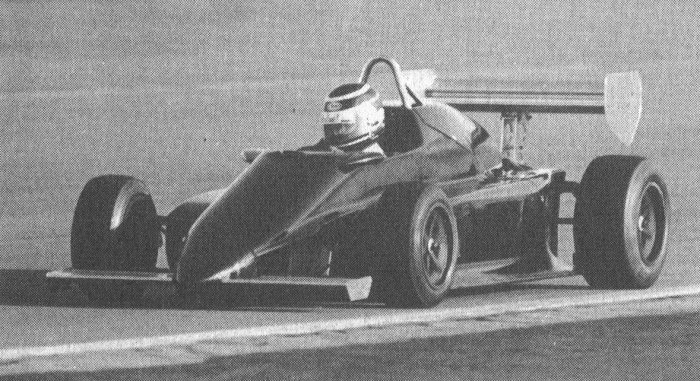
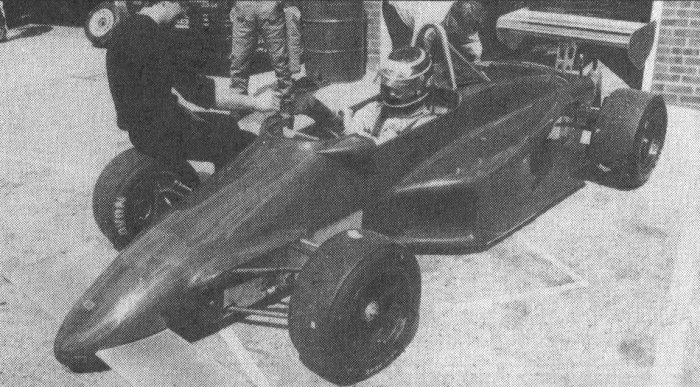
Monoposto champion Godfrey Hall ran his Lynx-Toyota GH2 in the 1984 British F3 Championship in the B Class for year old cars, the car was heavily based on a Ralt RT3. He scored in several races and finished eighth in the final standings.

Drivers:

1984 Godfrey Hall.

Lutos

lutos
lutos
lutos

Lutos

The Lutos was based on the Lotus 22 and was originally designed and built in Örebro as a F Junior but it never raced in this class, the chassis was built by Sportscars AB who used the same frame for their Focus (q.v.). It was bought by Sven-Erik Eriksson and it was fitted with rear suspension from a F2 Lola and bodywork from the F3 Svebe (q.v.). It raced occasionally in 1966-67 and it appeared again briefly in the 1970s fitted with a twin-cam engine.

Thanks to Peter Pettersson for the above information.

Drivers:

1966 Lars Bjuhr.

1967
Björn Öhrman.

197? Frank Lacknack.