Oscar

oscar86
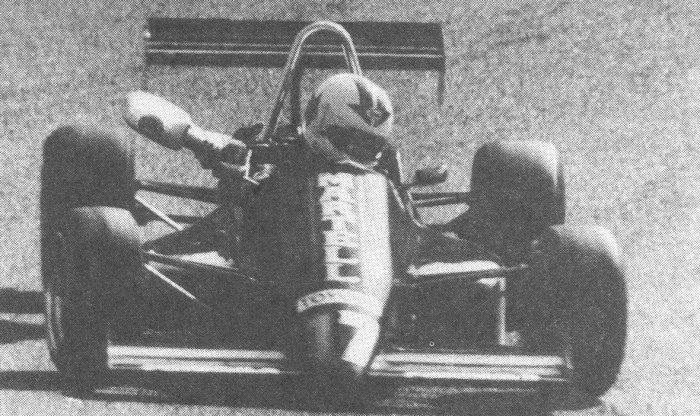
Hideo Fukuyama in the Oscar SK86F.

Oscar

The Oscar first competed in the Japanese F3 Championship in 1979, there seems to have been two models, the T1 and the T2. The cars were Toyota powered and were obviously competitive with Syuuroku Sasaki finishing fourth in the championship and winning the opening round at Suzuka. For 1980 a new car the T3 was introduced but results were generally disappointing. 1981 saw further modifications to the car with the emergence of the T3B and T3C, the T3C continuing into 1982 with Yoshiyasu Tachi taking a couple of third places early in the season.
For 1984 another new car appeared, the T4 but results were poor. Nothing daunted the SK86F with its pullrod suspension was the 1986 offering and it was one of their better designs with Hideo Fukuyama taking a win at Tsukuba in the rain and finishing sixth in the Japanese Championship. The SK86F continued into 1987 but it couldn’t compete with the Ralts and Reynards and Oscar disappeared from the F3 scene.

Drivers:

1979
T2
Syuuroku Sasaki, Katsuhiko Sugiura.

T1
Syuuji Kanemaru, Katsuhiko Sugiura, Fukumi Koutake, Syuuroku Sasaki.

1980
T3
Tsunehisa Asai.

T1
Masao Segawa, Tomiko Yoshikawa.

1981
T3C
Tsunehisa Asai

T3B
Tsunehisa Asai, Hideo Fukuyama, Yoshiyasu Tachi, Tomiko Yoshikawa.

1982 T3C
Hideo Fukuyama, Yoshiyasu Tachi.

1983 T3C
Yoshiyasu Tachi.

1984 T4
Kazuhiko Miyake.

1985
T4
Hisatoyo Gotou.

T1
Yoshitaka Matsumoto.

1986
SK86F
Hideo Fukuyama, Hisatoyo Gotou.

T4
Shinji Yoshikawa.

T1
Yoshitaka Matsumoto.

1987 SK86F
Hisatoyo Gotou, Syuuroku Sasaki, Takashi Yamada
Orca

ORCA
The Orca B301.

Orca

1979

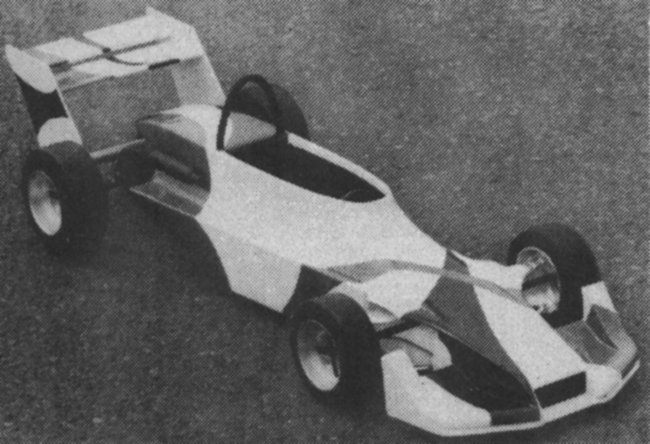
The Le Mans based ORCA team announced the F3 B301 in 1979 but it never seemed to progress beyond the model shown on the left.

1980

A new car was designed for 1980, the B302, and the Toyota-powered chasis had some outings in the French F3 Championship. Driver Jean-Louis Bousquet ran reasonably well in what were generally weak fields and in the final race of the season at the Le Mans Bugatti circuit he took a season’s best of third and finished 10th in the overall championship.

Drivers:

1980 Jean-Louis Bousquet.

Oliroy

oliroy - Copy
oliroy - Copy
oliroy - Copy

Oliroy

The Oliroy arose from the ashes of the 1979 Duqueine VG3 (q.v.). Seemingly driver Bernard Perroy fell out with the Duqueine brothers over financial matters and Perroy, together with fellow driver Denis Olivera, rebuilt the VG3 as the Oliroy (OLIveira + PerROY) C1-Toyota. The car used Martini bodywork and showed flashes of promise on a number of occasions with a best finish of second behind Alain Ferté’s Martini MK27 at Le Mans Bugatti circuit in October 1980. A couple of other top 6 finishes resulted in Olivera taking 9th place in the 1980 French F3 Championship.

Thanks to Colin Painter for additional information.

Drivers:

1980 Denis Oliveira

Ks

ks
ks

Ks

Three different KS cars raced in the 1979 Japanese F3 Championship, they were the 06B, 06C and 06X, the O6C was Toyota powered, the 06X had a Honda and no engine is listed for the 06B. The best result was achieved by Osamu Nakako in the 06C with a third at Tsukuba but after this the car disappeared. The 06X only did one race and finished seventh at the opening round at Suzuka.

Drivers

1979
Naoki Nagasaka (06B), Osamu Nakako (06C), Yoshiyuki Ogura (06X).

Grac

grac1
grac1
grac
Denis Dayan in the Grac MT11 at Montlhéry.

Grac

First entering F3 in 1969 Grac (Groupe de Recherches Automobiles de Course) had previously constructed cars for Formule France from their headquarters in Valence. They met with some success winning the French championship in 1968 and 1969. Team owner and designer, Serge Asiomanoff then moved into F3 for a few years where he met with limited success. In the mid to late ’70s Grac built a number of cars for the European 2-litre Sports Car Championship and appeared to leave the single-seater market. The MT chassis designation used on all the Grac models was a tribute to Maurice Trintignant. Today Serge Asiomanoff and Grac are still active but in in a different field, they manufacture specialised suspension systems for vehicles such as ambulances. (Thanks to Rene Verstappen for the information).

1964

A Ford-powered Grac raced sporadically in France, presumably a converted Formule France car.

1965

As in 1964 a couple of Ford-powered Gracs were occasionally seen in France, again probably converted Formule France cars.

1966

A Ford-powered Grac raced sporadically in France, presumably a converted Formule France car.

1967

As in 1964 a couple of Ford-powered Gracs were occasionally seen in France, again probably converted Formule France cars.

1969

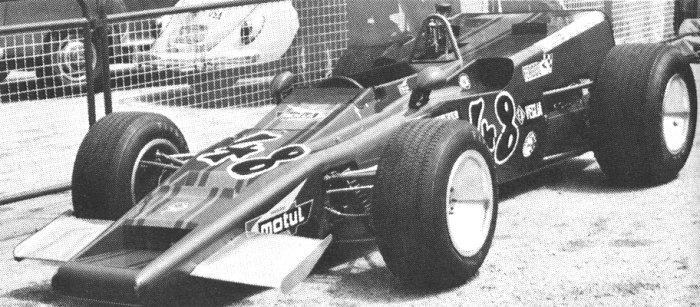
There were two versions of the MT8, one with the distinctive wedge shaped bodywork and one with conventional body work which was called the MT8A. Front suspension was via wishbones whilst the rear used top links and twin radius rods. Springs and dampers were outboard front and rear. Wheelbase: 78.7 ins. Track: front 55 ins. rear 55 ins. The MT8 proved a disaster and whilst the MT8A was better no results were achieved and Vidal gave up part way through the season.

1970

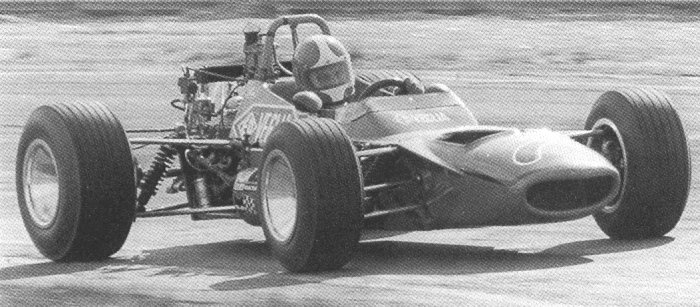
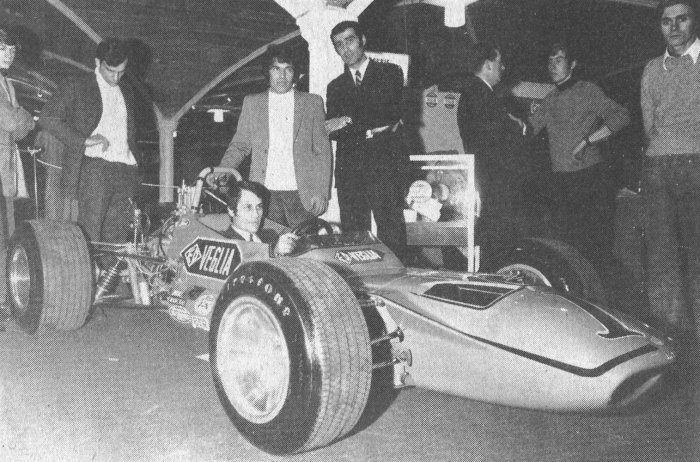
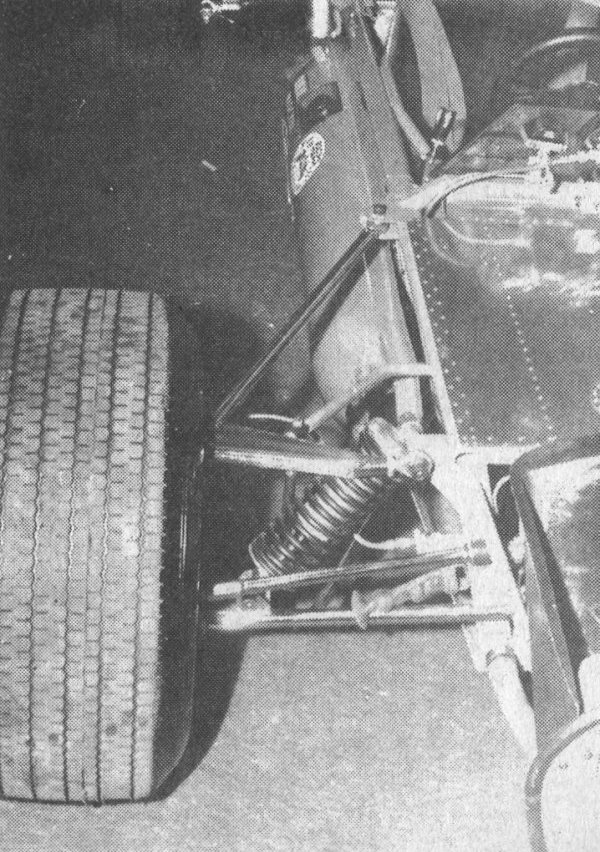
The MT11 used a spaceframe chassis with aluminium sheet panelling over the driver’s legs. There were twin rubber bag type fuel tanks in each sidepod. The front suspension used a top link and trailing arm similar to the Chevron design with a wishbone at the bottom. Rear suspension was by top link with reversed bottom wishbone and twin radius rods. Springs and dampers were outboard front and rear. The uprights were Grac’s own magnesium castings. The wheels were twin segment disc-type wheels that were adjustable for rim width. The car was sponsored by Veglia instruments and thus entered as a Veglia-Grac. Tragically Denis Dayan suffered a fatal accident in the car just as it was beginning to show well which bought an end to the project as well as Grac’s F3 involvement.s.
gracmt8
The very definite wedge shape of the MT8.
gracmt11
The MT11 on its announcement, Denis Dayan sits in the car, chassis builder Serge Granton holds the rollhoop and Serge Asiomanoff stands next to him.
gracmt11a
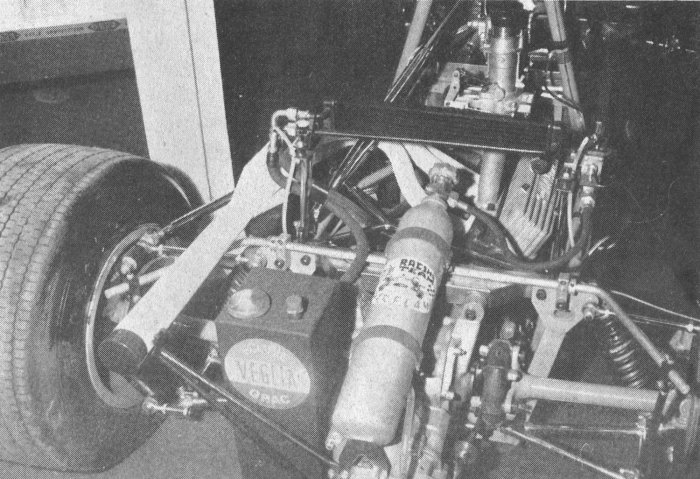
The fire extinguisher and the catch tank are clearly visible at the rear.
gracmt11b
The front suspension detail of the MT11.
gracmt14
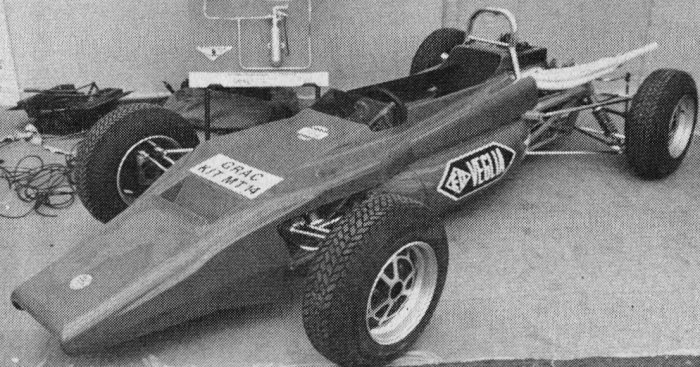
The MT14 on display at a racing car show in early 1971.

1973

The MT14 appeared in 1973 German F3 races were it raced with reasonable success with a best result of second in a weak field at Hockenheim. The MT14 was the 1971 Formule France chassis shown on the left, was the German car a converted Formule France model or something else? The MT14 designation was also used for the MT14B and MT14S which were sportscars so perhaps the German car had some other genesis.

Drivers

1964
Bernard Plaisance.

1965
Jean Faure, Alain Leguellec, Gilles Pequenot, Bernard Plaisance.

1966 Jean Faure, Jean Max.

1967 Alex Astruc, Jean Belin, Michel Moisset.

1968 Jimmy Mieusset .

1969
MT8
Jean Max.

MT8A
Philippe Vidal.

1970 MT11
Denis Dayan.

1973 MT14
Reinhard Pfändler.

1974 MT14
Giancarlo Commazzi.

Knapp

knap1
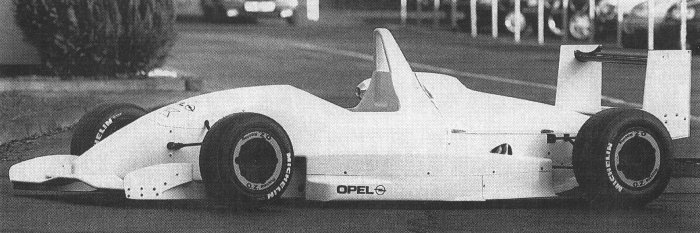
The Knapp at its announcement, considering the Opel financing the livery is a masterpiece of discretion..

Knapp

The Knapp JK26, designed by Austrian Johann Knapp, was entered by Tomei Sport and financed by Opel (hence the Opel power unit) in the opening three rounds of the 1993 Japanese F3 Championship. It was fitted with an Opel-development sequential gearbox which caused a lot of problems, the car qualified twice in the top twelve with a best finish of ninth at Tsukuba. The team then switched to a Dallara F393 and Anthony Reid went on to finish 3rd in the championship after a good run of results.

Drivers

1993
Anthony Reid.

Kitchener

Ketnecher
Ketnecher

Kitchener

Tony Kitchener had gained his experience working for the Chequered Flag team on their F2 and F3 cars before he started his own company in West London. He built his first F3 car in 1969 and then moved into F5000 where he had some success in 1970 with the under-financed K3, a modified F3 chassis, driven by Gordon Spice. Kitchener continued in F5000 for a few years running a modified McLaren 10B (the Kitchmac) and finally an ex-F1 McLaren M19. In 1974 he retired from motor sport.

1969

The first F3 Kitchener was the K2, it was a monocoque with a very short wheelbase and cantilever front suspension. The design was shared between Tony Kitchener, Max Boxstrom and Burt Ray although Boxstrom left before the car was finished. It was raced in France without much success and became the basis for the Kithchener K3 F5000 car. It was said that François Cevert tested it in F3 guise and was complimentary about it.

1970

The K2A was produced for 1970, effectively the F5000 car converted back to F3 spec it retained the tubular engine bay from that design. Additionally the front suspension was switched to a double wishbone setup with outboard springs and dampers. Two cars were raced in France but it seems the drivers weren’t up to much and no decent results were recorded.

Drivers

1969 Albert Badin, John Gillmeister.

k370
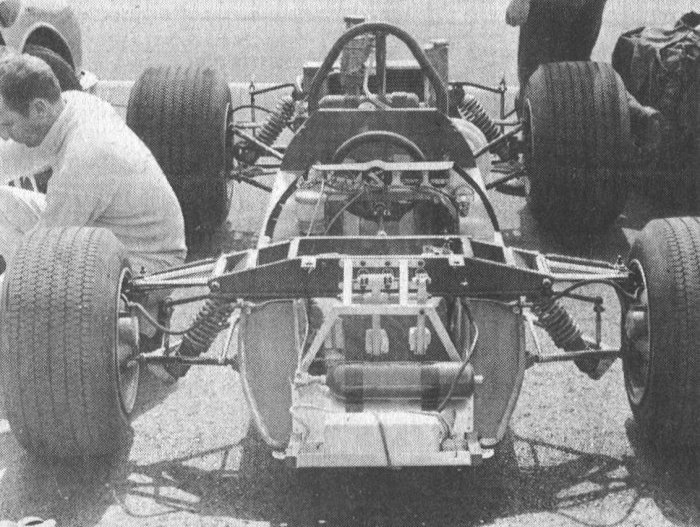
The F3 Kitchener K2A stripped for action.

Kdv

kdv
kdv
kdv

Kdv

The KDV 4 first appeared in the year-old Class B of the German F3 Championship in 1989, entries had been made in 1988 but the car did not appear. It was VW powered and in its two 1989 races it qualified and finished at the back, it appeared a few more times in 1990 but either failed to qualify or failed to start.

Drivers

1989 Jaroslav Vorel.

1990 Jaroslav Vorel.

Katano

katano
katano

Katano

The Katano FZ31 raced in the 1987 Japanese F3 Championship, the Toyota powered car was entered by Racing Post Katano which linked to the driver’s name would indicate the possibility of a driver/constructor combination. It only did four races, not qualifying for one and retiring in the other three after qualifying at the rear of the grid.

Drivers

1993
Tamihide Katano.

Quasar

quasar
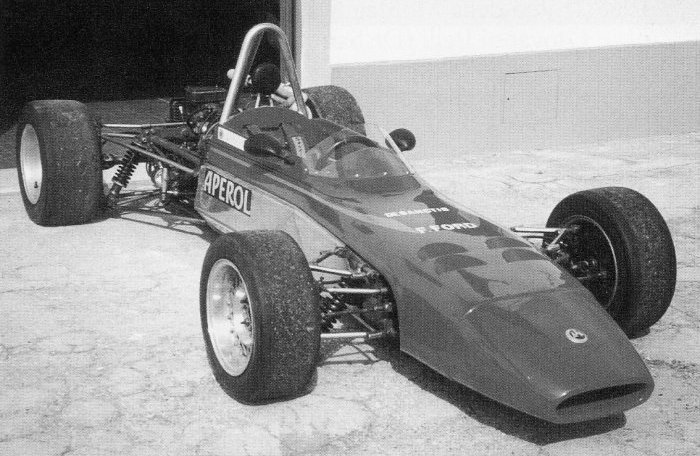
The Quasar in 1971 still showing its De Sanctis heritage on the bodywork.

Quasar

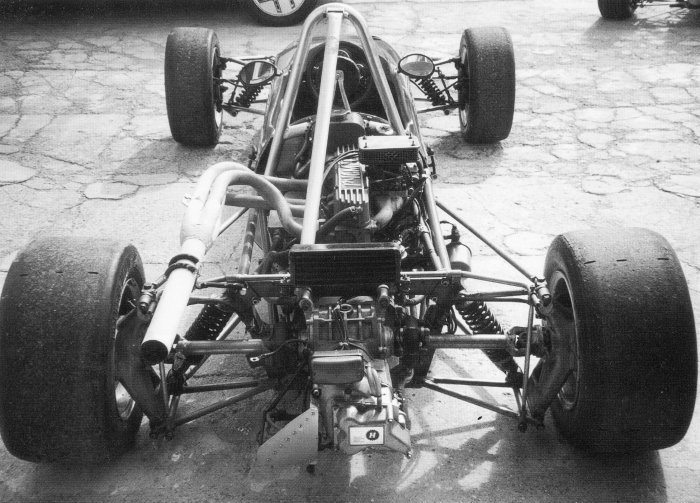
In 1971 Christiano del Balzo, under the Quasar name, built 10 F Ford 1600 cars based on the 1970 De Sanctis car, del Balzo had raced various examples of the De Sanctis marque in Italian F3 over the years using the pseudonym “Gero”. It would seem as if some of these cars may have been converted to F3 specification and raced in 1971 and ’72. The two pictures of the Quasar show it fitted with a 1600cc Ford crossflow engine but the wheels and tyres are clearly F3 sized. In 1971 a spaceframe chassis wouldn’t necessarily have been at a disadvantage, constructors such as Brabham and Alpine were quite happily winning races with their spaceframe designs. The Quasar had a few reasonable runs and del Balzo, racing as “Gero”, had a best finish of 5th at Imola. In 1972 two teams ran Quasars but half way through the season when both had only managed a couple of 7th places both teams switched to Brabhams and the Quasar was seen no more.

Drivers

1971 “Gero” (Christiano del Balzo).

1972 “Gero” (Christiano del Balzo), Marazzi.

quasar2
The engine is the Ford 1600 crossflow but the wheels and tyres are F3 sized.