Xr3

xr
Terry Ogilvie-Hardy in his Monoposto Project XR car at Becketts in the late sixties.

Xr3

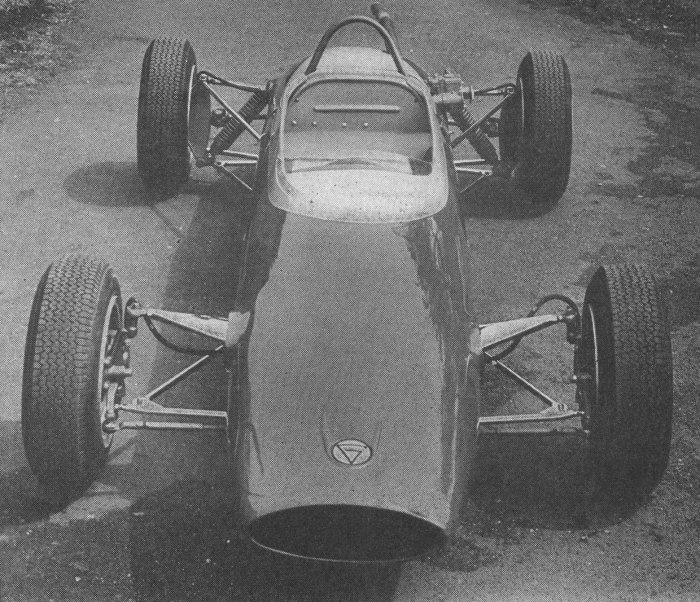
Terry Ogilvie-Hardy competed in a variety of classes including F Junior where he used a number of different cars from Alexis. He also built a number of Alexis-based cars under the Project XR banner such as the Monoposto car shown above
xr3
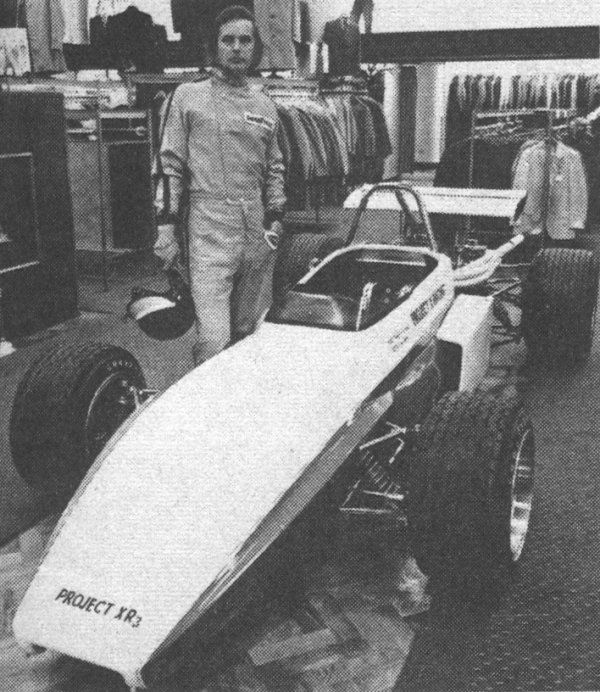
Terry Ogilvie-Hardy proudly standing next to his Project XR3.
Built in 1971 by Terry Ogilvie-Hardy and Brian Norton Project XR3 was displayed in Rackhams (which appears to be a clothes shop) in Birmingham. It was fitted with a Rowland engine and used Palliser uprights and wheels and seemingly never raced.

Zimmspeed

zimmspeed88
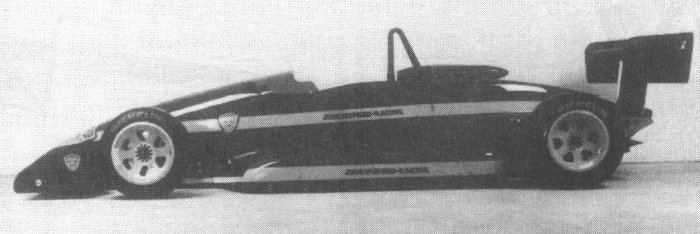
The Zimmspeed SM.

Zimmspeed

The Zimmspeed SM was designed by former F2 entrant Erich Schwaller who also ran Bernard Santal in the 1983 European F3 Championship. Consisting of a carbonfibre/honeycomb composite chassis fitted with a Spiess VW engine the car was entirely Swiss made. Driven by Christian Mettler it apparently ran in the Swiss national series, which of course due to the ban on racing in Switzerland took place on other circuits in Europe. Results aren’t known but it did record a ninth at Monza in the opening round in April. A car entered by Zimmspeed Racing raced in Germany in 1989, it was entered as a Zimmspeed Dallara 389 so presumably it was a Dallara with some Zimmspeed inspired modifications. Since its best finish all season was a twelfth at Hockenheim any modifications may actually have been detrimental.

Drivers

1988 Christian Mettler.

1989 Hanspeter Kaufmann (see text).

Urd

Urd
Urd

Urd

URD were a minor German sports-racing car constructor and in 1976 they built a F3 car, the 376, there were at least three chassis completed, one car had a Toyota Novamotor engine, the second a BMW and the third a Ford, presumably covering all the bases! There were a couple of top ten finishes in the German F3 championship in 1976

Drivers

1976 Werner Fischer, Dietmar Flöer, Thomas von Löwis.

Gueparda

Gueparda

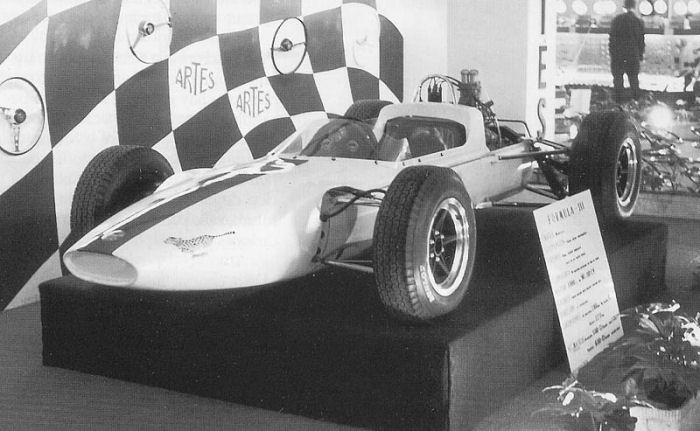
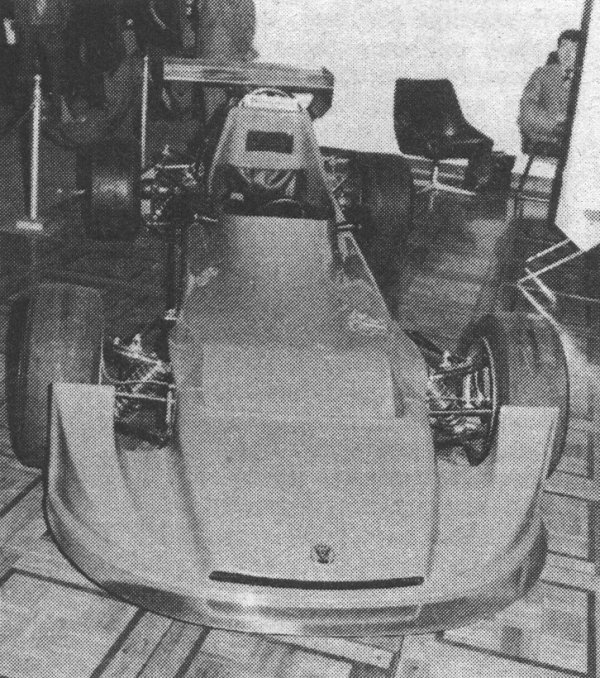
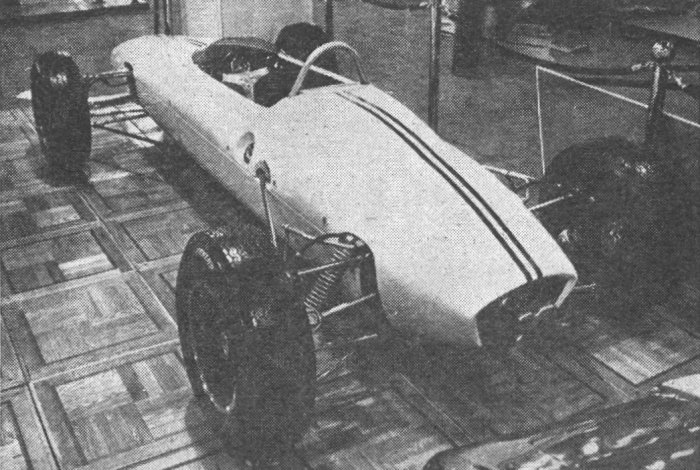
The Guerpardo (Spanish for cheetah) was displayed in 1966 at a Racing Car show, suspension was inboard at the front and outboard at the rear. From the picture it’s not clear what engine was fitted except it is not a standard F3 engine, it appears to have a twin-choke, downdraught carburettor fitted, at this time the regulations called for a single-choke carburettor and side-draught would be the norm until 1968. It would seem that Guepardo also built cars for Spanish Formula IV racing. There is no record that the car ever raced.

Greenwood

01b
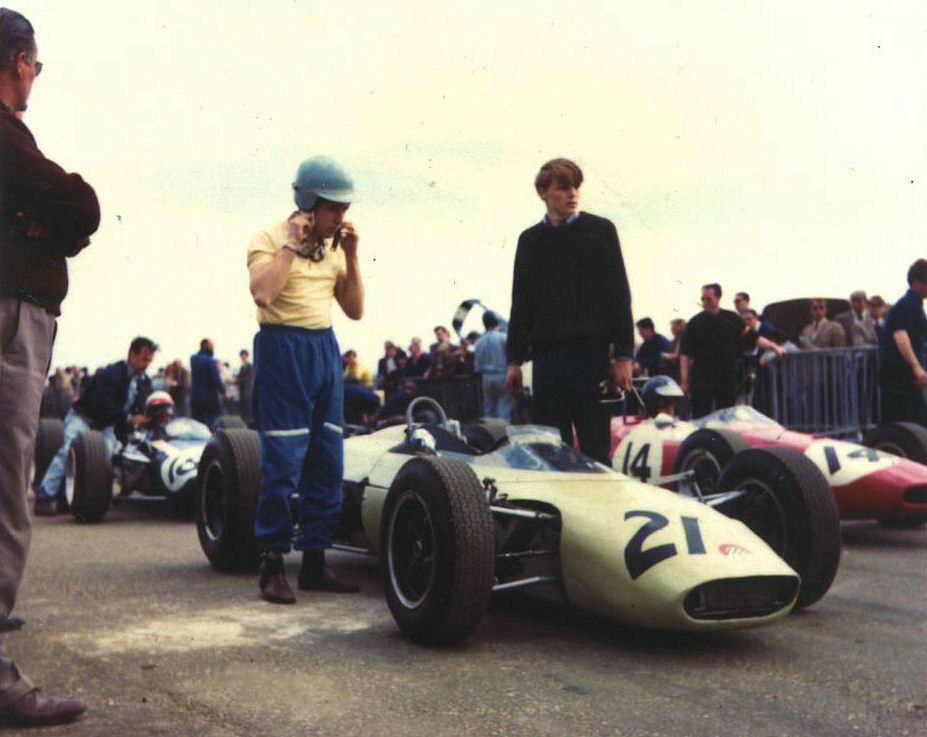
The Greenwood at the 1966 British GP meeting at Brands Hatch. (Picture copyright of John Greenwood)

Greenwood

A self-built car by Austin apprentice John Greenwood that raced in F3 in 1965-66, it used the steering wheel, drivers cowling and the twin Pannier fuel tanks from the F Junior Diggory Gwyniad and was powered by a BMC engine. Since the BMC engine was only competitive in 1964 and had quickly been left behind by the Ford unit there were no significant results either in the UK or on the odd continental outing.

Drivers:

1965 John Greenwood.

1966 John Greenwood.

GRD

GRD72b
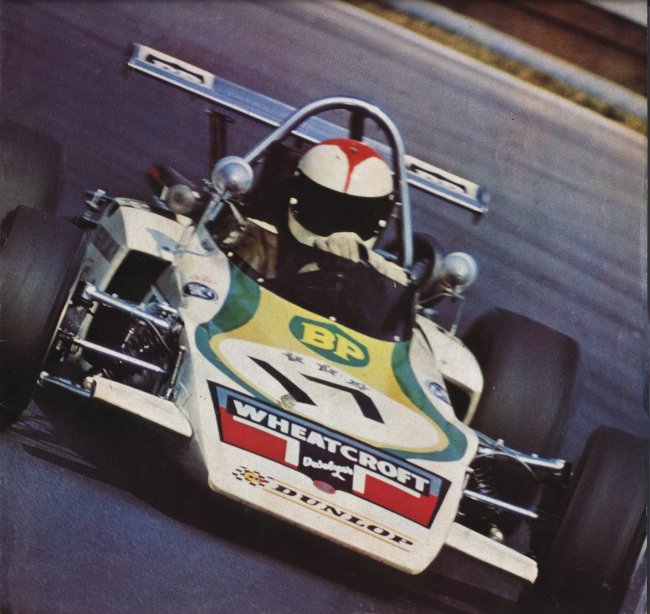
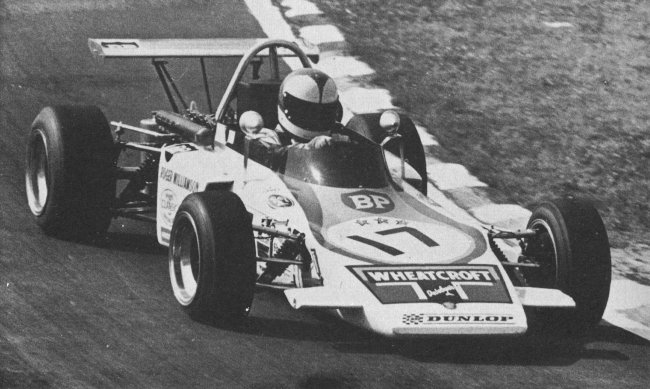
1972 F3 Champion, Roger Williamson at Mallory in his GRD 372.

GRD

As Lotus withdrew from the production side of racing car manufacture there were a number of personnel in the Hethel area of Norfolk looking for new employment. Several of these ex-Lotus employees, notably Mike Warner, designer Dave Baldwin and two leading technicians, Derek Wild and Gordon Huckle formed Group Racing Developments by linking together with local engineering company, Griston. To finish the group Jo Marquart joined from Huron as designer. With Lotus, and soon Brabham, leaving the production racing car market things looked good for GRD and initially they had a lot of success and in 1973 joined up with Denys Dobbie’s DART operation with grand plans for the future. However Dobbie pulled out in early 1974 and by the end of the year production ceased as prospects for the following year were not good. Three former employees set up a service operation and in 1975 Van Diemen took over this and the 375 F3 car (of which a modified version became the Van Diemen F3 car).

1972

The 372 consisted of an aluminium bathtub monocoque with tubular sub frames front and rear and conventional suspension. The bodywork had a pronounced wedge shape with large side mounted radiators. The car gained a reputation for being easy to set up and forgiving to drive and during the season it produced a lot of wins especially as other drivers switched over to it. The prototype chassis was debuted in some end of season races in the UK in 1971

1973

Most of the changes to the 373 were to make production of the chassis easier but it seemed that the factory preoccupation with F2 meant that the F3 car lacked some development and although successful it began to receive a less than flattering press from some of its drivers. A chassis flexing problem was solved mid season but it wasn’t until the end of the year that the real hard testing was carried out that eventually cured the problems. Alan Jones, Brian Henton and Richard Robarts chalked up 9 wins between them so the season wasn’t a total disaster by any means.
GRD373a
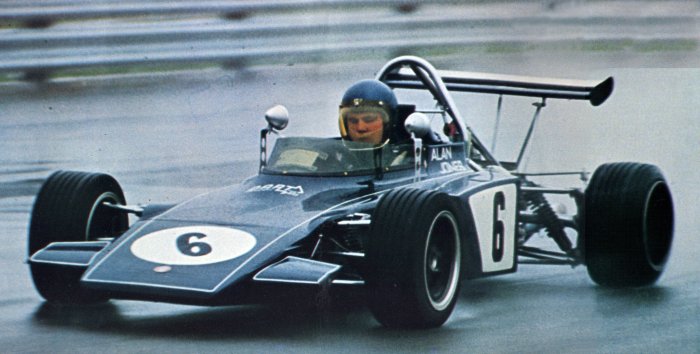
Alan Jones in the wet at Thruxton in his DART GRD 373.
GRD372d
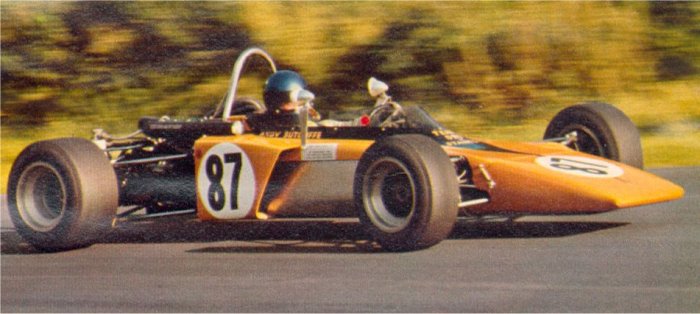
Andy Sutcliffe on the debut of the 372 at Brands Hatch in October 1971.
GRD72
Roger Williamson, winner of the Shell/Motor Sport International Championship.

1974

F3 racing was in the doldrums in the UK in 1974 with very small grids so the first major changes to the GRD design didn’t really help matters. The chassis/suspension remained basically as before with the changes to the radiator positioning and the new nose being the main modifications. Alex Ribeiro and Pedro Passadore had some reasonable runs but the writing was on the wall for GRD.

1975

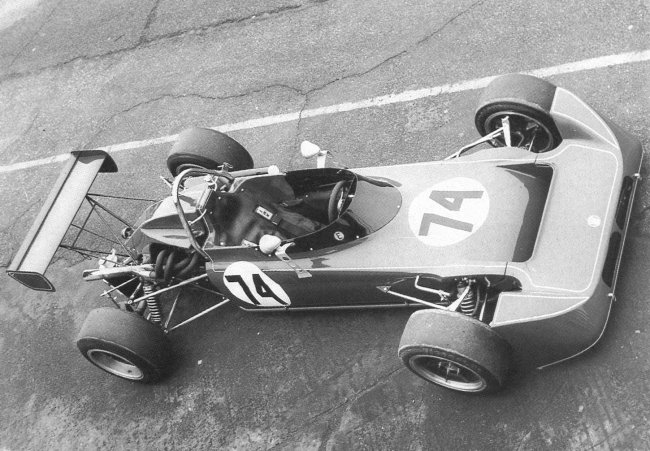
The GRD 375 at the 1975 Racing Car Show.
The first GRD 375 was in fact an updated 374 which shows that once again this was an evolutionary update. Ian Taylor ran in a works version and some support was given to some of the European competitors. The car retained its full width nose but the radiators were moved rearwards again. Highlight of the year was undoubtedly Renzo Zorzi’s fortunate victory at Monaco in a 374. At the end of the year GRD closed down and the F3 operation was taken over by Van Diemen.

Drivers
1971 372
Andy Sutcliife

1972 372
Tim Brise, Tony Brise, Cesare Doneda, Patrick Duchamp, Adelmo Fossati, Johnny Gerber, Bengt Gilhorn, Neil Ginn, Mo Harness, Hans-Peter Hoffman, Alan Jones, Masami Kuwashima, Barrie Maskell, Kurt Müller, Jorge Pinhol, Pierre-Francois Rousselot, Robin Smythe, Fernando Spreafico, Andy Sutcliffe, Keiichi Tahara, Ian Taylor, Bernard Vermilio, Jo Vonlanthen, Roger Williamson.

1973
373
Thomas Betzler, Bernhard Brack, Tony Brise, Wolfgang Bülow, Ingvar Carlsson, Rudolf Dötsch, Harald Ertl, Jeremy Gambs, Alexander Güttes, Sigi Hofmann, Alan Jones, Dieter Kern, Gernot Lamby, Heinz Lange, John MacDonald, Jac Nelleman, Gunnar Nordström, Pedro Passadore, Richard Robarts, Tony Rouff.

372
Tony Brise, Jacques Coulon, Roger Craven, Neil Ginn, Hans-Peter Hoffman, Alan Jones, Richard Knight, Norman Moffett, Jac Nelleman, Masami Kuwashima, Pedro Passadore, Larry Perkins, Rod Smith, Fernando Spreafico.

?
Walter Flückinger.

1974
374
Hakan Alriksson, Alberto Colombo, Gaudenzio Mantova, Gian-Massimo Martoni, Luis Moraes, Marcos Moraes, Jac Nelleman, Pedro Passadore, Alessandro Pessenti-Rossi, Alex Ribeiro, Renzo Zorzi.

373
Bernhard Brack, Günter Hölker, Roger Hurst, John-Erik Johansson, Gernot Lamby, Jac Nelleman, Gunnar Nordström, Tony Rouff, Len Smith.

372
Hans-Peter Hoffman, Kurt Müller.

?
Ingo Hopp.

1975
375
Ingvar Carlsson, Werner Fischer, Den Greer, Shaw Hayami, Donald MacLeod, Jac Nellemann, Ian Taylor.

374
Doug Bassett, Derek Cook, Jac Nellemann, Porky Thyling, Mike Tyrrell, Renzo Zorzi.

373
Hakan Alriksson, Ulf Alriksson, Bernhard Brack, Hans Deffland, Dan Greer, Günter Hölker, Roger Hurst, John-Erik Johansson, John Lain, Anders Olofsson, John Rust, Clas Sigurdsson, Len Smith, Marc Surer, Henrik Spellerberg, Fernando Spreafico.

372
Giancarlo Commazzi.

1976
375
Tommy “Slim” Borgudd, Ingvar Carlsson, Sören Hansen, Stefan Johannsson, John Nielsen, Jan Ridell.

374/6
Henrik Spellerberg.

374
Roger Andreason, Fernando Spreafico.

373/6
Doug Bassett.

373
Anders Olofsson, John Rust, Rudi Sehr.
GRD374b
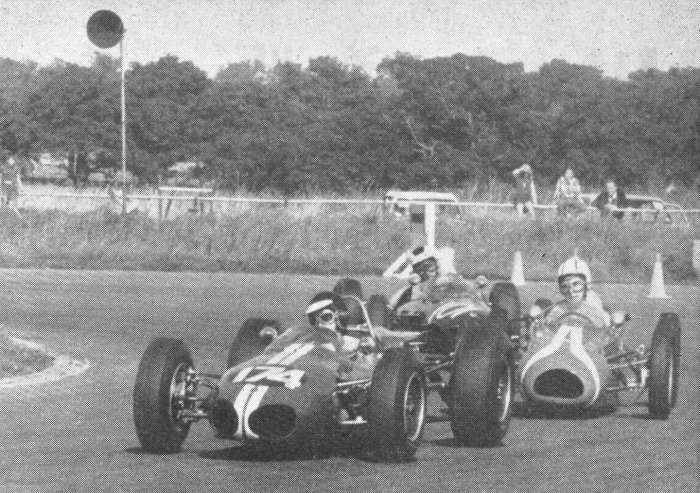
The GRD 374 was notable for a switch to a front radiator and full-width nose come configuration.
GRD375a
The GRD 375 at the 1975 Racing Car Show.

Graf

graf
graf
graf

Graf

Entered and driven by Franz Graf the Graf raced in the German F3 series in the mid sixties. Unusually it had a 1-litre Simca engine and it achieved some success in minor races including a win at Ulm (in a very poor field) and second at Mainz, both in 1967.

Drivers

1965 Franz Graf.

1966 Franz Graf.

1967 Franz Graf.

1968 Franz Graf.

Gozzoli

gozzoli
gozzoli
gozzoli

Gozzoli

Back to Italy again for this early 1970s contender, it was apparently totally conventional Nova-Ford powered chassis. It appeared in 1971 and then did a full season of the Italian F3 Championship racing in 1972 when prepared by Modena Corse. It only recorded two finishes from its 13 starts with a best placing of 7th at Monza.

Drivers

1971 Giuseppe Minozzi.

1972 Paulo Minozzi.

Ray

Ray
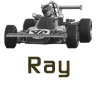
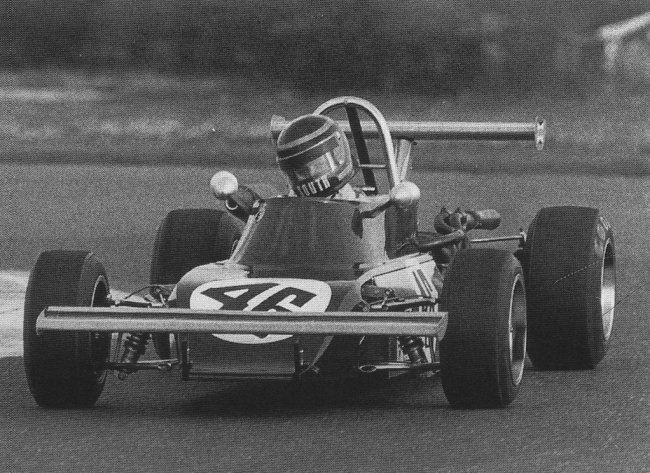
Stephen South in the Ray at Thruxton 1975.

Ray

Bert Ray has been involved in motor racing for many years now and for several years made his living as a fabricator making parts for other manufacturers such as Palliser as well as specialising in repairing other peoples accidents. He built his first car, a F Ford, in 1973 that was raced by ex-kart star Stephen South and in 1976 they both moved into F3. Over the years Ray has built a number of F Ford chassis that have always been competitive and frequently have been race winners but they have never been successful enough to challenge the dominance of manufacturers like Van Diemen.

1975

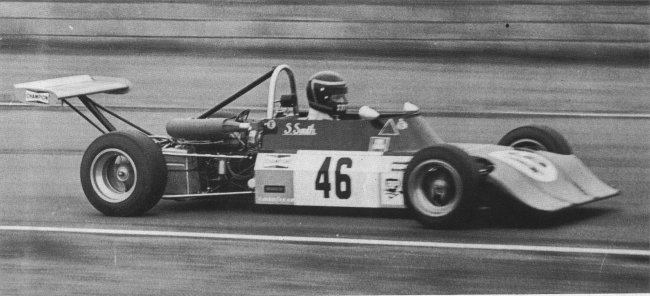
The 1975 Ray was designated either F375 or BR3 and was a monocoque design with a rear frame for the Toyota Novamotor. Suspension was double wishbone with outboard coils and dampers. The distinctive bodywork with its side radiators, high cockpit sides and full-width nose aerofoil certainly made it stand out although later in the season the nose design was changed (see above and left). Early results were promising with a 3rd at Aintree and a 5th at Brands Hatch but performance declined as the season progressed and although a F376 was announced for the following year Ray would not build another F3 car.

Drivers

1975 Stephen South.

1976 Luis Mara de Almenara (F375)

Ray75
Stephen South again showing a revised nose design at Crystal Palace 1975.

Ginetta

66b
The Ginetta G8.

Ginetta

Ginetta are most famous for their kit cars, their early models were based on Ford parts and the early cars were often successful in club racing especially the G4. The cars were designed and built by the four Walkett brothers, Bob, Ivor, Trevor and Douglas, at their base at Woodbridge in Suffolk, in the mid sixties they moved to Witham in Essex. More sports car with a competition bias followed and in 1964 a F3 chassis was built and work on a F2 car began. Later in 1969 a customer F Ford car, the G18, was built which showed some promise and another F3 car, the G19, based on the G18 was mooted but never built. In the same year Ginetta even announced the G20 a BRM V12 powered F1 car but this again never happened and Ginetta decided to concentrate on their kit cars and leave the world of single seaters.

1964

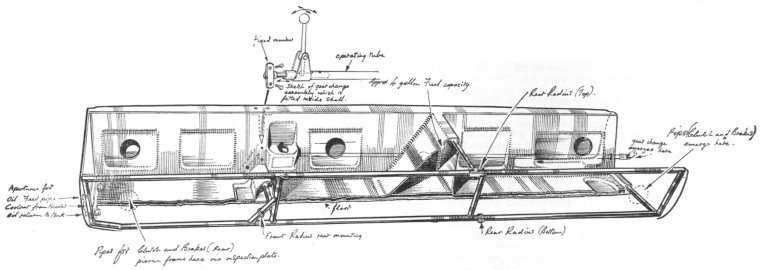
The G8 monocoque consisted of a steel frame made of 16 and 18 gauge tubing sandwiched between two layers of fibreglass. The steel frame then acted as an attachment point for the suspension, engine and gearbox. Steel sub-frames are added front and rear for attaching auxiliary components. Front suspension was by lower wishbones with rockers operating the inboard springs and dampers. Modified Triumph Herald uprights were used with an anti-roll bar inside the bodywork. Rear suspension employed reversed lower wishbones, a top link and twin radius rods with outboard springs and dampers, no rear anti roll bar was fitted initially. Rear uprights were Ginetta made magnesium units and the wheels (also of Ginetta make) were 13 inch. The engine was a Holbay-Ford with a 4-speed Hewland gearbox.
Three cars were built and Chris Meek showed the car had some promise but the problems of aligning the spaceframe accurately within the fibreglass tub and the sheer cost meant that Ginetta gave up on the project.

Drivers:
1964 Chris Meek.

66
The G8 was still being displayed at the 1966 Racing Car Show.
66a
Diagram of the Ginetta monocoque.