Race Report: Oulton Park, 31 March 1972

oulton

Race Report: Oulton Park, 31 March 1972

oulton

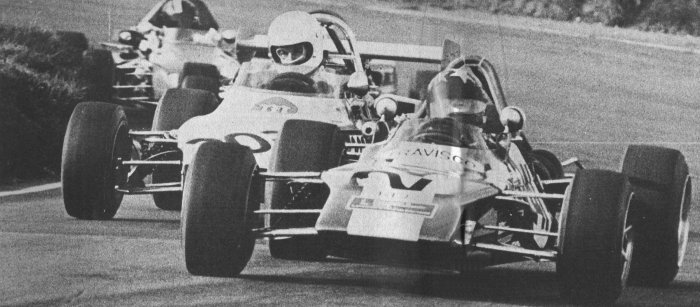
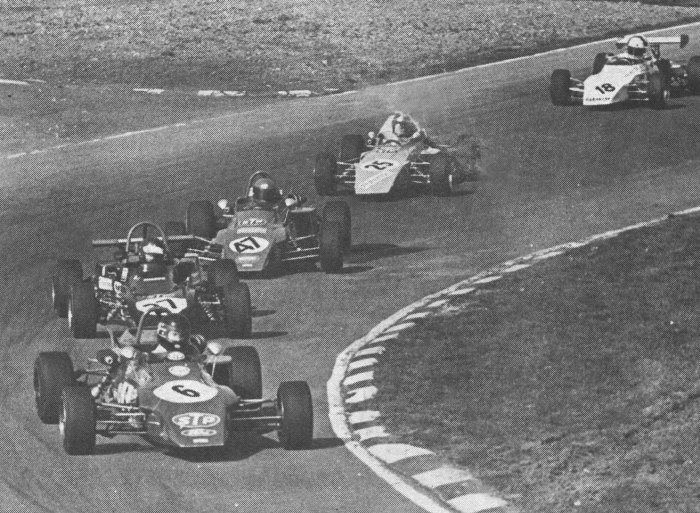
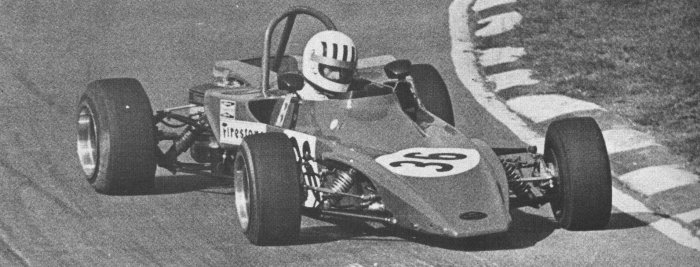
A good entry arrived at Oulton Park for this round of the Shell F3 Championship which was a support race for the European F2 round, the race taking place on Good Friday.

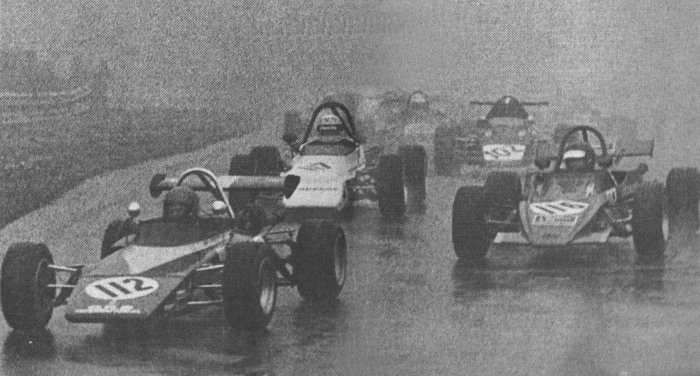
The F3 cars were greeted with pouring rain for their Thursday morning practice session and to many it seemed as if the rain had got into the timekeepers watches as several odd times were issued. The session did dry out a little towards the end and this was when the fastest times were set. Tom Pryce put his Royale RP11 on pole by an amazing 1.6 seconds which was perhaps a little generous although most felt he was the fastest man on the track. Second fastest was Andy Sutcliffe in the works GRD who put in a lot of laps, setting the same time was Tony Trimmer’s Lotus 73 which is waiting for a revised rear suspension, nevertheless Trimmer was pleased with the car’s progress. Roger Williamson headed row two disappointed that his March had run out of petrol during the drier period, next up setting identical times were the Ensigns of Colin Vandervell and Rikki von Opel and Peter Hull’s Brabham BT38. The New Zealander was another who missed the end of the session when he spun off at Druids when a radius rod on his Brabham broke.

Mike Walker was one driver who most felt had gone several seconds quicker than the time he was credited with, he was complaining of bad front wheel patter in his Ensign, observers around the track supported his comments. James Hunt also felt he had been hard-done-by as regards his time whilst Andy Sutcliffe lost time from experimenting with wings and having a faulty master switch dealt with. Others suffering sundry problems were Tony Brise who had bump steer and erratic braking on his Brabham and Chris Skeaping who hit the Armco at the Esses, the Chevron being taken back to the works at Bolton for a precautionary check. Barrie Maskell was also less than happy when after going very quickly in the wettest period, despite a lack of brakes, he had to give his car up to Geddes Yeates whose own car had been delayed after the Travisco transporter broke down. The JPS Lotus team missed a trick when they left early unaware that there was an untimed session later in the day which was dry which meant they had no chance to set up the 73s for the better weather.

Come the start of the race the track had virtually dried out except for the odd damp patch and the entire field started on slicks. Williamson made a demon start and tried to dive between Sutcliffe and Pryce who were ahead of him on the grid, realising the gap was closing on him Williamson backed off but not before the rear wheels of the GRD and Royale had hit the front wheels of the March. After the race it was found Williamson had cracked a rim and was perhaps fortunate the tyre stayed on during the race. Through Old Hall it was Pryce from Williamson, and onto Cascades where there seemed to be some midfield contact although everyone kept going. Coming into Esso however it all went wrong; Hunt, Trimmer and Sutcliffe all contrived to hit each other, the March and the GRD were instant retirements with damaged suspension, Trimmer and the innocent Hull were both delayed, especially the Brabham and Williamson also lost a little time.

All this meant that at the end of lap 1 Pryce had a big lead over Williamson, Vandervell, Ashley, Evans, von Opel, Matthews and Walker. Trimmer, after his delay, was next just ahead of Maskell who still had no brakes to speak of. Poor Peter Hull was down in 23rd place which was at least better than Gambs and Harness who were both out, oddly for the same reason, broken gear linkages. Lap 2 saw Evans pass Ashley and Matthews fall back behind Walker, Trimmer and Maskell whilst on the following lap Kuwashima spun at Knicker Brook and continued last.
By lap 4 out at the front Pryce continued to extend his lead and Williamson was comfortable in second, not going so well was Vandervell who hit the barrier at Esso after a tire deflated and on the next lap Sutcliffe ran wide at Cascades also striking the Armco. Walker was now third from von Opel, Evans and Maskell who were starting a battle that would last the rest of the race. Pryce’s easy run all came to nothing on lap 10 at Knicker Brook when he spun the Royale resuming in 17th spot, this left Williamson in a secure lead despite the best efforts of Walker to narrow the gap.

For the last few laps Williamson took it easy and crossed the line 2.2 seconds ahead of Walker. Third was another matter, von Opel taking the place on lap 12, Maskell then passed the Ensign round the outside at Knicker Brook on lap 19, then on the last lap it was von Opel ahead along Top Straight until he ran wide at Lodge knocking the nosecone off Maskell’s car in the process. This left Maskell to take third while von Opel and Evans virtually dead heated for fourth, the Ensign driver getting the verdict. Peter Hull made it back up to an excellent 6th despite not having a top gear, next up came Tony Trimmer who just managed to hold off Tony Brise who was suffering from an engine that was loosing power. Pryce’s unhappy race finished at Cascades on the last lap when he tore the suspension off one side of the Royale.

f3 HISTORY

RACES

Race Report: Oulton Park, 31 March 1972

Race Heat 1

1 Vittorio Brambilla

Birel Alfa Romeo 20:09.40

2 Fabrizio Noe

Lotus-Ford 69 20:09.50

3 Luigi Fontanesi

Tecno-Ford 20:13.10

4 Carlo Franchi (Gimax)

De Sanctis-Alfa Romeo 20:23.40

Race Heat 2

1 Giovanni Lo Voi

Brabham-Ford BT28 15:05.00

2 Adelmo Fossati

Brabham BT28 15:05.00

3 Patrice Compain

Martini-Ford MW7 15:21.00

4 Manfred Möhr

Lotus-Ford 15:34.10

5 Marcello Gallo

Brabham BT28

Race Final

1 Vittorio Brambilla

Birel Alfa Romeo 30:44.30 144.318

2 Marcello Gallo

Brabham BT28 30:44.34

3 Fabrizio Noe

Lotus-Ford 69 30:45.10

4 Adelmo Fossati

Brabham BT28 30:55.40

5 Patrice Compain

Martini-Ford MW7 31:08.00

6 Carlo Franchi (Gimax)

De Sanctis-Alfa Romeo 31:11.50

7 Manfred Möhr

Lotus-Ford 31:59.60

8 Giovanni Lo Voi

Martini-Ford MW7 31:08.00

Race Report: Snetterton, 26 March 1972

snetterton

Race Report: Snetterton, 26 March 1972

snetterton

33 cars arrived at Snetterton for round two of the Lombard North Central round, sadly they would only be given 10 laps to strut their stuff.

The track was damp in places for practice and wets were the order of the day for all the drivers, fastest was Mike Walker’s Ensign LN2 from Andy Sutcliffe (GRD 372) and Chris Skeaping (Chevron B20). Row two saw the Palliser WDF3 of Damien Magee sitting next to the Brabham BT38 of Tony Brise who fitted a rear wing when he found the back end of the car a little loose. Rousselot headed row three his GRD running better than of late, whilst next runner Tom Pryce was trying a rear wing but found it was hampering his straight line speed. Roger Williamson sat on the outside of the row, he like all the March 723 runners was unhappy with the handling of the car, the wide track at the front causing wandering problems. Drivers further down than normal were Ian Ashley on row nine with engine and tyre problems and Peter Hull who only managed one lap after a brake pipe failed on his Brabham.

It was Mike Walker who put his Ensign into the lead at Riches on what was now a dry track whilst the next dozen or so cars furiously slipstreamed each other around the lap, over the line at the end of lap one it was Walker from Magee with a damaged nose, Sutcliffe, Brise, Williamson, Maskell, Purley and Skeaping. Lap 2 saw Magee put the wheels of the Palliser on the grass at the Esses immediately spinning, this allowed Walker and Sutcliffe to get away from Maskell and Williamson who were delayed by the gyrating Irishman. Walker began to pull away from Sutcliffe despite grabbing brakes and a problem with third gear selection, the GRD in turn being well clear of Maskell, Williamson, Brise, Pryce and Purley. Brise put his Brabham in third place on lap 5 but it was Williamson again on lap 6, the March was going very quickly despite its wayward handling. It was all change on lap 7 when Walker had to pull off as his engine lost oil pressure along the Norwich Straight and he switched it off rather than risk damaging it.
This left a surprised Sutcliffe out in front with Williamson starting to edge away from the chasing group in second, Williamson really starting flying in the last few laps in an attempt to catch Sutcliffe but the GRD took the flag 3 seconds ahead of the March. It had been Maskell in third until lap 9 when worsening gear selection caused him to spin and then retire when all the gears disappeared. It was Brise who took third ahead of Pryce, Purley and a fast closing von Opel.

f3 HISTORY

RACES

Race Report: Snetterton, 26 March 1972

Race Heat 1

1 Vittorio Brambilla

Birel Alfa Romeo 20:09.40

2 Fabrizio Noe

Lotus-Ford 69 20:09.50

3 Luigi Fontanesi

Tecno-Ford 20:13.10

4 Carlo Franchi (Gimax)

De Sanctis-Alfa Romeo 20:23.40

Race Heat 2

1 Giovanni Lo Voi

Brabham-Ford BT28 15:05.00

2 Adelmo Fossati

Brabham BT28 15:05.00

3 Patrice Compain

Martini-Ford MW7 15:21.00

4 Manfred Möhr

Lotus-Ford 15:34.10

5 Marcello Gallo

Brabham BT28

Race Final

1 Vittorio Brambilla

Birel Alfa Romeo 30:44.30 144.318

2 Marcello Gallo

Brabham BT28 30:44.34

3 Fabrizio Noe

Lotus-Ford 69 30:45.10

4 Adelmo Fossati

Brabham BT28 30:55.40

5 Patrice Compain

Martini-Ford MW7 31:08.00

6 Carlo Franchi (Gimax)

De Sanctis-Alfa Romeo 31:11.50

7 Manfred Möhr

Lotus-Ford 31:59.60

8 Giovanni Lo Voi

Martini-Ford MW7 31:08.00

Race Report: Nogaro, 26 March 1972

nogaro

Race Report: Nogaro, 26 March 1972

nogaro

This was the first round of the French F3 Championship and was run over two 30 lap heats with the winner being decided on aggregate times.

The first heat was dominated by the two works Alpine-Renaults of Alain Serpaggi and Michel Leclère. The only opposition came from José Dolhem in his Martini MW7 and once he had retired with broken suspension Serpaggi took an easy 30 second victory from Leclère. Phillipe Albera took third in his Martini Mk9 from Patrice Compain (March 723) who recovered well after spinning on lap 2.
The second heat saw Leclère pull away in front this time whilst Serpaggi got involved in a battle with José Dolhem, Phillipe Albera and Jacques Coulon (Martini). Lap 6 saw Serpaggi retire the Alpine with a broken steering arm, so at the finish it was Leclère from Albera by 0.5 seconds from Coulon who in turn lead Dolhem by 0.1 seconds. Beguin’s Martini was another 30 seconds down with the March 713Ms of Alzerat and de Henning a lap down.

On aggregate it was Leclère from Beguin, Alzerat, de Henning and Max Bonnin (Brabham BT35).

f3 HISTORY

RACES

Race Report: Nogaro, 26 March 1972

Race Heat 1

1 Vittorio Brambilla

Birel Alfa Romeo 20:09.40

2 Fabrizio Noe

Lotus-Ford 69 20:09.50

3 Luigi Fontanesi

Tecno-Ford 20:13.10

4 Carlo Franchi (Gimax)

De Sanctis-Alfa Romeo 20:23.40

Race Heat 2

1 Giovanni Lo Voi

Brabham-Ford BT28 15:05.00

2 Adelmo Fossati

Brabham BT28 15:05.00

3 Patrice Compain

Martini-Ford MW7 15:21.00

4 Manfred Möhr

Lotus-Ford 15:34.10

5 Marcello Gallo

Brabham BT28

Race Final

1 Vittorio Brambilla

Birel Alfa Romeo 30:44.30 144.318

2 Marcello Gallo

Brabham BT28 30:44.34

3 Fabrizio Noe

Lotus-Ford 69 30:45.10

4 Adelmo Fossati

Brabham BT28 30:55.40

5 Patrice Compain

Martini-Ford MW7 31:08.00

6 Carlo Franchi (Gimax)

De Sanctis-Alfa Romeo 31:11.50

7 Manfred Möhr

Lotus-Ford 31:59.60

8 Giovanni Lo Voi

Martini-Ford MW7 31:08.00

Race Report: Brands Hatch, 19 March 1972

brands - 1

Race Report: Brands Hatch, 19 March 1972

brands - 1

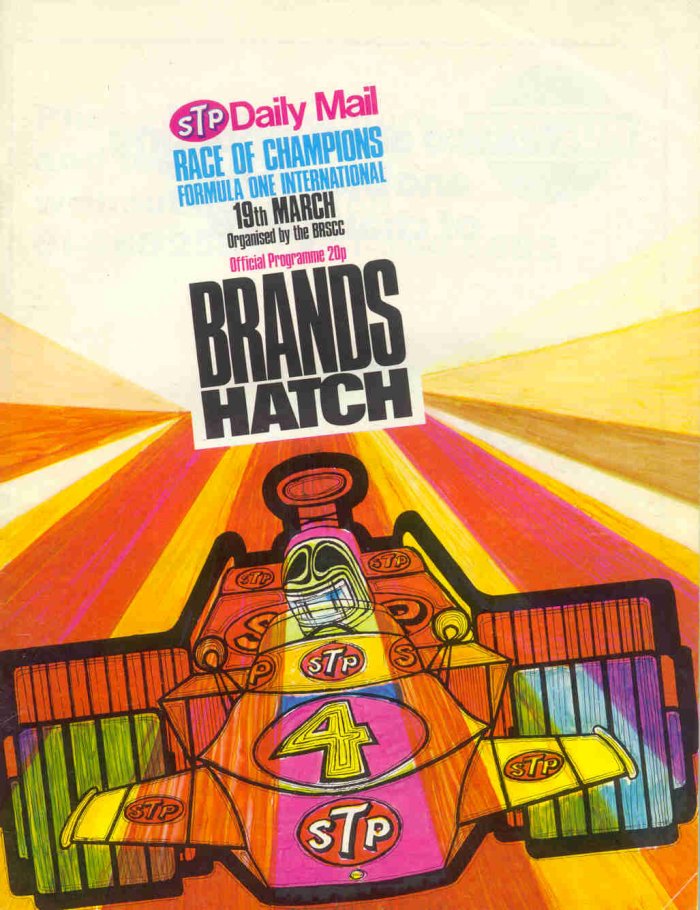
This was the first round of the Shell Super Oil Championship widely regarded as the most prestigious of the UK championships so it was not surprising that nearly 40 cars arrived to race on the Brands Hatch GP circuit. The fact that it was also one of the support races for the F1 Race Of Champions helped as well as it would give the F3 drivers a chance to show what they were made of in front of the F1 Team Managers.

Practice was on Friday and Saturday, several drivers weren’t ready for the Friday session but they didn’t miss a lot when much of the circuit was liberally covered in oil after Mo Harness lost an oil line on his Brabham through bottoming. Tom Pryce was going very well in the Royale RP11 looking both smooth and fast and by the end of practice, despite limiting the number of laps done to save his only engine, it was the Welshman who took pole position. Lining up next to Pryce on the front row was Barrie Maskell,

again going very quickly in his Lotus 69 despite an off at Westfields and James Hunt who was much happier in his March after some midweek testing. Row two saw the second Royale of Ian Ashley sitting next to the new Ensign of Colin Vandervell whilst row three had Mike Walker’s Iberia Airlines Ensign from Tony Trimmer who was still getting used to the Lotus 73 and Peter Hull who missed Friday’s session to go testing at Goodwood and was reaping the benefit. Hull’s Brabham BT38 had been more badly damaged than first realised at Mallory and the car had to go back to the factory to have the tub rebuilt. Bob Evans who had discovered his March had been incorrectly fitted with F2 springs and anti-roll bars was much happier now the correct items were installed led row four from Peter Lamplough who was pleased with the new Merlyn.
Row five occupants were David Purley who lost time in his Ensign with a split radiator, Chris Skeaping in the works Chevron and Andy Sutcliffe who lost a lot of time with a gearbox offering only second and third gears. The next row had Geddes Yeates (Lotus 69) from a brake troubled Damien Magee and Rikki von Opel who hadn’t done himself any favours when after being black-flagged for a loose nosecone he took a shortcut over the Clearways grass which damaged his radiator and bodywork. The second Lotus 73 of Bernard Vermilio suffering from an incorrectly adjusted clutch pedal sat on row seven with the disappointing Rousselot who couldn’t seem to get his GRD running as quickly as he had managed to pedal his Brabham the previous year.
Mo Harness was next, after curing his oil pipe problems, and was going well in his first F3 outing, and was followed by Bengt Radmyr (Lotus 69). Neil Ginn (GRD 372) who split an oil tank sat on row nine along with Patrice Compain who was still sorting his new March and Paul Butler (Brabham BT28). Stan Matthews should have been next but a big off at South Bank resulted in a badly damaged March and a broken big toe. Moving up a place as a result was Roger Williamson who set his time in the slow Friday session, on Saturday when by his own admission he was going too quickly on cold tyres Roger lost the March at Westfield badly damaging a rear corner. A quick trip back to the March factory at Bicester saw the car ready to race on Sunday as good as ever with a new Holbay also added. Final qualifiers were Reg James (Brabham BT28) who had piston problems, Matt Spitzley (March 713M), Val Musetti (Royale RP11), a very unhappy Brendan McInerney (March 723), Jeremy Gambs (Ensign) who had an run in with John MacDonald and Davy Powers (March 723).
Fastest non-qualifier and first reserve was Tony Brise who only managed five laps in his new Brabham BT38, next up was the slow Eifelland 23 of Willi Deutsch which was actually a March 723 with a new nosecone from the March 713M of John MacDonald who had suffered engine problems on Friday and only done three laps and then on Friday made contact with Gambs damaging his suspension. Final runners were the second, and even slower, Eifelland of Hannelore Werner, the Alpine of Linguard Goulding, the very slow March 723 of Robin Smythe and the appallingly slow Merlyn of Dalqvist.

The fastest 30 lined up on the grid for the 20 lap race but before the flag fell Maskell threw his arm in the air, a lead had fallen off his starter motor and his engine was silent, further back on the grid von Opel was also in starting difficulties. The rest of the field took off managing to avoid the stricken Maskell who received a push and a 60 second penalty, Pryce took the lead into Paddock and held on so that at the end of lap one it was the Royale with a slight lead from Vandervell, Hunt, Ashley, Evans Sutcliffe, Lamplough, Hull, Trimmer, Yeates, Walker and Purley. At the very back McInerney found his misery compounded by a one minute penalty for jumping the start. By lap 3 Pryce already had a five second lead over Vandervell, Ashley, Hunt and Evans who seemed more concerned about squabbling for second than chasing the fast disappearing Royale, Lamplough was next ahead of Sutcliffe, Hull and Trimmer. In the middle of the field Williamson had pulled up to 13th with strict instructions from Tom Wheatcroft to take it carefully when overtaking, nonetheless the March was progressing well.
Lap 5 saw Hunt pass Vandervell and Trimmer, despite not having a clutch, had moved the Lotus up to sixth but had Lamplough and a fast closing Hull to contend with. Over the next few laps Pryce continued to consolidate his lead but behind him the battle for second was getting closer as more cars joined in. Hunt and Vandervell were constantly swopping second and third but then Ashley took second to make it a Royale one-two for a few laps, also in the group were Hull, Trimmer, Walker and Purley with Lamplough beginning to fall away. Williamson and Sutcliffe were only a short distance behind this bunch and both were making determined efforts to join in the fun. Further back Magee led Vermilio, Yeates and Skeaping from von Opel who was shortly to retire with overheating, Maskell was next up, making good progress after his startline problems.
The final ten laps saw more arguing over second although Pryce continued out in front on his serene way. There were yellow flags at South Bank on lap 16 as the Ensigns of Walker and Vandervell made contact, Walker was out with radiator damage and Vandervell dropped to eighth, second now was Evans from Ashley, Hull, Hunt (a few lengths back), Trimmer and Williamson. Nothing was going to stop Pryce and at the end of 20 laps he took the chequered flag some 15 seconds up on Hull who took an excellent second on the race debut of his BT38, Evans took third despite gearbox problems from Ashley, Trimmer, Hunt and Williamson.

There was more drama to come after the race in the scrutineering bay, the first three cars were weighed and found to be underweight, fourth placed Ashley was then checked, his GRD was underweight and his airbox was leaking. Trimmer and his Lotus had gone home but anyway his car was ineligible for points since the Lotus didn’t carry Shell stickers (a requirement to score points) due to a sponsorship clash. All this meant that sixth place Hunt whose car was checked and found legal should have been declared the winner. However after a lot of argument it was decided that it would be impossible to find 6 legal cars as most of the teams had by now gone home and with all the checking and rechecking over a three hour period cars could have been tampered with. It was decided to fine the entrants of the illegal cars £25 each and let the results stand with the exception of Ashley who was disqualified because of his faulty airbox. It was also decided to get the weighbridge certified just to be on the safe side which was just as well for a week later it was officially checked and found to be inaccurate so the results were declared as below with a lot of official red faces.

f3 HISTORY

RACES

Race Report: Brands Hatch, 19 March 1972

Race Heat 1

1 Vittorio Brambilla

Birel Alfa Romeo 20:09.40

2 Fabrizio Noe

Lotus-Ford 69 20:09.50

3 Luigi Fontanesi

Tecno-Ford 20:13.10

4 Carlo Franchi (Gimax)

De Sanctis-Alfa Romeo 20:23.40

Race Heat 2

1 Giovanni Lo Voi

Brabham-Ford BT28 15:05.00

2 Adelmo Fossati

Brabham BT28 15:05.00

3 Patrice Compain

Martini-Ford MW7 15:21.00

4 Manfred Möhr

Lotus-Ford 15:34.10

5 Marcello Gallo

Brabham BT28

Race Final

1 Vittorio Brambilla

Birel Alfa Romeo 30:44.30 144.318

2 Marcello Gallo

Brabham BT28 30:44.34

3 Fabrizio Noe

Lotus-Ford 69 30:45.10

4 Adelmo Fossati

Brabham BT28 30:55.40

5 Patrice Compain

Martini-Ford MW7 31:08.00

6 Carlo Franchi (Gimax)

De Sanctis-Alfa Romeo 31:11.50

7 Manfred Möhr

Lotus-Ford 31:59.60

8 Giovanni Lo Voi

Martini-Ford MW7 31:08.00

Race Report: Monza, 12 March 1972

monza_12_3

Race Report: Monza, 12 March 1972

monza_12_3

This was the first round of the Italian F3 Championship and it was originally planned to run it to the “breakaway” Italian regulations which allowed a 23mm air restrictor, however intervention by a CSI representative saw the normal 21.5mm restrictor fitted to all cars.

The race was held over two heats and a final in the pouring rain on the junior Monza circuit. Heat one went to Vittorio Brambilla after Jochen Mass retired his March 723 with a broken gear lever. The two Scuderia Italia Brabham BT35s of Pico Pina and Adelmo Bignani came second and third. The works Tecno of Luigi Fontanesi won heat two from a gaggle of BT35s, Italian lady racer Lella Lombardi took ninth in her Lotus 69.

Pico Pina took an easy victory in the final winning by 20 seconds from Brambilla, Fontanesi was a further 16 seconds down in third.

f3 HISTORY

RACES

Race Report: Monza, 12 March 1972

Race Heat 1

1 Vittorio Brambilla

Birel Alfa Romeo 20:09.40

2 Fabrizio Noe

Lotus-Ford 69 20:09.50

3 Luigi Fontanesi

Tecno-Ford 20:13.10

4 Carlo Franchi (Gimax)

De Sanctis-Alfa Romeo 20:23.40

Race Heat 2

1 Giovanni Lo Voi

Brabham-Ford BT28 15:05.00

2 Adelmo Fossati

Brabham BT28 15:05.00

3 Patrice Compain

Martini-Ford MW7 15:21.00

4 Manfred Möhr

Lotus-Ford 15:34.10

5 Marcello Gallo

Brabham BT28

Race Final

1 Vittorio Brambilla

Birel Alfa Romeo 30:44.30 144.318

2 Marcello Gallo

Brabham BT28 30:44.34

3 Fabrizio Noe

Lotus-Ford 69 30:45.10

4 Adelmo Fossati

Brabham BT28 30:55.40

5 Patrice Compain

Martini-Ford MW7 31:08.00

6 Carlo Franchi (Gimax)

De Sanctis-Alfa Romeo 31:11.50

7 Manfred Möhr

Lotus-Ford 31:59.60

8 Giovanni Lo Voi

Martini-Ford MW7 31:08.00

Race Report: Mallory Park, 12 March 1972

mallory

Race Report: Mallory Park, 12 March 1972

brands

This was the first round of the 1972 Forward Trust Championship and 23 cars arrived at Mallory for this supporting event to the European F2 Championship race. There were two practice sessions on Saturday, the first one was slightly damp so all the quick times came in the later session. Times were generally 0.5 seconds slower than the lap record due, it was felt, to the new rim width restrictions introduced for this year.

Fastest at the end of practice was a delighted Barrie Maskell who was driving one of the Travisco Lotus 69s (the ex-Geddes Yeates car) and even though his first acquaintance with it was on Saturday morning he found the handling suited his style perfectly. Brands Hatch winner Andy Sutcliffe in his GRD was next with Roger Williamson’s March 723 completing the front row, Williamson not being happy with the handling of his car. James Hunt was fourth quickest in his March 723 despite too much oversteer that would hopefully be eliminated for the race, next to him was the works Royale RP11 of Ian Ashley who was also in handling bothers and had a couple of spins to his name.

Andy Sutcliffe made an excellent getaway and led at the end of lap one from Williamson, Maskell, Hunt Evans and Yeates who had already opened out a gap from Ashley, Magee, Rousselot and Ginn. Williamson put his March into the lead on lap 2 but he was still suffering from handling problems and was unable to pull away from the rest. On lap 6 Williamson, Maskell and Sutcliffe were three abreast along Stebbe and into the Esses it was Maskell in the Lotus who braked last and took the lead. Maskell immediately began to pull away from the others, his cause helped when Sutcliffe found himself sharing the same piece of track with the slow March of Powers at the hairpin, the resultant bent wishbone creating terrible understeer for the rest of the race.
Williamson meanwhile was falling back with tyre problems and Hunt was quickly past him on lap 12, the works March then targeting Sutcliffe. Hunt quickly caught the GRD but was unable to find away past and the two cars fought over second for the rest of the race. So at the finish Maskell took an excellent victory from Sutcliffe and Hunt, Yeates took fourth from Williamson on lap 14 with the March finishing fifth, 1.2 seconds ahead of Evans. Seventh was a delighted Trimmer who had moved confidently through the field from the start, he felt the Lotus had a lot of potential but there was still a lot of work to be done on it first.
After the race the top four finishers were given vacuum tests on their air boxes, once again Hunt’s failed and he was disqualified moving everyone from fourth down up a place.

f3 HISTORY

RACES

Race Report: Mallory Park, 12 March 1972

Race Heat 1

1 Vittorio Brambilla

Birel Alfa Romeo 20:09.40

2 Fabrizio Noe

Lotus-Ford 69 20:09.50

3 Luigi Fontanesi

Tecno-Ford 20:13.10

4 Carlo Franchi (Gimax)

De Sanctis-Alfa Romeo 20:23.40

Race Heat 2

1 Giovanni Lo Voi

Brabham-Ford BT28 15:05.00

2 Adelmo Fossati

Brabham BT28 15:05.00

3 Patrice Compain

Martini-Ford MW7 15:21.00

4 Manfred Möhr

Lotus-Ford 15:34.10

5 Marcello Gallo

Brabham BT28

Race Final

1 Vittorio Brambilla

Birel Alfa Romeo 30:44.30 144.318

2 Marcello Gallo

Brabham BT28 30:44.34

3 Fabrizio Noe

Lotus-Ford 69 30:45.10

4 Adelmo Fossati

Brabham BT28 30:55.40

5 Patrice Compain

Martini-Ford MW7 31:08.00

6 Carlo Franchi (Gimax)

De Sanctis-Alfa Romeo 31:11.50

7 Manfred Möhr

Lotus-Ford 31:59.60

8 Giovanni Lo Voi

Martini-Ford MW7 31:08.00

Race Report: Brands Hatch, 5 March 1972

brands

Race Report: Brands Hatch, 5 March 1972

brands

The entry for this opening Lombard Championship round was a little disappointing as neither of the two new works Ensigns were ready and there had been some delays at Brabhams so there were no new BT38s to be seen.

Practice was held in very wet conditions and despite suffering from a heavy cold it was Andy Sutcliffe in the works GRD 372 in pole position, an excellent achievement for a manufacturer in only its third race. Next to the GRD was Damien Magee in the ex-Peter Lamplough Palliser now employing a new Rowland lump and Ian Ashley who was using Tom Pryce’s Royale RP 11 whilst waiting for his own to be completed. Row two saw James Hunt in the works March 723 in its new red STP colours, Hunt was suffering badly with his visor misting up in the rain, David Purley sat next to the March in his Ensign.

Formula Three debutante Paul Butler was going very well in his ex-Alan Jones Brabham BT28 to head row three from Stan Matthews in his new March 723 and Chris Skeaping in the works Chevron B20 which, strangely given the conditions, wasn’t using a rear wing. Row four comprised John MacDonald’s March 713M and Val Musetti’s Royale RP 11. Bob Evans was on the fifth row with his brand new March 723 which was showing a worrying appetite for fuel pumps destroying two in as many laps. A pair of GRD 372s came next, Pierre-François Rousselot disappointed to be so far down as was Neil Ginn. Final runner was Welshman Davy Powers in his new March 723 whilst non-starters were Jeremy Gambs who knocked a corner off his new Ensign with a spin on the grass opposite the pits and Reg James in his ex-David Purley Brabham BT28 was unlucky to do similar damage to his car on the pit wall when trying to avoid Gambs.

Conditions were appalling for the start of the 15 lap race, from the pits it was impossible to see either Druids or Clearways due to a low lying mist and it was still raining heavily. It was the three front row cars who got away the best and at the end of the first lap they had already pulled out a gap on the rest of the field with Sutcliffe leading Magee and Ashley. Purley was in fourth from Hunt, who was trying an open faced helmet, next up were Butler, MacDonald, Matthews, Evans and Skeaping who had made a slow start. Hunt passed Purley on lap two but his engine was beginning to sound rough with water in the electrics and he could make no impression on the leaders. Further back Chris Skeaping had passed several cars and was now looking for a way past Butler’s Brabham and MacDonald’s March. Magee tried to pass Sutcliffe’s GRD on lap 3 but couldn’t complete the manoeuvre and fell back and was nearly overtaken by Ashley. The Royale continued to harass the Palliser and on lap 9 Ashley made it up to second but it only lasted for a lap as Ashley became the next victim of waterlogged electrics and Magee retook his second place. Hunt still held fourth but Purley was close behind him and Skeaping was catching both of them. As the remaining laps unwound Sutcliffe pulled away to a 4.6 victory to claim a maiden win both for himself and GRD, Magee and Ashley finished second and third with Hunt just hanging onto fourth.

f3 HISTORY

RACES

Race Report: Brands Hatch, 5 March 1972

Race Heat 1

1 Vittorio Brambilla

Birel Alfa Romeo 20:09.40

2 Fabrizio Noe

Lotus-Ford 69 20:09.50

3 Luigi Fontanesi

Tecno-Ford 20:13.10

4 Carlo Franchi (Gimax)

De Sanctis-Alfa Romeo 20:23.40

Race Heat 2

1 Giovanni Lo Voi

Brabham-Ford BT28 15:05.00

2 Adelmo Fossati

Brabham BT28 15:05.00

3 Patrice Compain

Martini-Ford MW7 15:21.00

4 Manfred Möhr

Lotus-Ford 15:34.10

5 Marcello Gallo

Brabham BT28

Race Final

1 Vittorio Brambilla

Birel Alfa Romeo 30:44.30 144.318

2 Marcello Gallo

Brabham BT28 30:44.34

3 Fabrizio Noe

Lotus-Ford 69 30:45.10

4 Adelmo Fossati

Brabham BT28 30:55.40

5 Patrice Compain

Martini-Ford MW7 31:08.00

6 Carlo Franchi (Gimax)

De Sanctis-Alfa Romeo 31:11.50

7 Manfred Möhr

Lotus-Ford 31:59.60

8 Giovanni Lo Voi

Martini-Ford MW7 31:08.00

Ralt

Ralt

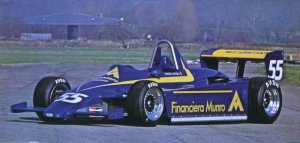
The elegant lines of the Ralt RT3/82.

Ron Tauranac was the designer behind the Formula 1 World Championship winning Brabham Grand Prix cars of the 1960’s and when Bernie Ecclestone bought out the company and after doing a number of freelance projects Tauranac decided to set up business on his own account. Ron started in racing in 1946 in his native Australia when with his brother Austin Lewis (Ron + Austin + Lewis + Tauranac= RALT) he began building cars for local competition events.

Ron Tauranac in the Ralt Mk1 in Australia in the early 1950s. Following him is Stan (father of Alan) Jones in his Maybach Special.

Ron himself competed in hillclimbs during the 1950s where a fellow competitor and later friend was Jack Brabham. By 1959 Ron was ready to accept Jack’s invitation to join him in England to set up Motor Racing Developments and begin the long run of very successful works and customer cars. Numerous race wins were taken in F1, F2 and F3 with both Jack Brabham and Denny Hulme winning the World Drivers Championship and Brabham taking the Constructors Cup. For several seasons Brabham dominated F2 and especially F3 as customers favoured the cars’ blend of simplicity, ease of maintenance and most importantly their sheer competitiveness. Eventually when Jack retired Ron bought Brabham and ran it for a year before selling it onto Bernie Ecclestone.
After a period that included designing the Trojan F1 and F5000 cars and working for Frank Williams Ron decided he wanted to get back into designing customer cars so in 1974 Tauranac set up the Ralt factory at Woking in Surrey and in 1975 the first Ralt, the RT1, was produced. The design philosophy behind the RT1 was to build a strong, reliable and easily maintained customer car that would be eligible for a number of classes, primarily Formula 2 and 3, and in the USA Formula Atlantic. Such was the success of the Ralt marque that by 1984 the 500th Ralt was delivered. In 1988 March bought out Ralt and Tauranac stayed on as a consultant, for the next couple of years March continued to win a lot of races but into the early nineties the Ralt star faded along with that of March. In the early nineties the 93C and the 94C turned out to be complete disasters and the Ralt name dropped out of F3 with hardly a ripple. At the end of the decade there was a surprise return to racing and although early results were disappointing Ralt returned to the UK championship in 2002.

1975

Larry Perkins in the original RT1 at Thruxton in 1975.

The first F3 Ralt, the RT1, consisted of a 16-gauge L72 aluminium monocoque with a steel subframe behind the cockpit. This consisted of two tetrahedron frames that ran to the bottom of a square frame that attached to the Hewland gearbox, a pair of tubular brackets secured the engine to the back of the tub. Additional braces located the top of the frame to the engine adaptor plate. Double wishbone suspension with outboard springs and dampers was employed at the front whilst a single top link, reversed bottom wishbone and twin radius rods were to be found at the rear, also with outboard springs and dampers. The radius rods were attached to the outer corners at the rear of the tub via steel plates. The front of the car used a large full width fibreglass nosecone whilst a wing was attached to the gearbox at the rear via a tubular frame. Brakes were solid 10.5 in. discs front and rear.
The car was on the pace immediately with Larry Perkins going well in the UK winning twice at Brands Hatch as well as taking a first at Monza and Bertram Schäfer taking a number of top three places in the German Championship including a win at Ulm.
Track: front 50.25 ins. rear 51 ins.

1976

Alessandro Pessenti-Rossi at Vallelunga in a European F3 round 1976

A number of small changes were introduced for 1976, the most noticeable was a new nose cone design with rounder lines and an adjustable splitter. In addition the forward braces for the roll hoop were repositioned closer to the hoop, presumably for driver comfort. The track was also narrowed to 47.375 ins. at the front and 48.5 ins. at the rear.
Results were good without being spectacular, once again Bertram Schäfer went very well taking three wins.

Geoff Brabham in his RT1 in 1977

For 1977 Tauranac introduced a few more small changes to his design, new elliptical bodywork was fitted. The intention had been to use this from the beginning but Tauranac held off as he felt customers would not like it as it made the car look bigger than it actually was. In addition changes to the technical regs meant that the rear wing now attached to the rear of the gearbox by a large diameter tubular steel crossbeam that doubled as the oil catch-tank.
The RT1 seemed to hit its stride in 1978 and although there were only two wins in the UK for Geoff Brabham on the continent the Ralt took nineteen major wins with Anders Olofsson taking the runner-up spot in the European Championship and won the Swedish crown whilst Elio de Angelis took the laurels in Italy although two of his four wins came in a Chevron.

1978

There was a relatively major redesign carried out to the engine spaceframe for 1978. In effect the twin tetrahedrons were flipped so that instead of the main spar running along the bottom of the tub with the “hypotenuse” going from the base of the roll hoop to the bottom of the gearbox, the main spar now ran from the base of the roll hoop to the top of the gearbox with the “hypotenuse” going from the bottom of the tub to the top of the gearbox. The square frame around the gearbox was replaced with a cast aluminium crossbeam bolted to the top of the gearbox to which the top link and damper were mounted. A cast magnesium bracket bolted to the bottom of the gearbox to take the lower wishbone. The radius rods now attached to the top and bottom of the tetrahedrons where they were bolted to the tub. The lower radius rod had a choice of three mounts to adjust the rear castor. The wishbone design was changed with an additional pair of plates to take the rearward attachment for the lower radius rod, previously it had been located on the wishbone via a clevis bolt.
Some teams tried fitting the wide track F Atlantic suspension which seemed to make the car more stable and improved its handling in mid-speed corners. Also some teams fitted adjustable roll bars and went to great lengths to lighten the cars.
The RT1 dominated the UK scene winning 24 of 29 races with Nelson Piquet and Derek Warwick ruling the roost. Similarly the European Championship was dominated by Jan Lammers and Anders Olofsson who won eight races between them, Olofsson took the Swedish Championship again and Bertram Schäfer came out top in Germany.

1979

The RT3's first race at Donington, Elisio Salazar driving.

1979 saw ground-effect arrive in F3 and constructors such as March, Chevron and Martini soon had their wing cars up and running, some with more success than others. The RT1 continued to be used by many drivers and although it was still capable of getting its driver on the podium it was no longer a winner. Thus the RT3 was born, it would soon become one of the most successful F3 designs ever. Comprising a very stiff aluminium tub with honeycomb bulkheads, suspension was inboard all round with the fuel tank located centrally. The tub was very narrow which allowed for wide, skirted sidepods for maximum ground-effect. The whole thing was enclosed in a very stylish body.
Early indications gave no clue as to its winning future, production was slow and only a handful of cars were built. Initially the car was a little heavy and it took drivers time to get used to it. The best result was probably a third at the Nurburgring in a German Championship round for Georg Bellof.

1980

Not surprisingly perhaps in view of its slow start in 1979 most drivers preferred the more proven March/Argo option for 1980 and it was not until round six of the British Championshiop that a RT3 appeared. However the chassis now began to show its worth as testing refined it and drivers got the knack of setting it up. Fortunately for Ralt front-runner Stefan Johansson was, like all other 803 drivers, having trouble with the latest March finding it very inconsistent. His Project Four team (owned by Ron Dennis) decided to switch to an RT3 for the closing races of the year and Johansson immediately took pole position for, and walked away with, the final four races to win the Vandervell British F3 Championship. It was a similar story in Germany where the RT3s of Frank Jelinski and Wolfgang Klein took first and second in the German Championship.

Stefan Johansson in his championship winning RT3

1981

Raul Boesel low flying his RT3/81.

The RT3/81 was a lightly revised version of the 1980, it featured a strengthened engine bay and reprofiled sidepods. In the UK the RT3 dominated the Marlboro Championship taking eight of the top ten places and winning nineteen out of twenty races. During the season Tauranac introduced revised suspension geometry based on the USA spec F Atlantic car. It was a similar story in Germany with the RT3 taking 5 of the top six places in the championship. It was only in the European Championship where the RT3 suffered it seemed unhappy on the European tyres although it was only at the final race that a RT3 appeared on the Michelin tyres that largely dominated the series.

Belgian Thierry Tassin who won four races in the British Championship with his RT3/81.

1982

The RT3/82 with wet weather tyres.

The 1982 RT3 continued the evolution of the original model and as its success increased more and more teams switched from other manufacturers, especially now that March were no longer building F3 cars. A number of the more experienced teams began to experiment with minor modifications to the design, notably to the bodywork, in an effort to gain an edge (however small) over their fellow RT3 users.
The Marlboro British Championship saw an almost total Ralt dominance, 20 wins out of 20 and 117 point scoring finishes out of 120. In Germany it was a RT3 1-2 finish in the championship whilst the only RT3 in Japan took the F3 Challenge Cup by a comfortable margin and both the French and Italian championships went to RT3 drivers. It was only in the European Championship that the RT3 suffered due to a lack of a concerted effort by any teams running a RT3. Nevertheless James Weaver took three wins and a second in only four races in the Eddie Jordan car to show what might have been with a full season season.

James Weaver during one of his dominant European Championship races.

1983

Ayrton Senna won the Marlboro British F3 Championship in his West Surrey Racing RT3/83.

Further evolution was the name of the game for the RT3/83, the sidepods were reprofiled once again, the rear end was further stiffened and there were slight suspension geometry modifications. Most obvious change was a new tub with a revised footbox area as a result of new FISA regulations. These design changes led to a more aerodynamic bodywork that featured a reprofiled pointed nosecone. Unfortunately the F3 cars were now suffering from the same problem that was ruining Formula 1, the cars were loosing aerodynamic efficiency as soon as they sat in the dirty air of another car.
Once again it was total RT3 dominance in the British Championship with Ayrton Senna and Martin Brundle winning 18 out of 20 rounds with the RT3s of Allen Berg and Calvin Fish taking the other 2 races. It was a similar story in the European Championship with every round going to a RT3 and the top nine places in the final standings going to RT3 drivers. Things were slightly different in the national championships, Anson took the German Championship with RT3s second and third, it was a similar story in France, Martini first, Ralt second and third. Italy, Japan and Sweden saw the status quo returned with RT3 drivers winning both championships.

Runner-up Martin Brundle in the Eddie Jordan RT3/83, note the reprofiled nosecone.

1984

For this, the final incarnation, of the RT3 the most obvious change to the design was the adoption of a pushrod front suspension in place of the previous rocker arm design. Some drivers found the revised front suspension made the car more nervous and they reverted to the older system although most agreed that the pushrod system had more potential given sufficient sorting. Further rear-end strengthening and sidepod reprofiling were also introduced. Some teams also adopted the stronger Hewland FT200 gearbox in place of the more usual Mk9.
In the Marlboro British Championship it was business as usual, 17 rounds, 17 RT3 victories with Johnny Dumfries dominating, he won 10 rounds in all. In addition with the exception of one sixth place for Magnum every single point position went to RT3s. The B Class championship was also a RT3 benefit with the top seven places being sewn up. In Germany and Italy it was a RT3 1-2-3-4 in their respective championships whilst it was a top ten clean sweep in Sweden. Only in Europe and France did the RT3 stumble. Ivan Capelli took the European Championship in the Martini MK42 but his win was tainted after his car was found to have an illegally modified airbox at Monza and he was disqualified. RT3s took the next four places. In France it was a Martini home win with the MK42 taking the top five places.

1985

Continuing with the RT3 design was no longer feasible for 1985 with the introduction of the new flat bottom regulations so Tauranac came up with a new design, the RT30. The new car was clearly related to the RT3, at least as far as looks went but under the skin it was another story. Most obvious difference was the low sidepod on the right, Tauranac had spotted a loophole in the regulations as regards the the size of the deformable structure required and he used this to improve the aerodynamic advantage of the car. He also utilised the “coke bottle” shape pioneered by the McLaren F1 team to further aid the downforce available. At the rear a new development was fitting longitudinally mounted shock absorbers on the top of the gearbox. The car retained an aluminium tub with a honeycomb dash panel despite main rival Reynard taking the composite option. The chassis was 4 inches longer that the RT3 and a tubular “A” frame was used at the rear to mount the engine. Tubular steel wishbones were employed front and rear with pull rod operated dampers. For the first time Tauranac used a bell housing oil tank. The new flat floor was made from varnished wood and extended from the front of the pods to the rear where it joined to upswept sections.
Not surprisingly the car was another Tauranac winner although Reynard was a very serious threat. An early season change to the front suspension geometry saw the car easier to balance and it began to win. Mauricio Gugelmin took the British Championship with three victories and Dave Scott, Gary Evans and Gerrit van Kouwen also took UK wins. To nobody’s surprise the new Class B for year old cars was a RT3 benefit with wins at every round, final victory going to Jamaica’s Carlton Tingling. Results on the continent were good without being brilliant, Michel Trollé took third in the French Championship whilst in Germany Kris Nissen and Adrian Campos were second and third. In Japan the RT30 of Kouji Satou took first place ahead of the similar car of Aguri Suzuki.

1986

The old, familiar, and very successful, Tauranac evolutionary ploy was used in 1986 when the RT30 became the RT30/86. Utilising the same nose and cockpit as the ’85 model the two cars looked very similar but there were a number of significant changes. At the rear the dampers were moved back to a vertical position as wind tunnel testing showed a lower cleaner underwing was the way to go. The rear uprights were new allowing the lower wishbones to be lifted above the one-piece rear floor. Inboard the wishbones attached to a new combined bellhousing and oil tank. A modified left-hand sidepod contained a new smaller copper radiator. The tub was still aluminium honeycomb but was generally tidied up to make it more user friendly.
The RT30/86 was generally very successful, although the British Championship went to Andy Wallace and his Reynard the next 11 places went to Ralt. The German and Japanese Championships fell to Ralt and the chassis did well in both France and Italy despite coming up against hordes of Martinis and Dallaras. The car did gain a reputation for being hard to get the maximum out of and a few drivers tried switching to Reynard in the UK but didn’t go any better so perhaps it was a psychological problem than anything else.

1987

For 1987 a new car was introduced, the RT31, although it looked very similar to the RT30 it was in fact a largely new car in all respects. Rather than the previous aluminium honeycomb the tub now used outer skins internally clad with honeycomb composite panels tightly fitting between the bulkheads. The new design was claimed to increase rigidity as well as giving greater energy absorption in the event of an accident. At the front the springs and dampers were now mounted above the footbox and angled to the rear (they were angled forward on the RT30/86). The bulkhead forward of the dash hoop that takes the spring loadings was machined from solid on a CNC lathe. The tub itself was three inches longer between the engine and cockpit than on the 1986 car both to improve the driveability and to allow the fitment of an improved fuel collection system. The whole car was slimmer than the RT30/86 which meant that wider, deeper front wings were fitted without interfering with the airflow to the oil and water cooling systems in the left-hand pod, the water radiator size was increased by 25%.The flat floor was made from plywood which merged into the composite diffuser at the rear. The car now featured a contoured head fairing on the very smooth bodywork. Suspension was double wishbone all round with pushrods and “nodders” operating the dampers. The gearbox was a Hewland 5-speed with the option of a 6-speed at extra cost.

Track: front 56 ins. rear: 52 ins.
Wheelbase: 102 ins.
Length: 167 ins.

The RT31 was up against some very tough competition from both Reynard and Dallara and results were mixed. In the UK honours were pretty much even with Reynard and Ralt winning nine races each although Johnny Herbert won the Championship in a Reynard. The RT30 took second to fifth in the B Class Championship. In France the RT31 was second and third behind the Dallara of Jean Alesi. Understandably in Italy it was all about Dallara and fourth in the final German standings was the best result for a RT31. Ross Cheever won the Japanese title splitting his time between an RT30/86 and a Reynard 873 whilst most of the next places went to either RT31s or RT30/86s. The lower key Swedish Championship went to the RT31 of Micke Johansson.

1984

Once again it was evolution rather than revolution for the MK42 but after all this development things looked good again for Martini. Ivan Capelli took the European Championship in the Coloni-run car winning three races. Capelli also took a fourth win at Monza but was excluded when the airbox on the car was found to be illegally modified. This put rather a cloud on Capelli’s year but he did win two more races after Monza in a fully legal car. In the French Championship the MK42 dominated taking the first five places in the order Grouillard, Delavallade, Raphanel, Belmondo and Morin.

1985

The arrival of the flat-bottom regulations for 1985 saw a new model, the MK45, appear on the scene. It looked much smaller and neater than some of the more recent Martinis with its low, sloping sidepods. Once again it did very well with Raphanel and Dalmas taking 1-2 in the French Championship and Volker Weidler winning the German equivalent whilst Alex Caffi finished second in the Italian version. Yet again it was a Martini win at Monaco with Dalmas taking the victory laurels.

1986

The MK49 was in effect a stopgap whilst Martini were working on their first composite chassis. It was very much an evolution of the MK45 and once again was successful. Perhaps its most remarkable achievement was Dalmas winning the Monaco GP support race, the eighth successive win for Martini! At home Dalmas won six of the eleven rounds to win the French Championship, Michel Trollé taking third. Elsewhere it was less successful with just a sixth place in the final standings of the German Championship for Otto Rensing.

1987

There were high hopes for the MK52, Martini’s first composite chassis, it used pushrod suspension and was a typical late eighties design. Jean Alesi, runner-up in the 1986 series, was the works driver in France and in the first race of the French Championship at Albi he could only finish twelfth. For the next round Alesi borrowed his previous year’s Dallara and immediately won, the third round saw Alesi in a MK49 with MK52 suspension finishing seventh. Alesi was fed up and insisted on running a new Dallara for the rest of the year, he won six more rounds and took the championship. Martini blamed the problems on the drivers saying they were unwilling to develop the car but it was a similar story in Germany where despite some heroic efforts by Otto Rensing he could only manage two fourth places at Hockenheim and Zolder.

1988

The MK55 was Martini’s attempt to recover after the disaster of the MK52 and to some degree it was a success. The works cars of Lionel Robert and Didier Artzet ran well on occasions with the highlight a 1-2 at Paul Ricard and Artzet was leading comfortably at La Chatre until a loose wheel put him out. Sadly both men had to leave the championship half way through due to sponsorship problems. They finished seventh and eighth in the French Championship despite this, a case of what might have been. In Germany Frank Biela won at Mainz and the Hungaroring and took a second at Brno to finish third in the German Championship. Not a bad effort after the disaster of the previous year.

1989

Another new car for 1989, the MK58, it didn’t win any races but Yvan Muller and Lionel Robert had some good results in France to take fifth and sixth in the final standings although Robert did the last three races in a Dallara. Despite the previous years success in Germany the only runner of note was Michael Roppes, eighth at the end of the year.

1990

After the recent improved form of the Martini it all went wrong again in 1990 with the MK60, results were poor in both France and Germany.

1994

After leaving F3 for a few years Martini returned to the fray in 1994 with the Opel-powered MK67. The car was designed in 1993 but not built until ’84 when Promotec, the team running it, had secured the necessary finance. The car was driven by David Dussau who by the time the car appeared in the middle of May was the joint leader of the French F3 Championship in a Dallara. It finished fifth on its debut at Dijon in June, despite this promising beginning it seems the team weren’t happy with it and returned to the Dallara for the rest of the year.

1996

The Mk73 first appeared in August 1996 driven in the German F3 Championship. The idea was to have the car racing in 1996 so that it would qualify for the 1997 French championship which would only allow cars that raced before the end of 1996 to race. It showed immediate promise with a couple of top six finishes against the massed hordes of Dallaras.

1997

Martini’s ploy of introducing the MK73 early and getting some racing miles under it’s belt paid off in 1997. Although it was Dallara that took the French championship and Martini were up against the sheer numbers of the Italian cars Montagny showed the MK73 was a front runner with four wins towards the end of the year. In addition German driver Wolf Henzler took an excellent second place at the Monaco GP support race as well as finishing third in the German Championship. Henzler’s win at the Nurburgring was the first time Dallara had been beaten in Europe for over three years.

1997

1975

RT1
Luigino Grassi, Roberto Marazzi, Larry Perkins, Terry Perkins, Bertram Schäfer.

1976
RT1
Hakan Alriksson, Ian Ashley, Patrick Bardinon, Paul Bernasconi, Geoff Brabham, Helmut Bross, Eje Elgh, Ian Flux, Boy Hayje, Hanspeter Hess, Norbert Hutter, Werner Klein, Wolfgang Klein, Knut-Holger Lehmann, Gaudonzio Mantova, Oscar Pedersoli, Alessandro Pessenti-Rossi, Erkki Salminen, Bertram Schäfer, Detlef Schmickler, Walter Schöch, Clas Sigurdsson, Ulf Svenson, Thorkild Thyrring, Ole Veljlund.

1977
RT1
Daniele Albertin, Hakan Alriksson, Elio de Angelis, Paul Bernasconi, Tommy “Slim” Borgudd, Geoff Brabham, Gianfranco Brancatelli, Helmut Bross, Roberto Campominosi, Luis Canomanuel, Thorbjörn Carlsson, Sandro Cinotti, Armin Conrad, Eje Elgh, Roberto Farnetti, Don Farthing, Werner Fischer, Fernando Jorge, Wolfgang Locher, Thomas von Löwis of Menar, Roberto Manzoni, Piero Necchi, John Neilsen, Jac Nelleman, Filippo Niccolini, Anders Olofsson, Guido Pardini, Mario Pati, Oscar Pedersoli, Nelson Piquet, Orazio Ragaioli, Marzio Romano, Bertram Schäfer, Walter Schöch, Clas Sigurdsson, Henrik Spellerberg, Fernando Sperafico, Ulf Svenson, Thorkild Thyrring, Ole Veljlund, Leonardo Verrelli, Juan Villacieros, Derek Warwick.

1978
RT1
Daniele Albertin, Mauro Baldi, Tommy “Slim” Borgudd, Geoff Brabham, Helmut Bross, Roberto Campominosi, Guido Cappellotto, Ingvar Carlsson, Thorbjörn Carlsson, Jorge Caton, Andrea de Cesaris, Enzo Coloni, Ricardo Galiano, Jan Lammers, Wolfgang Lechner, Thomas von Löwis of Menar, Arie Luyendijk, Roberto Manzoni, Louis Maulini, John Neilsen, Anders Olofsson, Guido Pardini, Mario Pati, Oscar Pedersoli, Nelson Piquet, Huub Rothengatter, Bertram Schäfer, Gary Scott, Phil Silverstone, Hanspeter Stoll, Ulf Svenson, Thorkild Thyrring, Erico Uncini, Fermin Velez, Derek Warwick, Fridolin Wettstein, Rob Wilson.

1979
RT3
Georg Bellof, Roberto Campominosi, Luciano Pavesi, Eliseo Salazar.

RT1
Kenny Acheson, Daniele Albertin, Mauro Baldi, Georg Bellof, Michael Bleekmolen, Tommy “Slim” Borgudd, Thierry Boutsen, John Bright, Hans-Georg Burger, Roberto Campominosi, Guido Cappellotto, Thorbjörn Carlsson, Jorge Caton, Bruno Corradi, Urs Dudler, Jon Hedstrom, Placido Iglesias, Fernando Jorge, Thomas Kaiser, Walter Lechner, Frank Marvel, Louis Maulini, Philipp Müller, Luciano Pavesi, Oscar Pedersoli, Jean-Pierre Rochat, Carlo Rossi, Eliseo Salazar, Trevor Templeton, Bengt Tragardh, Rob Wilson.


1980
RT3
Daniele Albertin, Harald Brutschin, Hans-Georg Bürger, Guido Cappellotto, Frank Jelenski, Stefan Johansson, Eddie Jordan, Wolfgang Klein, Jun Takahashi, Rob Wilson.

RT1
Leo Anderson, Eddy Bianchi, Jackob Bordoli, Terry Gray, David Humphreys, Tomas Kaiser, Olar Ronningen, John Village, Marcel Wettstein.


1981
RT3/81
Enrique Benamo, Mike Blanchet, Michael Bleekemolen, Raul Boesel, Enzo Coloni, Cliff Hansen, Fred Krab, David Leslie, Roberto Moreno, Kees Nierop, Mike O’Brian, Hitoshi Ogawa, Brett Riley, Shoruku Sasaki, Klaus Schinkel, Dave Scott, David Sears, Ian Shaw, Thierry Tassin, Bengt Tragardh, Richard Trott, James Weaver.

RT3
Jonathan Palmer, Jun Takahashi, James Weaver.

RT3 (year unknown)
Alain Abdel, Stefan Bellof, Harald Brutschin, Umberto Calvo, Guido Cappellotto,Günter Gebhardt, Frank Jelinski, Thomas Kaiser, Peter Katranksi, Herve Roger, Peter Schindler.

RT1
Leo Andersson, Manfred Hebben, Aikawa Hiromitsu, Jean-Pierre Lorriaux, Takayuko Nakahama, Olav Ronningen, Norimasa Sakamoto, Gérard Vallat, Fridolin Wettstein, Jakob Wettstein, Peter Wisskirchen.

?
Rolf Egger, Philipp Müller.


1982
RT3/82
Enrique Benamo, Martin Brundle, Tommy Byrne, Paolo Giangrossi, Enrique Mansilla, John Nielsen, Bengt Tragardh, James Weaver.

RT3/81
Juan-Carlos Abella, Guido Capellotto, Fredy Eschenmoser, Kengo Nakamoto, Roberto Moreno, Denis Morin, Bernard Santal, Jo Zeller.

RT3 (year unknown)
Leo Andersson, Peter Argetsinger, Helmut Bross, Harald Brutschin, Thorbjörn Carlsson, Enzo Coloni, Philippe Colonna, Bruno Corradi, Dave Coyne, Bruno Eichmann, Cor Euser, Calvin Fish, Henning Hagenbauer, Manfred Hebben, Dieter Heinzelmann, François Hesnault, Philippe Huart, Mario Hytten, Ake Jansson, Davy Jones, Michael Kahnt, Thomas Kaiser, Harri Kangas, Peter Katsarski, Patrick Lalande, Walter Lechner, Tim Lee-Davey, Erich Leitner, David Leslie, Pierre-Alain Lombardi, Jean-Pierre Lorraiux, Pierluigi Martini, Kris Nissen, Nicky Nufer, Hans-Peter Pandur, Pierre Petit, Johann Reindl, Hervé Roger, Luiz Schaffer, Dave Scott, David Sears, Rudi Seher, Alfonso Toledano, Richard Trott, Fritz Vogel, Mike White, Joachim Winkelhock, Peter Wisskirchen.

RT1
Hiromitsu Aikawa, Werner Eckert, Georges A. Hedinger, Heinrich Heintz, Herbert Lingmann, Karl Schäfer, Arnold Wagner, Fridolin Wettstein, Tomiko Yoshikawa.

?
Bernard Leisi.


1983
RT3/83
Carlos Abella, Allen Berg, Gerhard Berger, Martin Brundle, Max Busslinger, Tommy Byrne, Ivan Capelli, Enzo Coloni, Johnny Dumfries, Calvin Fish, Patrick Gonin, Ronnie Grant, Tommy Grunnah, David Hunt, Mario Hytten, Davy Jones, Eric Lang, Tim Lee-Davey, Pierluigi Martini, Ruggero Melgrati, Cathy Muller, John Nielsen, Sakae Obata, Tarou Oomi, Emanuele Pirro, Roberto Ravaglia, Bernard Santal, Ayrton Senna, Didier Theys, Kurt Thiim, Carlton Tingling, Richard Trott, James Weaver.

RT3/82
Leo Andersson, Allen Berg, Ronnie Grant, Tim Lee-Davey, Johnny Dumfries, Mario Hytten, Carlton Tingling, Tony Trevor, Martin Wood.

RT3/81-82
Mike Blanchet.

RT3/81
Yoshimasa Fujiwara, Tommy Grunnah.

RT3/80
Gerry Amato.

RT3 (year unknown)
“Albin”, Harald Becker, Bodo Beil, Enrique Benamo, Jakob Bordoli, John Bosch, Helmut Bross, Harald Brutschin, Thorbjörn Carlsson, Fernando Cazzaniga, Urs Duddler, Marc Duez, Fredy Eschenmoser, Laurent Ferrier, Heinz Gilges, Manfred Hebben, Dieter Heinzelmann, François Hesnault, Thomas Kaiser, Harri Kangas, Peter Katsarski, Hanspeter Kaufmann, Günther Köbele, Claudio Langes, Walter Lechner, Gilles Lempereur, Nettan Lindgren, Stefano Livio, Karl-Christian Lück, Gerd Lünsmann, Heikki Mustonen, Nicky Nufer, Peter Oberndorfer, Hakan Olausson, Hans-Peter Pandur, Ralf Rauh, Johann Reindl, Hervé Roger, Alessandro Santin, Paul Schild, Lars Schneider, Frank Schmickler, Alfredo Sebastiani, Enzo Sebastiani, Johnny Sigfridsson, Marc Sourd, Marco Spinelli, Bartl Stadler, Hasse Thaung, Jan Thoelke, Franz Tost, Enrico Uncini, Fritz Vogel, Jürg Vogt, Walter Voulaz, Ruedi Wegmann, Volker Weidler, Karl-Heinz Wieschalla, Joachim Winkelhock, Peter Wisskirchen, Jo Zeller.

RT1
Heinrich Heintz, Bernard Leisi, Gerd Lünsmann, Axel Ress, Karl-Heinz Soll, Arnold Wagner.

?
Norbert Gapp.


1984
RT3/84
Carlos Abella, Leo Andersson, Marco Apicella, Allen Berg, Gerhard Berger, Adrian Campos, Ross Cheever, Dave Coyne, Johnny Dumfries, Christian Estrosi, Gary Evans, Calvin Fish, Darilo Frassoni. Andrew Gilbert-Scott, Alfred Heger, David Hunt, Harald Huysman, Mario Hytten, Paul Jackson, Neto Jochamowitz, Davy Jones, Eric Lang, Claudio Langes, Cosimo Lucchesi, Ruggero Melgrati, Cathy Muller, John Nielsen, Kris Nissen, Paul Radisich, Bret Riley, Luis Sala, Bernard Santal, Alessandro Santin, Dave Scott, Marc Simon, Russell Spence, Gabriele Tarquini, Hasse Thaung, Luis Villami, Walter Voulaz, James Weaver, Peter Wisskirchen, Rob Wilson, Emilio Zapico.

RT3/83
Ross Cheever, Johnny Dumfries, Keith Fine, Grey Hedley, Paul Jackson, Steve Kempton, Akio Morimoto, Sakae Obata, Tarou Oomi, Kouji Satou, Tony Trevor, Volker Weidler, Jo Zeller.

RT3/82
Steve Bradley, Philip Daniels, Ronnie Grant, Bernard Horwood, Sigiurd Krane, Hakan Olausson, “Anton Sobriquet”, Carlton Tingling.

RT3/81
Mike Blanchet, John Bullock, Masashi Kitagawa, Richard Morgan, Kouzou Okumura.

RT3/80
Dave Button, Hideo Fukuyama.

RT3 (year unknown)
Tuomo Alitalo, Beat Amacher, Steven Andskär, Eric Bachelart, Gianni Bianchi, Jakob Bordoli, Harald Brutschin, Alex Caffi, Thorbjorn Carlsson, Hendrik ten Cate, Thomas Danielsson, Dominique Delestre, Peter Deuscher, Michael Dorner, Urs Dudler, Marc Duez, Dominique Dupuy, Eberhard Ernst, Fredy Eschenmoser, Ernst Franzmaier, Heinz Gilges, Bruno di Gioa, Manfred Hebben, Altfrid Heger, Thomas Holert, Ake Jansson, Peter Katsarski, Hanspeter Kaufmann, Jari Koiranen, Franz Konrad, Walter Kupferschmid, Bernard Leisi, Gilles Lempereur, Walter Lechner, Nettan Lindgren, Leif Lindstrom, Thomas von Löwis, Karl-Christian Lück, Gerd Lünsmann, Claude Marcq, Heikki Mustonen, Mikael Nabrink, Nicky Nufer, Jari Nurminen, Stefan Oberndorfer, Christer Offason, Hans-Peter Pandur, Ronnie Peterson, Eric van de Poele, Ralf Rauh, Franco Scapini, Karl Schäfer, Lars Schneider, Gernot Sirrenburg, Reima Södermann, Karl-Heinz Soll, Bartl Stadler, Gianfranco Tacchino, Kurt Thiim, Thorkild Thyrring, Franz Tost, Gérard Vallat, Ruedi Wegmann, Jon Warmland, Karl-Heinz Wieschalla.

RT1
Heinrich Heintz, Axel Ress.


1985
RT30/85
Kouichi Akagi, Steven Andskar, Frank Biela, Franz Binder, Enrico Bertaggia, Adrian Campos, “Pierre Chauvet“, Ross Cheever, Dominique Delestre, Gary Evans, Keith Fine, Jo Foster, Ernst Franzmaier, Mark Galvin, Andrew Gilbert-Scott, Mauricio Gugelmin, Steve Harrington, Harald Huysman, Phil Kempe, Gerrit van Kouwen, Karl-Christian Lück, Giorgio Montaldo, Heikki Mustonen, Kris Nissen, Christer Offason, Jörg van Ommen, Mario Pelloni, Sami Pensala, Manuel Reuter, Luis Sala, Kouji Satou, Willi Schuster, Dave Scott, Russell Spence, Bartl Stadler, Delia Stegemann, Aguri Suzuki, Gianfranco Tacchino, Franz Theuermann, Alfonso Toledano, Michel Trollé, Peter Wisskirchen, Graham de Zille.

RT3/84
Paul Belmondo, Giles Butterfield, Wayne Earnshaw, Mark Goddard, Ronnie Grant, Godfrey Hall, Ross Huckenhull, Jun’ichi Ikura, Steve Kempton, Ian Khan, Rodolphe Koentges, Richard Morgan, Cathy Muller, Seiichi Okada, Dick Parsons, Kazushi Sano, Dave Scott, “Anton Sobriquet”, Paul Stott, Ray Stover, James Tolerton, Sean Walker, Rob Wilson, Mike Wright.

RT3/83
Hendrik ten Cate, Kevin Jones, Tarou Oomi, Terry Pudwell, Fumiko Shinoda, Carlton Tingling, Jo Zeller.

RT3 (year unknown)
Jorma Airaksinen, Beat Amacher, Marco Apicella, Eric Bachelart, Heinz Beißler, Jakob Bordoli, Peter Deuscher, Urs Dudler, Horst Fendrich, Jürgen von Gartzen, Richard Hamann, Altfrid Heger, Bruno Ilien, Paul Jackson, Wolfgang Jandl, Ulf Johansson, Peter Katsarski, Hanspeter Kaufmann, Wolfgang Kaufmann, Jari Koiranen, Rolf Kuhn, Walter Kupferschmid, Walter Lechner, Gilles Lempereur, Thomas von Löwis, Gerd Lünsmann, Heikki Myllymaa, Stefan Neuberger, Hitoshi Nishiyama, Jari Nurminen, Georg Pacher, Philippe Pechberty, Manuel Reuter, Hervé Roger, Uwe Schäfer, Willi Schuster, Gernot Sirrenburg, Reima Soderman, Ernst Thurnherr, Alfonso Toledano, Franz Tost, Klaus Trella, Arnold Wagner, Wilhelm F. Weber, Wolfgang Wendlinger, Jo Zeller.

RT1
Hiroyuki Makino, Shinji Kameda.

?
Steven Andskar, Claes Goran Back, Niclas Blom, Pierre Hirschi, Sonny Johansson, Sigurd Krane, Joakim Lindstrom, Leif Lindstrom, Christer Offason, Hakan Olausson, Ronnie Petersson, Hasse Thaung.


1986
RT30/86
Akio Morimoto, Julian Bailey, Gary Brabham, Ross Cheever, Tim Davies, Martin Donnelly, Cor Euser, Keith Fine, Mark Galvin, Peter Hardman, Johnny Herbert, Damon Hill, Ross Hockenhull, David Hunt, Harald Huysman, Syuuji Hyoudou, Paul Jackson, Kouichi Iwaki, Gerrit van Kouwen, Joachim Lindstrom, Massimo Monti, Kris Nissen, Mikael “Micko” Nordlander, Akinori Okada, Hakan Olausson, Tetsuya Oota, Eric van de Poele, Paul Radisich, Anthony Reid, Maurizio Sandro Sala, Syuuroku Sasaki, Kouji Satou, Dave Scott, Dave Simpson, Jo Zeller, Graham de Zille.

RT30/85
Kouichi Akagi, Guido Basile, Mike Donovan, Gary Dunn, Jun’ichi Ikura, Kristyan Ingram, Steve Kempton, Ian Khan, Alastair Lyall, Takamasa Nakagawa, Osamu Nakajima, Akihiko Nakaya, Makoto Nakayama, Shigeki Naruse, Tarou Oomi, Mario Pelloni, Lee Perkinson, Steve Petitt, James Shead, Paul Stott, Sean Walker, Gary Ward, Adrian Wilmott.

RT30 (year unknown)
Franz Abraham, Henrik Barkstrom, Sigi Betz, Franz Binder, Rinaldo Capello, Artur Deutgen, Frédéric Delavallade, Bruno Eichmann, Peter Elgaard, Stefan Fricke, Jürgen von Gartzen, Richard Hamann, Dieter Heinzelmann, Harald Huysman, Wolfgang Jandl, Micke Johansson, Michael Kahnt, Peter Katsarski, Wolfgang Kaufmann, Thomas von Löwis, Martin Ludwig, Gerd Lünsmann, Kris Nissen, Sami Pensala, Michael Roppes, Frank Schmickler, Willi Schuster, Gernot Sirrenburg, Delia Stegemann, Hasse Thaung, Franz Theuermann, Wilhelm F.Weber, Peter Wisskirchen, Peter Zakowski.

RT3/84
Ronnie Grant, Lee Perkinson.

RT3/83
Urs Dudler.

RT3/82
Simon Davey.

RT3 (year unknown)
Jorma Airaksinen, Masako Fujikawa, Hideaki Hagiwara, Masaru Isomura, Walter Kupferschmid, Masao Minamino, Heikki Myllymaa, Hitoshi Nishiyama, Franz-Josef Prangemeier, Renate Sieger, Johann Stelzer, Arnold Wagner, Mitsumasa Watanabe, Karl-Heinz Wenig, Uwe Wolpert.


1987
RT31
Didier Artzet, Eric Bachelart , Eric Bernard, Gary Brabham, Eric Cheli, Erik Comas, Jean-Denis Deletraz, Paulo Delle Piane, Martin Donnelly, Stefan Fricke, Yoshimasa Fujiwara, Hideo Fukuyama, Bertrand Gachot, Hideaki Hagiwara, Yukihiro Hane, Damon Hill, Syuuji Hyoudou, Kouichi Iwaki, Micke Johansson, Masahiko Kageyama, Takayuki Kinoshita, Jean-Noel Lanctuit, Gerd Lünsmann, Andre Malherbe, Michele Minutoto, Massimo Monti, Cathy Muller, Hitoshi Ogawa, Eric van de Poele, Roland Ratzenberger, Michael Roppes, Victor Rosso, Maurizio Sandro-Sala, Frank Schmickler, Dave Scott, Delia Stegemann, Mitsumasa Watanabe, Hisashi Yokoshima, Peter Zakowski, Graham de Zille.

RT30/86
Ross Cheever, Yukihiro Hane, Syunji Kasuya, Ian Khan, Takayuki Kinoshita, Eisaku Kitaguchi, Yoshimitsu Kondou, Osamu Nakajima, Sadafumi Nakajima, Akihiko Nakaya, Akinori Okada, Keiji Onaya, Kouji Satou, Isao Shibata, Gary Ward, Jo Zeller.

RT30/85
Thierry Lejeune, Takamasa Nakagawa, Osamu Nakajima, Isao Shibata.

RT30 (year unknown)
Peter Albertson, Henrik Barkström, Franz Binder, Peter Bohlin, Peter Boutwood, Rowan Dewhurst, Mike Donovan, Stefan Fricke, Kurt Gewinnus, Ronnie Grant, John Hotchkiss, Patrick Jerome, Tim Jones, Ian Khan, Eddie Kimbell, Martin Koller, Martin Ludwig, Alastair Lyall, Alain Menu, Christer Offason, Ian Shaw, James Shead, Paul Spooner, Mercedes Stermitz, Carlton Tingling, Julian Westwood, Uwe Wolpert.

RT3/84
Jun Andou.

RT3 (year unknown)
Gerhard Claus, Klaus Lepp, Yasuharu Nakajima, Martin Wagenstetter.


1988
RT32
Pierre Bennehard, Gary Brabham, Martin Donnelly, Gary Dunn, Kazuo Hada, Masakazu Hamana, Damon Hill, Ross Hockenhull, Syuuji Hyoudou, Jun’ichi Ikura, Eddie Irvine, Masahiko Kondou, Peter Kox, Masahiro Matsunaga, Alain Menu, Kiyoshi Misaki, Akihiko Nakaya, Makoto Nakayama, Ryuuichi Natsukawa, Hitoshi Ogawa, Akinori Okada, Maurizio Sandro-Sala, Syuuroku Sasaki, Kouji Satou, Dave Scott, Antonio Simoes, David Velay, Mitsumasa Watanabe, Karl Wendlinger, Jo Zeller.

RT31
Andy Bovensiepen, David Brabham, Claude Degremont, Martin Donnelly, Stefan Fricke, Sen’ichi Fujino, Kazuo Hada, Hideaki Hagiwara, Naoki Hattori, Syuuji Hyoudou, Jun’ichi Ikura, Kiyoshi Itou, Naozumi Itou, Micke Johansson, Masashi Kabuyama, Masahiko Kageyama, Katsutomo Kaneishi, Gerrit van Kouwen, Frank Krämer, Takuya Kurosawa, Shigeki Matsui, Hiroyuki Matsushita, Katsuhiko Mochiki, Eiki Muramatsu, Katsumi Muraoka, Akinori Okada, John Penfold, John Robinson, Maurizio Sandro-Sala, Kouji Satou, Isao Shibata, Tomohiko Sunako, Eiichi Tajima, Phillip Verellen, Naoki Wakasugi, Mitsumasa Watanabe, Logan Wilms, Eiji Yamada, Yuuji Yamamoto.

RT30/85
Ronnie Grant, Thierry Lejeune.

RT30 (year unknown)
Guido Basile, Peter Boutwood, Otmar Fassold, Naoki Hattori, Tamihide Katano, Yoshimitsu Kondou, Trond-Aage Krosby, Tsuneyoshi Mon’nai, Sakae Obata, Walter Zischg.

RT3 (year unknown)
Jun Andou, Andras Kövesdan, Herbert Prügl.


1989
RT33
Philippe Adams, Gary Ayles, David Brabham, John Estupinan, Takahiko Hara, Naoki Hattori, Derek Higgins, Naozumi Itou, Masahiko Kageyama, Katsutomo Kaneishi, Syunji Kasuya, Masahiko Kondou, Takuya Kurosawa, Shigeki Matsui, Alain Menu, Alan McNish, Fuminori Mizuno, Eiki Muramatsu, Ryuuichi Natsukawa, Steve Robertson, Keiichi Sakamoto, Kouji Satou, Antonio Simoes, Yoshiyasu Tachi, Minoru Tanaka, Hisashi Wada, Meik Wagner, Paul Warwick, Karl Wendlinger, Julian Westwood, Alessandro Zanardi, Jo Zeller.

RT32
Giovanna Amati, Ken Bowes, Augusto Cesario, Dominic Chappell, Masakazu Hamana, Naoki Hattori, Syuuji Hyoudou, Akira Ishikawa, Katsutomo Kaneishi, Takayuki Kinoshita, Masahiko Kondou, Thierry Lejeune, Shin’ya Maeda, Kiyoshi Misaki, Morio Nitta, Sakae Obata, Takayuki Ooi, Fernando Plata, Warwick Rooklyn, Kouji Satou, Kenta Shimamura, Tomohiro Souma, Tomohiko Sunako, Atsushi Tanaka, Tetsuya Tanaka, Hisashi Wada, Mitsumasa Watanabe, Chad Wentzel, Shinji Yoshikawa.

RT31
Yoshimichi Fujinaga, Hideaki Hagiwara, Genji Hashimoto, Tomoyuki Hosono, Naozumi Itou, Fuminori Mizuno, Tsuneyoshi Mon’nai, Akio Morimoto, Sadafumi Nakajima, Yukio Okamoto, Hakan Olausson, Seiji Oomura, Walter Perfler, Joachim Ryschka, Eiichi Tajima, Yoshinari Takasugi, Souichirou Tanaka, Tetsufumi Toda, Naoki Wakasugi.

RT30/86
Tsuneyoshi Mon’nai.

RT30 (year unknown)
Otmar Fassold, Volkmar Löw, Wolfgang Petutschnig.

RT3 (year unknown)
Syun’ichi Inoue, Herbert Prügl.


1990
RT34
Gary Ayles, Thorbjörn Carlsson, Eric Cheli, Bernard Dolan, Christian Fittipaldi, Mitsuo Fujimura, Yoshimichi Fujinaga, Ken’ichirou Fujinuma, Hideo Fukuyama, Naohiro Furuya, Kanemitsu Gondou, Markus Gutjahr, Hideaki Hagiwara, Osamu Hagiwara, Mika Hakkinen, Yukihiro Hane, Eric Helary, Pekka Herva, Marc Hessel, Derek Higgins, Jun’ichi Ikura, Akira Ishikawa, Naozumi Itou, Thomas Johansson, Masami Kageyama, Syunji Kasuya, Mitsutake Koma, Masahiko Kondou, Takuya Kurosawa, Ellen Lohr, Shin’ya Maeda, Jonathan McGall, Shigeki Matsui, Kiyoshi Misaki, Fuminori Mizuno, Kenji Moriya, Yvan Muller, Eiki Muramatsu, Takamasa Nakagawa, Sadafumi Nakajima, Ryuuichi Natsukawa, Masayoshi Nishigaito, Hiromi Nishizawa, Hideki Noda, Akinori Okada, Yukio Okamoto, Niko Palhares, Otto Rensing, Victor Rosso, Rickard Rydell, Mika Salo, Susumu Shinoduka, Hans Simonsson, Paul Stewart, Kinji Suzuki, Yoshiyasu Tachi, Eiichi Tajima, Youji Takahashi, Kazuaki Takamura, Minoru Tanaka, Tetsuya Tanaka, Tetsufumi Toda, Paul Warwick, Marco Werner, Hisashi Wada, Julian Westwood, Hisashi Yokoshima, Jo Zeller.

RT33
Philippe Adams, Laurent Aiello, Luca Badoer, Dominic Chappell, Yoshihiro Daimonji, Amato Ferrari, Yoshihisa Fujita, Naohiro Furuya, James Gurney, Osamu Hagiwara, Naoki Hattori, Steve Hepworth, Yasutaka Hinoi, Tomoyuki Hosono, Akira Ishikawa, Thomas Johansson, Masami Kageyama, Kouichi Kashiwabara, Tooru Katou, Nagao Kitade, Peter Kox, Robert Mears, Fuminori Mizuno, Satoshi Motoyama, Ryuuichi Natsukawa, Akinori Okada, Yukio Okamoto, Tadashi Okunuki, Kouzou Orita, Fernando Plata, Charles Rickett, Steve Robertson, Victor Rosso, Claes Rothstein, Darren Shaw, Susumu Shinoduka, Kazuaki Takamura, Tetsuya Tanaka, Syuuhei Taniguchi, Tetsufumi Toda, Keiichi Tsuchiya, Hisashi Wada, Hisashi Yokoshima, Flurin Zegg.

RT32
Takeshi Asami, Steve Bradley, Augusto Cesario, Dominic Chappell, Yoshihiro Daimonji, Pedro Diniz, Haruki Fujimura, Néstor Gurini, Thierry Lejeune, Tsuneyoshi Mon’nai, Kiyoshi Nakazawa, Osvaldo Negri, Akinori Okada, Kuniomi Sakai, Juan Serda, Atsushi Tanaka, Souichirou Tanaka, Jon Warmland.

RT31
Manfred Banzer, Kanemitsu Gondou, Kiyoshi Nakazawa, Walter Perfler, Joachim Ryschka,

RT30 (year unknown)
Günter Aberer, Volkmar Löw, Tomas Spöttl.

RT3 (year unknown)
Josef Tarmann.


1991
RT35
Philippe Adams, Marcel Albers, Hiroyuki Aoki, Rubens Barrichello, Olivier Beretta, Paulo Carcasci, Paolo Coloni, Jose Cordova, David Coulthard, Laurent Daumet, Pedro Diniz, Ludovic Faure, Yoshimichi Fujinaga, Jordi Gene, Guillaume Gomez, Kanemitsu Gondou, Yukihiro Hane, Takahiko Hara, Marc Hessel, Tomoyuki Hosono, Kaoru Iida, Takuji Ishida, Akira Ishikawa, Naozumi Itou, Masami Kageyama, Tatsuhiko Kanaumi, Kenji Kanehisa, Katsutomo Kaneishi, Masahiko Kondou, Tom Kristensen, Linus Lundberg, Hidetoshi Mitsusada, Akio Morimoto, Satoshi Motoyama, Takamasa Nakagawa, Sadafumi Nakajima, Ryuuichi Natsukawa, Eduar Merhy Neto, Masyoshi Nishigaito, Akira Noda, Hideki Noda, Keiichi Ogawa, Akinori Okada, Yukio Okamoto, Klaus Panchyrz, Olivier Panis, Anthony Reid, Andre Ribeiro, Steve Robertson, Kouji Satou, Ryuutarou Sawada, Eiichi Sawanobori, Mimmo Schiattarella, Shinsuke Shibahara, Kenta Shimamura, Takeshi Souda, Tomohiko Sunako, Eiichi Tajima, Kouji Takahashi, Kazuaki Takamura, Tetsuya Tanaka, Tetsufumi Toda, Keiichi Tsuchiya, Marcello Ventre, Jacques Villeneuve, Eugenio Visco, Marco Werner, Shin’ichi Yamaji, Hisashi Yokoshima, Alex Zampedri.

RT34
Steve Arnold, Olivier Beretta, Sandy Brody, Yoshihisa Fujita, Pekka Herva, Mikke van Hool, Tomoyuki Hosono, Syuuji Hyoudou, Tatsuhiko Kanaumi, Ewald Kapferer, Hideki Katou, Linus Lundberg, Shin’ya Maeda, Robert Mears, Hidetoshi Mitsusada, Kazutomo Mizuki, Ryuuichi Natsukawa, Akira Noda, Tadashi Okunuki, Sherif El Sakkaf, Yasunori Satou, Ryuutarou Sawada, Eiichi Sawanobori, Peter Schär, Ruedi Schurter, Shinsuke Shibahara, Kenta Shimamura, Nigel Smith, Hugo Spowers, Tomohiko Sunako, Kinji Suzuki, Kazuhito Takahashi, Kouji Takahashi, Tetsufumi Toda, Franz Wöss, Jo Zeller.

RT33
Christophe Bouchut, Jean-Christophe Bouillion, Alan Carruthers, Yoshihiro Daimonji, Svend Hansen, Eric Helary, Kaoru Iida, Kenji Kanehisa, Hideki Katou, Masamichi Mizutani, Yukio Okamoto, Claes Rothstein, Susumu Shinoduka, Souichirou Tanaka, Franc ten Wolde.

RT32
Augusto Cesario, Leonel Friedrich, Affonso Giaffone, Marcos Gueiros, Pedro Muffato, Cezar Pegoraro, Ricardo Risatti, Darcio Dos Santos, Tom Stefani.


1992
RT36
Philippe Adams, Marcel Albers, Hilton Cowie, Yoshihiro Daimonji, Pedro Diniz, Stéphane Fedon, Giancarlo Fisichella, Guillaume Gomez, Shigeaki Hattori, Pekka Herva, Warren Hughes, Elton Julian, Keiichi Kobayashi, Masahiko Kondou, Tom Kristensen, Michael Krumm, Scott Lakin, Nicolas Leboissetier, Sascha Maaßen, Hidetoshi Mitsusada, Kazutomo Mizuki, Hirofumi Sada, Mika Salo, Martin Santner, Diego Castro Santos, Kazuaki Takamura, Olivier Thévenin, Marco Werner.

RT35
Christian Abt, Steve Arnold, Peter Aslund, Adam Cottrell, Paul Evans, Gray Hedley, William Hewland, Derek Higgins, Yasutaka Hinoi, Akira Ishikawa, Frank Kremer, Tom Kristensen, Satoshi Motoyama, Yukio Okamoto, Niko Palhares, Danny Pfeil, Anthony Reid, Mika Salo, Nigel Smith, Kazuaki Takamura, Tetsuya Tanaka, Franz Wöss, Jo Zeller.

RT34
Steve Arnold, Augusto Cesario, “Constantino Jr.”, Hilton Cowie, Kurt Fischer, Guillermo Kissling, Pedro Muffato, Ricardo Risatti, Amanda Runnacles, Urs Rüttimann, Stephen Watson.

RT33
Affonso Giaffone, Marcos Gueiros, Svend Hansen, Claes Rothstein.

RT32
Pedro Muffato.

RT31
Christian Baumann, Günther Obermüller, Willi Sträuli.

RT30/86
Christoph Grossenbacher, Bruno Huber.

?
Josef Renauer.


1993
93C
Jeremy Cotterill.

RT37
Oliver Gavin, Riccardo Rosset, Gualter Salles, Eiichi Tajima, Jo Zeller.

RT36
Patrick Bernhardt, Chris Clark, Brian Cunningham, Yoshihiro Daimonji, Hans Fertl, Andre Fibier, Shigeaki Hattori, Masami Kageyama, Keiichi Kobayashi, Masahiko Kondou, Frank Kremer, Kazutomo Mizuki, Claes Rothstein, Hirofumi Sada, Derek Watts.

RT35
Abel Gonzalez, Georg Holzer, Ewald Kapferer, Urs Rüttimann, Andreas Schüssler, Franz Wöss.

RT34
Rubén Fontes, Bruno Huber, Fabián Malta, Tarso Marques, Norio Matsubara, Pedro Muffato, Helio Castro Neves, Andrew Nimmo, Renato Russo.

RT33
Fernando Croceri.

RT32
Andreas Bähler.

RT31
Wolfgang Krebitz, Willi Sträuli.

RT30 (year unknown)
Detlef Schoch.

RT3 (year unknown)
Jean-Claude Pointet


1994
94C
Warren Hughes, Eiji Sengoku.

93C
Hiroshi Urayoshi.

RT37
Urs Rüttimann, Jonathan Williams.

RT36
Yoshihiro Daimonji, Masayoshi Hasimoto, Georg Holzer, Ewald Kapferer, Josef Neuhauser, Franz Wöss, Hiroyoshi Yamazaki.

RT35
Andreas Bähler, Georg Holzer.

RT34
Roque Aranda, Fernando Croceri, Adrián Hang, Bruno Huber, Ramón Ibarra, Guillermo Kissling, Fabián Malta, Ricardo Risatti.

RT32
Denis Schubiger.

RT31
Willi Sträuli.

RT30 (year unknown)
Theodor Erhard.


1995
RT36
Florian Schnitzenbaumer.

RT35
Andreas Bähler, Georg Holzer.

RT34
Daniel Belli, Luiz Donizetti, Kurt Fischer, Bruno Huber, Marcelo Maciel, Sergio Tetamanzi.

RT33
Walter Santángelo.

?
Toni Teittinen.


1996
93C
Jo Zeller.

RT37
Urs Rüttimann.

RT36
Thomas Stingelin.

RT34
Gastón Amboade, Carlos Canzonetta, Luiz Donizetti, Kurt Fischer, Fabian Gysin, David Muffato, Carlos Di Nella, Gabriel Werner.

RT32
Stephan Bachmann.

RT33
Pontus Moerth.

RT3 (year unknown)
Christian Zeller.


1997
93C
Urs Rüttimann.

RT37
Heinz Baltensperger.

RT36
Peter Bachofen, Thomas Stingelin.

RT35
Georg Holzer, Bruno Huber.

RT34
Theodor Erhard, Jimmy Mezquida, Federico Sanz.

RT33
Markus Döbeli.

RT3
Christian Zeller.


1998
93C
Urs Rüttimann.

RT36
Peter Bachofen, Thomas Stingelin.

RT35
Bruno Huber, Reimund Seidenfaden.


1999
RT36
André Gauch, Marcel Heimberg.

RT35
Bruno Huber.

RT34
Fabian Gysin.


2000
F3/2000
Stuart Crow.

RT36
Tobias Blättler.

RT35
Bruno Huber.


2001
RT36
Esa Harklin.

RT35
Mikko Polameri.


2002
F93C
Bruno Huber.

?
Jussi Lailavuo.


2003
RT35
Teemu Tanninen.
BWA

BWA

Another of Italian F3 manufacturers that seemed to proliferate through the 1960s and early 1970s. BWA were a road-car wheel and trim manufacturer and during the second half of the ’60s produced a handful of conventional Ford powered F3 cars. Despite the occasional reasonable result the BWA was never to really prove consistently competitive and as financial problems hit BWA any development of the cars was left to the teams. 1971 would seem to have been the last year a BWA raced competitively when di Nuzzo managed 2nd place in a F3 race at Monza.
1967

The first and only BWA monocoque, the T324, was introduced for 1967, it was very slim and constructed from Dural. It consisted of two parallel pontoons connected at intervals by fully stressed formers, the flanks were undercut along the sides of the cockpit. Cosworth engines driving through Colotti gearboxes were used. The wide track wishbone based suspension was outboard and ten cars were built. Pino Pica took a second at Monza but despite the sale of the cars BWA were in financial troubles and the company closed during the year.

Driver

1965 Pino Babbini, Enzo Corti, “Geki”( Giacomo Russo), Massimo Natili, Nestor Salerno.

1966 Pino Babbini, Enzo Corti, Carlo Facetti, Giovanni Lo Voi, Marco Macciantelli, Giancarlo Moiso, Massimo Natili, Mario Pandolfo, Boley Pittard, Gaetano Starrabba.

1967
T324
Enzo Corti.

1966 chassis (type number unknown)
Jorge Kissling.

?
Alessandro Braga, Enzo Corti, Chris Craft, Giancarlo Moiso, Rosario Nicoletti, Gianfranco Padoan, Mario Pandolfo, Giuseppe Piazzi, Pino Pica, Franco Tofani.

1968 Alessandro Braga, Enzo Corti, Franco Galli, Franco Tofani.

1969 Alessandro Braga, Enzo Corti, Piazza.

1970 Mario Bianchi.

1971 Michele di Nuzzo

BSR

BSR89_2
Frank Krämer at Hockenheim in the BSR 389.

BSR

Bertram Schäfer was a former F3 driver of some note and after he retired he started a new life as an entrant running Ralts in German F3 until in 1988 he became a constructor building the KS388 at his Volkswagen Motorsport base at Birburg. Clearly Schäfer wasn’t taking any chances as he also ran a Reynard 883 alongside his own car. A new design followed for 1989 but Schäfer found that taking on the experience of the more established was too much and in 1990 his team switched to the Ralt chassis. The BSR name was derived from Bertram Schäfer Racing.

1988

The KS388 was designed by Johann Knapp who had worked at Zakspeed, it was a conventional design with pullrods at the front and pushrods at the rear, it was powered by a Schrick tuned VW engine and used the ubiquitous Hewland gearbox. It was the first carbonfibre F3 car to be built in Germany. A series of good placings for Krämer with bests of a 2nd at Brünn and thirds at the Nurburgring (twice) and Hockenheim saw a fourth place in the German Championship.
BSR88small
Frank Krämer in the BSR 388.
BSR89small
Ellen Lohr in the BSR 389.

1989

Obviously pleased with the success of the 1988 model Schäfer had a pair of 389s built for the 1989 Championship, this time doing the designing himself. Things got off to a good start with a somewhat fortuitous 1-2 finish at the opening round at Hockenheim but for the rest of the season his two drivers only managed two other top six finishes each. It appeared that the chassis wasn’t sufficiently stiff compared to its competitors and there was little that could be done to help matters..

1990

A new chassis was designed and built for 1990 but Volkswagen, who were backing the team, felt that the tried and tested route was probably safer and the team switched back to runmning Ralts.

Driver


1988 388
Frank Krämer.

1989 389
Frank Krämer, Ellen Lohr, Marco Werner.

1990 389
Arnold Wagner.