Jehro

jehro

Jehro

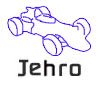
A German F3 car, the 377P was entered and raced by Herbert Rostek, it was Toyota powered and its only race appears to have been at Fassberg where it finished eleventh of the sixteen starters.
Out of interest the derivation of the name appears to be from Moses father-in-law!

Drivers
1979 Herbert Rostek

JEC

jec
jec
jec

JEC

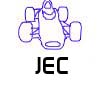
The career of the JEC 386B seemed to span one race in the German F3 Championship at Brünn in 1968. The VW powered machine was driven by Jacky Eeckelaert and entered by Excelsior in the year-old B class, it qualified at the back and finished last. In the previous year, 1987, a number of entries were made for the same driver in a JEC 386 but the car never arrived.

Drivers:
1988 Jacky Eeckelaert.

Jak

jak
jak
jak

Jak

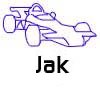
The Jak JK26 appeared for the first half of the 1994 German F3 season, it was Opel powered and entered under the “Racing for Bela Rus” banner, a similar car was entered under the “Racing for Russia” name on numerous occasions but it never appeared. It seems to have been a fairly hopeless effort, for its first three races, driven by Fibier, it started on the back row and over the next few races the third from back row was its highest achievement. Finishing positions were equally dismal and Fibier found himself replaced by Taulborg who failed to qualify for the next two races. By the end of July the team had had enough and the car was seen no more.

Drivers:

1994 Andre Fibier, Brian Taulborg.

Focus

focus

Focus

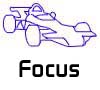
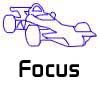
The Focus MkIV raced in the F3/F Junior class of the Karlskoga F2 race in August 1964. It was based on the Lotus 22 and was powered by a Ford 105E engine and wasn’t noticably quick, whether it was in F3 or F Junior spec and if it raced at any other events isn’t known. The car was built by Sportscars AB (AB is the Swedish equivalent of Limited) of Stockholm who were more noted for their tuning work, the same chassis was used in the Lutos F3 (q.v.). They were more successful with their sports cars, in 1966 they built the Focus-Maserati, based on a Lotus 23, it was built by for Picko Troberg. Ronnie Peterson also raced a Ford FVA powered version with which he scared a number of bigger cars such as Jo Bonnier’s mighty Lola T70-Chevrolet. Thanks to Stefan Örnerdal for additional information.
Drivers

1964 Per-Olof Zetterström.

Fc1000

fc1000
fc1000

Fc1000

Driven and entered by Franco Conti, the FC1000 failed to finish a race at Monza in May 1967. No engine was listed and this would seem to be its only race.

Drivers

1967 Franco Conti.

Ippocampo

ippokampo
ippokampo
ippokampo

Ippocampo

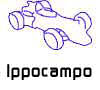
There were at least three chassis built of this 1967 Italian F3 machine, seemingly it was an almost exact Brabham BT10 copy. It was driven by future F1 driver Andrea de Adamich and its biggest moment was winning a F3 race at Imola in May were de Adamich beat a reasonable field that included Clay Regazzoni, Silvio Moser and Manfred Mohr. It had a number of other quite competitive outings during the year and de Adamich finished in the upper reaches of the Italian Championship. It is possible that it was designed by driver Guglielmo Bellasi who was also responsible for the Bellasi (q.v.) range of cars.

Drivers:
1967 Andrea de Adamich, Alessandro Angeleri, Guglielmo Bellasi, Guffanti.

Idra

idra
idra
idra

Idra

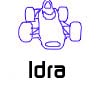
This Italian (?) car appeared at the 1970 Monaco GP support race where it failed to qualify. It was powered by a Novamotor engine and driven by Claudio Francisci, there are no indications that it raced anywhere else.

Drivers:

1970 Claudio Francisci.

Faure

faure

Faure

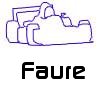
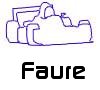
In July 1964 driver, entrant and probable constructor Jean Faure raced at Clermont-Ferrand in his Faure-Peugeot, he failed to finish. This seems to have been its only appearance, the Peugeot engine suggests possible F Junior beginnings.

Drivers

1964
Jean Faure

Falcon

Falcon

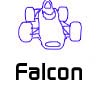
This Japanese manufacturer provided cars for the Japanese Championship between 1979 and 1982. In 1979 the Toyota powered 78B woks car of Iida had a best finish of fifth at Fuji. The 78B continued into 1980 and Sakae Obata took a third at Fuji and a fourth at Suzuka finishing seventh in the Chasmpionship. Two new cars arrived in 1980, the 813 and the 813B, still Toyota powered results were generally poor except for a fifth at Tsukuba. The 813B continued into 1982 only racing in a couple of events taking a seventh at Tsukuba.

Drivers

1979
78B
Takeshi Iida, Sakae Obata.

1980
78B
Sakae Obata.

1981
813B
Sakae Obata, Hiroshi Takayama.

813
Sakae Obata, Yasuo Shinoda.

1982
813B
Tsugiaki Ogura, Yasuo Shinoda.

1984 813
Eliji Iwata.

Fafnir

fafnir
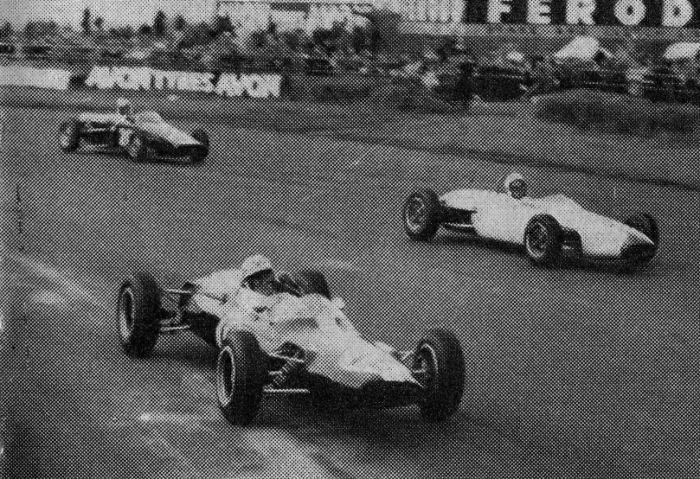
A rare sighting of the Fafnir chasing a Cooper and a Brabham through Copse.

Fafnir

The Fafnir (in Norse mythology the son of the giant Hreidmar) probably started life as a rear-engined F Junior and was converted to F3 spec where it ran very sporadically in 1964, it had a Ford engine and was raced by Peter Moeller. Possibly related to the German Fafnir brand (1903-1926), producing road cars as well as having a race dept. Legendary German driver Rudolf Caracciola started his career in a Fafnir. Thanks to Roger Moench for the additional information.
Drivers

1964 P. E. Moeller.