Abbott

Abbott

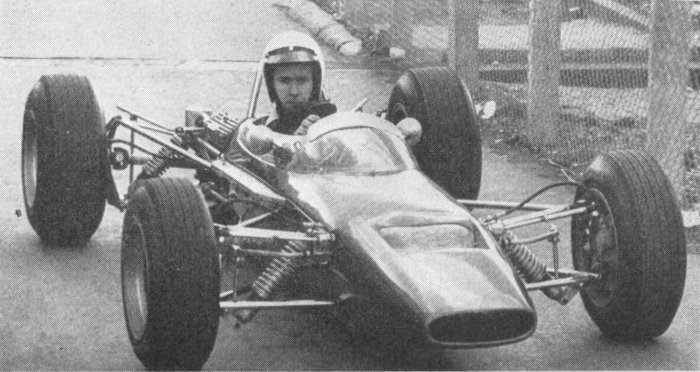
Originally built in 1966 and debuted by its driver Norman Abbott at a November Brands Hatch meeting where it ran in the midfield. Described in contemporary reports as “projectile like” it was 5 inches (12.5 cms) slimmer than the contemporary Lotus 41. Suspension was outboard with wishbones at the front and a top link and radius rods at the rear. It looks as if there was an “external” extension on the top of the spaceframe tub for the top radius rod to attach to, this is reminiscent of the later Chevron B34.


It would seem there was only ever a singleton chassis built, apparently it cost £1400 (a new “name” chassis would have cost in excess of £2000). It is not clear how often it raced but its moment of glory came in early 1970 at a slippery Forward Trust round at Silverstone when Abbott finished an impressive second behind the works Lotus of Dave Walker.

abbott
Norman Abbott tests the Abbott at Brands Hatch.

Drivers

1966 Norman Abbott

1967 Norman Abbott

1970 Norman Abbott

Alba

Alba

Designed by Giorgio Stirano, a former Osella engineer, he left the Italian F1 team in 1981 and built the one-off AR1 at the end of the year. He named it Alba meaning dawn and it raced without providing any results in 1982. After this Stirano switched to designing and building Group C Junior sports cars with more success.

1981

Appearing at Mugello in October 1981 the AR1 it was powered by an Alfa Romeo engine and was apparently conventional in design, unusually for the time it was fitted with Pirelli tyres. The bodywork shape is very reminiscent of Osella designs showing Stirano’s heritage. The same chassis was used in 1982.

Drivers


1981 Enzo Coloni.

1982 Giovanni Alberti, Davide Pavia.

1984 Gatta.

The Alba in action at Varano Melegar in April 1982 - Photo credit Filippo Rossi

Ags

Ags

Formed by part-time racing car builder and driver Henri Julien and based at Gonfaron a small town 40kms north east of Toulon, Autombiles Gonfaronnaise Sportives began constructing cars in 1970 for the Formule France series. The first chassis was the JH1 designed by Christian Vanderpleyn and cars for other French categories followed, notably Formule Renault. By 1978 AGS began constructing cars for F2 and produced a number of neat and reasonably competitive cars, driver Richard Dallest winning at Pau and Zandvoort in 1980. F3000 cars followed and in 1986 AGS moved into F1 and for the next few years would struggle to make the grade in Grand Prix racing scoring the odd point until the financial realities caught up with them and they withdrew.
1972

In 1972 the JH5 was constructed for F3, consisting of a monocoque with a tubular sub frame for its Nova engine it had a front radiator and orthodox suspension. It only raced on two occasions when it was driven by future owner of the GPA Helmet company François Berthelot who would later be an AGS sponsor sadly it was not a great success and was to be AGS’s only F3 car.

Drivers

1972  François Berthelot.

Active

Active

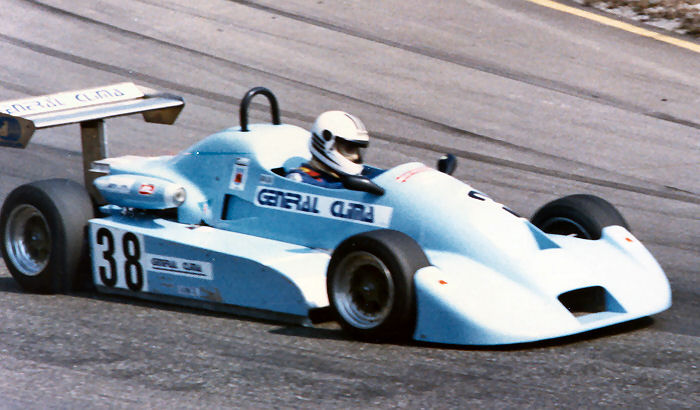
The Active TA-31 appeared during the 1993 Japanese F3 Championship, it was entered by Active Motorsport and it was driven by Hidehiro Mochizuki. The car was powered by a Tom’s Toyota engine and it was never competitive generally qualifying around 20th and never finishing higher than 12th.

DRIVERS

1993  Hidehiro Mochizuki.

Abarth

Abarth

badge

Carlo Abarth was one of the Porsche project managers for the doomed Cistalia GP car and in this capacity he came to Turin in 1947. Following the failure of the Cistalia programme Abarth decided to stay in Turin where he started his own company producing high performance add-ons for Fiat, Lancia and Alfa Romeo. To advertise the effectiveness of his products Abarth began producing a number of racing and record cars using Fiat and Alfa engines fitted to attractive cars designed by many of the noted Turin stylists. Abarth began to specialise in tuning Fiats especially following the release of the Fiat 600. Through the 1960s and ’70s Abarth created and raced number of very potent saloon and 2-litre sports cars often with great success. However Abarth only ever dabbled in the world of single seaters, in 1964 they built a spaceframe F2 car with their own 995cc engine and six-speed gearbox but results were disappointing with the Abarth engine no match for the opposition Cosworth unit. In 1968 a F1 car was announced using an Abarth V8, it was to have been tested/raced by Jonathan Williams but in his opinion the car design was very outdated and rumours that the V8 was dreadfully underpowered meant the car never turned a wheel.

1964

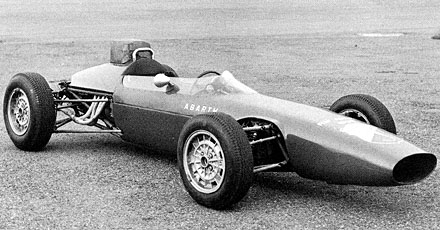
The pictures of the 1964 Abarth F3 indicate that the chassis was the same as that used for the F2 design, in addition track and wheelbase dimensions were virtually identical. It was a conventional spaceframe design with wishbone-based outboard suspension front and rear. Front track was 1320mm, rear 1330mm, wheelbase 2300mm and the chassis weighed 400kg. The engine was a 982cc Fiat-based unit with a four-speed gearbox, a Weber 40DCD carburetor was used and power was quoted as 88bhp at 7900rpm.
For whatever reason, perhaps the F3 engine wasn’t up to the job, the Abarth never raced.

f3_1964
The Abarth F3 on its announcement.