Bastet

Bastet

The Renault-powered Bastet was entered by its driver in a race at Nogaro in March 1967 but failed to arrive, it was a similar story in both May and September of 1968 at Montlhéry. There are no further details as to whether the car ever raced.

Driver

1967 Jacques Bastet.

1968 Jacques Bastet.

Barron

barron
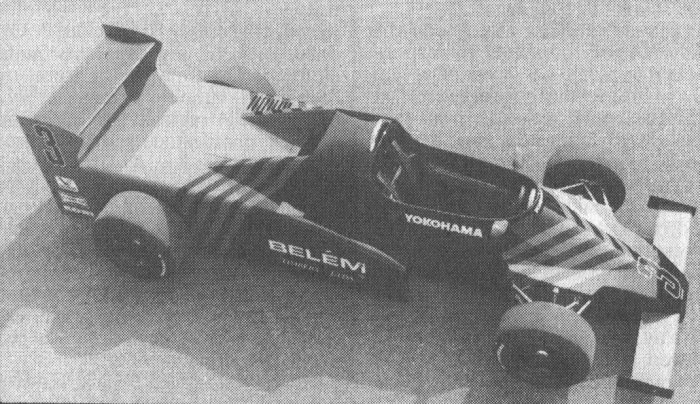
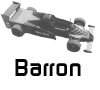
The F31 on its announcement.

Barron

The Dutch Barron Racing Team announced the creation of the “first professional Dutch F3 car” in 1984, a claim that DAF might have had a quarrel with. Prior to the development of their own car they had been running March and Ralt chassis in the European Championship since 1980. They also ran a couple of ex-works Tyrrell 012s in F5000 in 1985 notably for Roberto Moreno without much success and then part way through the year the team disappeared.

1985

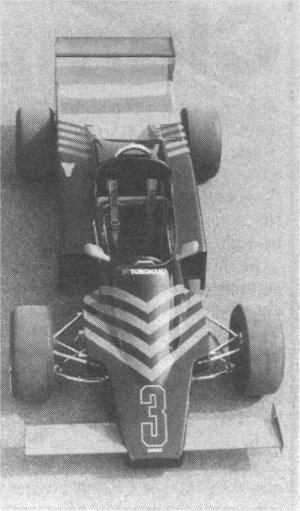
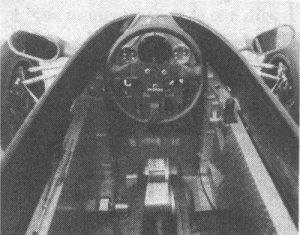
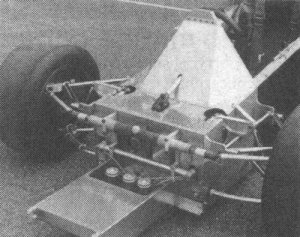
Built in late 1984, the F31 certainly looked the part with its flat rear deck and abbreviated sidepods. Designed by Kees van der Grint, who had previously designed the McGregor FF1600 and 2000 cars, the monocoque employed a bonded and riveted sandwich construction to reinforce the aluminium tub. Suspension was narrow track with pushrods at the front and rocking levers at the rear, custom Koni dampers were fitted all-round. Stopping was courtesy of AP/Lockheed single caliper outboard brakes front and rear. Power was provided by a Toyota engine and a Hewland Mk9 gearbox were fitted. Unusually for the time a digital tachometer was fitted with the other gauges; oil temperature and pressure, fuel pressure and water temperature, replaced with a series of warning lights. “Green” meaning OK, “amber” call in at the pits and “red” switch the engine off immediately! Due to compete in 1985 it seems that the car never actually raced, at least in the UK or Germany. In June of that year it was reported that Dutch FF2000 champion Lammy van der Heuvel would be testing the car but presumably the demise of the F3000 team saw the end of any F3 aspirations also.

Barnett

barnett01b
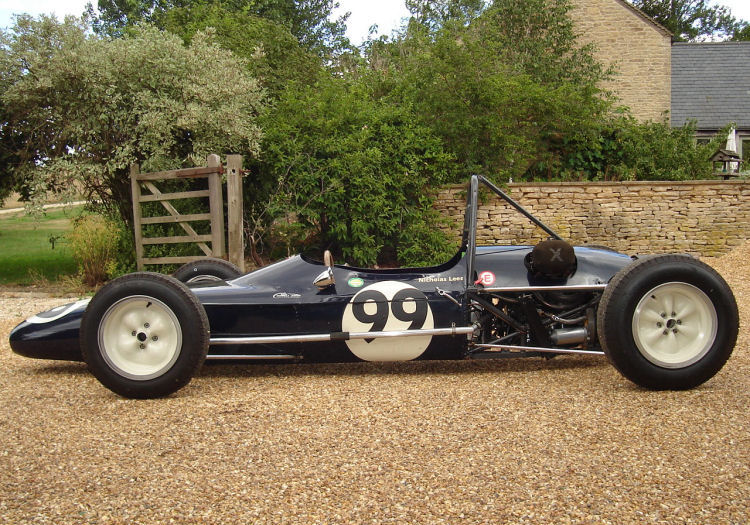
The Barnett as it looks toaday.(Picture courtesy of Nick Lees)
barnett02b
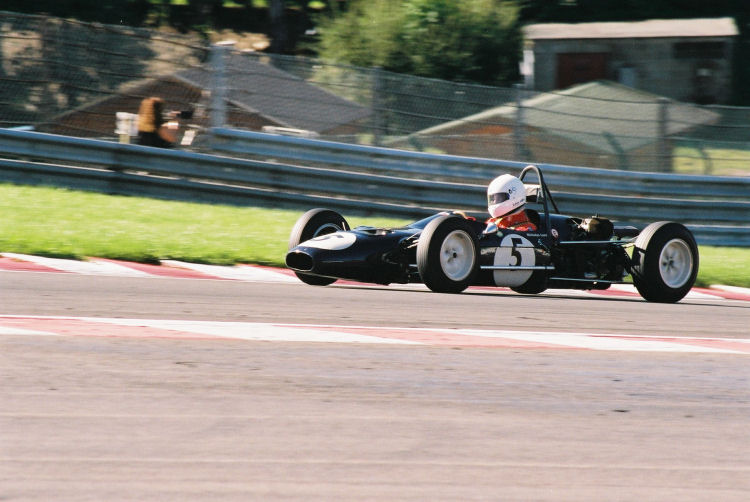
The Barnett at Spa in 2004. (Picture courtesy of Nick Lees)

Barnett

The Barnett-BMC was entered by driver Chris Barnett for a F3 race at Castle Combe at the end of June 1966 but seemingly it did not arrive. The Barnett then took to the hills in the early seventies and it can now be seen in Historic racing events driven by Nick Lees.

Avidesa

Avidesa83a
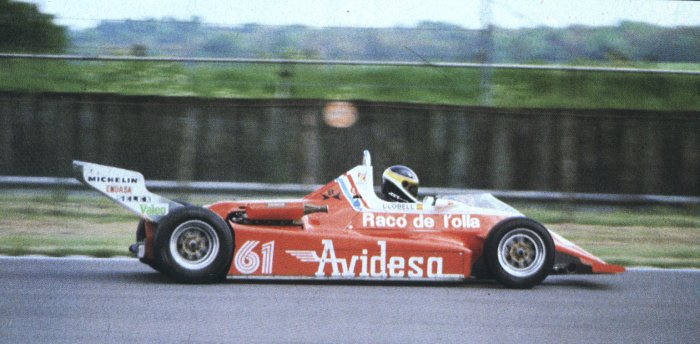
Jose-Luis Lobelli in his Avidesa.

Avidesa

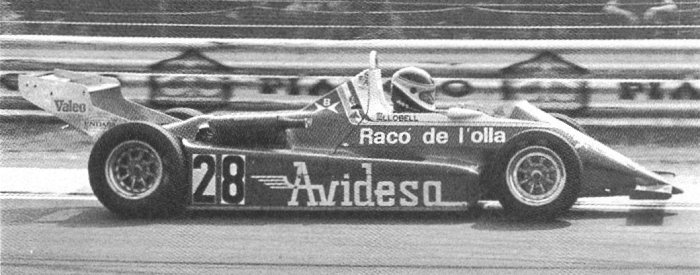
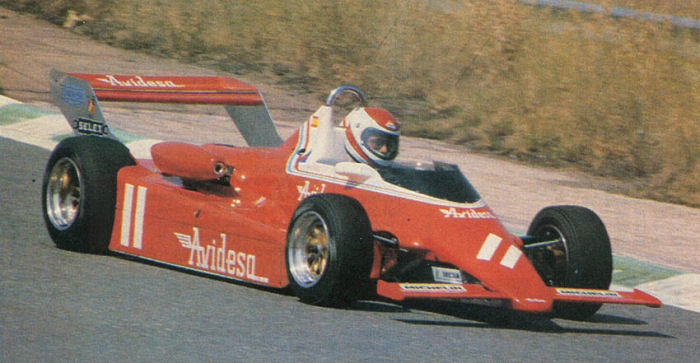
One of the few Spanish contributions to F3 racing, the Avidesa team employed the Selex company (q.v.) to produce a car for them in 1983 for their Spanish drivers Adrian Campos and Jose-Luis Lobelli. Selex had been producing neat, tidy F3 cars on and off since 1969 without any great success, this would be the Barcelona company’s last F3 car.

1983

The Avidesa 383 was a development of the 1982 Selex and was entirely conventional. Powered by an Alfa-Romeo engine there were several top ten finishes with a best of seventh at Jarama for Campos. Many felt the Avidesa had great potential but the team were hampered by the inexperience of Campos in setting up a car, the Spaniard had only done 5 races at the start of the season! Lobelli was more experienced but seemed to get second best in the equipment stakes and a broken ankle sustained in a fall from a transporter curtailed his season. For 1984 Avidesa bowed to the inevitable and bought a Ralt RT3 for Campos.
Avidesa83
Another shot of Jose-Luis Lobelli, notice the very rearward biased rear wing for maximum downforce.
Avidesa83b
Adrian Campos in his Avidesa with revised airbox.

Driver

1983  Adrian Campos, Jose-Luis Lobelli.

Avia

avia
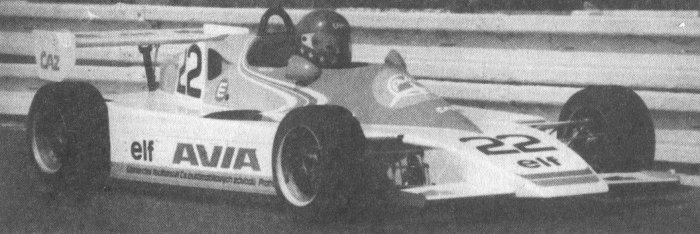
Václav Lim in his Formula Easter Avia AE3 in 1982

Avia

A Czechoslovakian F3 car is an unlikely thought and a Czechoslovakian F3 car built by a bus manufacturer even more so, but in 1970 and 1972 it nearly happened when Avia tried constructing a chassis for the formula. The company, based in Prague, manufacture buses and heavy goods vehicles including Renault trucks built under licence and a racing project under the control of company engineer Václav Lim was initiated. It would seem that the problem of obtaining the specialist components required for such a venture precluded any hope of success. Lim continued to build cars for Formula Easter (1.3-litre production-based engines) driving himself winning numerous races and as well as three national championships

Autotecnica

Autotecnica

Entered and driven by Romano Orsola, the Ford-powered Autotecnica failed to arrive at Vallelunga in October 1967. There are no records of any other appearances.

Driver

1967  Romano Orsola

Ausper

ausper3
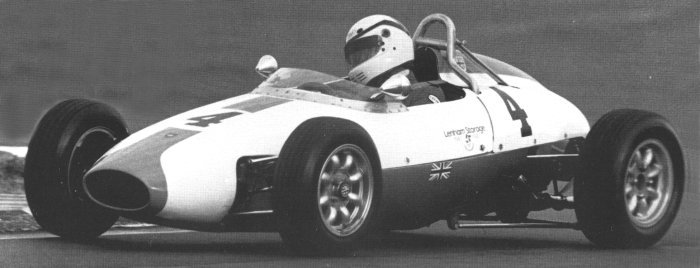
The Ausper T3 in 1990 taking part in an Historic F Junior race at Silverstone driven by Rod Tolhurst.

Ausper

Ausper was formed by Australian Tom Hawkes who built the Tomahawk F Junior at the end of 1960. In the winter of that year Hawkes formed Competition Cars of Australia constructing the Ausper T2. For 1961 the T3 was built, it consisted of a multi-tubular spaceframe with unequal length wishbones at the front and lower wishbones and twin radius rods at the rear, the driveshaft acted as a top link. Brakes were Alfin drums: 10 in front, 9 in rear whilst the gearbox was an Ausper modified Renault. In 1964 Anthony “Bubbles” Horsley (of Hesketh F1 fame) entered and raced a T3 in a number of German and Italian F3 rounds without any great success. It seems that the German encouraged F Junior cars to make up the grids and it is quite likely that the T3 stayed in F Junior trim and wasn’t modified to F3 spec. In 1966 Patrick Allfrey took part in some early season races but finished well off the leaders, by now the car would have been to F3 specifications

Driver

1964 Tony Horsley.

1966 Patrick Allfrey.

Aumont

aumont1
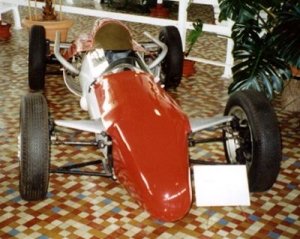
The Aumont Panhard on display at the Musée Automobile de Vendée. (larger picture not available)

Aumont

This French car took part in a number of races in France and East Germany between 1964 and 1966, powered by a Panhard engine in ’64 and ’65 and a Ford for ’66. One car was driven by Gabriel Aumont (possibly the designer?) and entered by Automobiles Gabriel Aumont, results were poor with a best of a couple of 12th places. Judging by the picture above it was a very small and neat car with inboard front suspension utilising upper rocker arms and a lower

Drivers

1964 Gabriel Aumont, Luis Fernandes, José Lampreia, Rene Villet.

1965 Gabriel Aumont.

1966 Gabriel Aumont.

AU Bode

AU Bode

Almost nothing is known about this car, it raced in Germany between 1964 to 1966, it was entered and raced by Karl Starke. Designed by Erich Bode, it was powered by a DKW engine and it had a few top ten finishes in the East German races. It was originally designed for F Junior and it is not clear whether it was still racing as a F Junior or whether it had been converted to f3 spec. Since it had a box-section chassis and leaf spring front suspension it wasn’t very competitive, it was also known as the Bode 3 in F Junior guise.

Drivers-

1964 Karl Starke.

1965 Karl Starke.

1966 Karl Starke, Klaus Tenbensel.

Arno

Arno

The first Arno appeared at an end of season Italian Championship round, it apparently didn’t handle too well and was difficult to set up. For 1984 Arno built three cars, the A02-384, featuring a honeycomb monocoque with double wishbone suspension, inboard springs and dampers operated by pushrods. This car must have been an improvement as Mancini came tenth in the Italian Championship in his Alfa powered car with a best finish of third.
A new car was built for 1985, the A03-385, but results were disappointing and Arno disappeared during the 1986 season.

Drivers

1983 Fabio Mancini.

1984 Fabio Mancini.