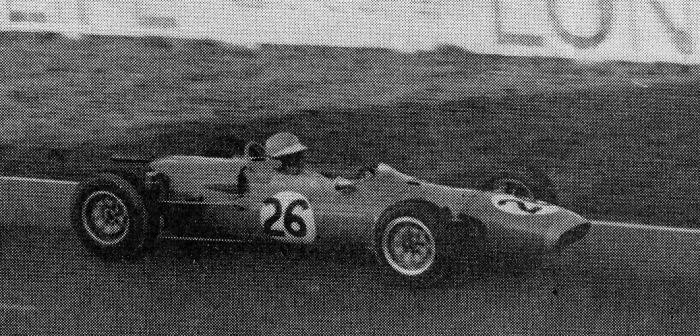
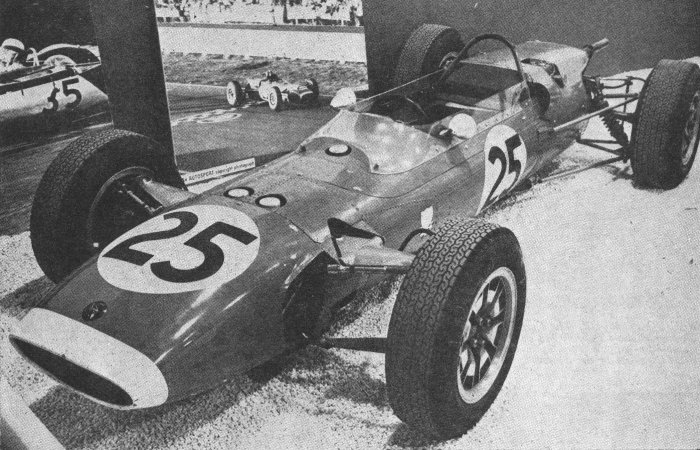
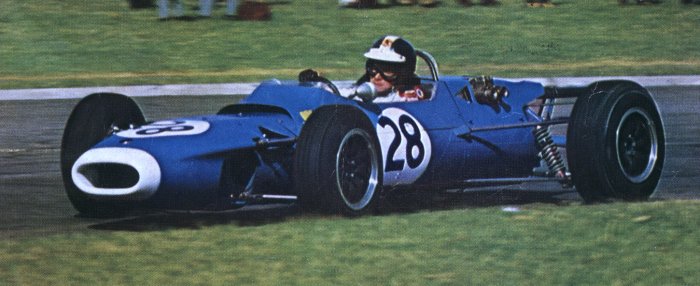
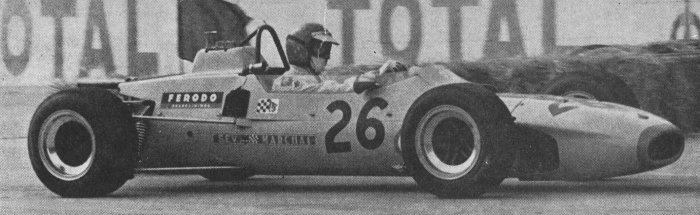
Matra’s first F3 car was the MS1, the MS standing for Matra Sports, designed by Paul Carillo and based on the René Bonnet F2 design, it was a monocoque car featuring suspension along conventional lines with the front inboard. Its most unusual feature was the tub which had been built using aerospace techniques, so tightly and accurately were the sections joined that fuel bag tanks weren’t required as the tub was leak-proof. This technique meant that lateral bracing to the tub was possible giving it a very high degree of stiffness. The car was an immediate success winning the high-profile support race at the Rheims 12 hours in Jacky Ickx’s hands. Later in the year Ickx won again at Cognac and Jaussaud took a win at Montlhéry. Four cars were built during the year, two in short-chassis which had the MS1 designation and two in long-chassis configurations that were designated as MS2.
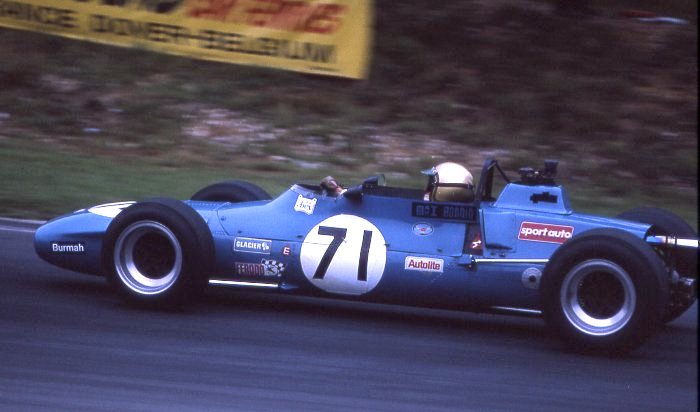
The MS5 was the definitive version of the F3 car and was a refined version of the MS1/MS2. Matra capitalised on the success of their first year building six more cars. The cars were raced almost entirely in France and during the year they took eight wins with Johnny Servoz-Gavin the most successful driver with three wins. Six MS5s were built in total.
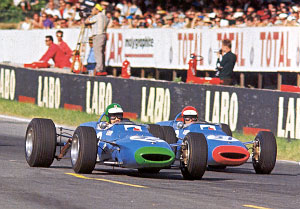
The MS5 was modified for 1967 with suspension changes being introduced to take advantage of the latest in tyre development, the new car was known as the MS6. It certainly seemed to work as the cars had an excellent reputation for their ability to put the power down giving them a definite edge over their rivals. A further three new cars were built to add to the previous tally.
The season started in fine style with Jean-Pierre Beltoise dominating the Temporada series in Argentina by winning all four races. After that the MS5 just kept winning racking up another 17 wins during the year including finishing 1-2-3-4-6 in a race at the French circuit of Dax. Although there was no “World”championship for F3 most observers reckoned that Henri Pescarolo was the star of the year.
Matra withdrew from F3 in 1968 selling off their cars to any (in an oddly chauvanistic decision) Frechman that could afford one. Development had now ceased and the cars began to slip from their previous pinnacle with Jean-Pierre Jabouille being the only driver to make a mark with five wins. The MS5 continued in private hands for a couple of years until changes in regulations that required the fitting of bag tanks made them obsolete.
1965
MS1
Jean-Pierre Beltoise, Jean-Pierre Jaussaud.
MS2
Jean-Pierre Beltoise, Jean-Pierre Jaussaud, Eric Offenstadt.
1966
MS5
Jean-Pierre Beltoise, John Fenning, Jacky Ickx, Jean-Pierre Jaussaud, Derek Kavanagh, Henri Pescarolo, Johnny Servoz-Gavin, Claude Vigreux.
1967
MS6
Jean-Pierre Jaussaud, Henri Pescarolo, Roby Weber.
MS5
Jean-Pierre Beltoise, Alain Boudier, Robert Challoy, Michel Dagorne, “Geki”, Jean-Claude Guenard, Jean-Pierre Jabouille, Jean-Pierre Jaussaud, Johnny Servoz-Gavin, Philippe Vidal.
MS1
Alain Boudier, Serge Mesnil.
1968
MS5
Hervé Bayard, Max Bonnin, Jean-Pierre Jabouille, Adam Potocki.
?
Gérard Bazin.
1969
MS5
Hervé Bayard, Max Bonnin.