| |
 |
 |
|
|
|
The
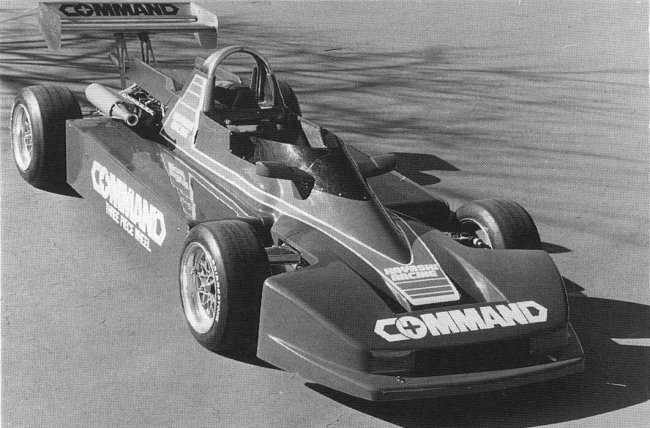
Hayashi 320.
|
|
A
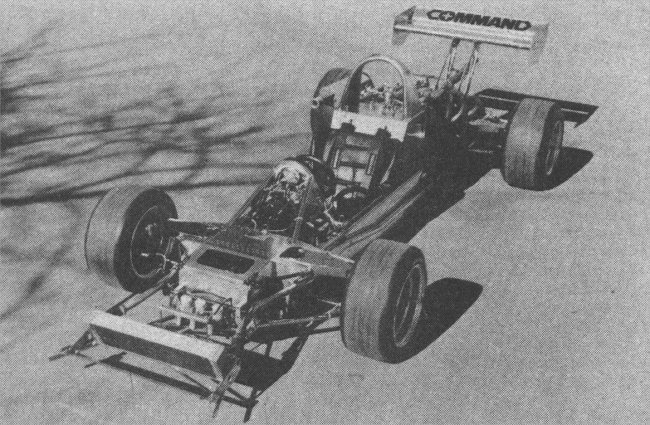
Masaoa Ono designed car was introduced for 1981, the 320, Ono
had made his name designing the Kojima F1 cars. For the new
model the radiators were moved into the sidepods and a needle
nose was used instead of the full width design of the 803. The
tub consisted of an aluminium-alloy twin-tub with tubular sub-frames.
It was very successful finishing first, third and fourth in
the Japanese Championship winning three of the nine rounds. |
|
| |
 |
 |
|
|
|
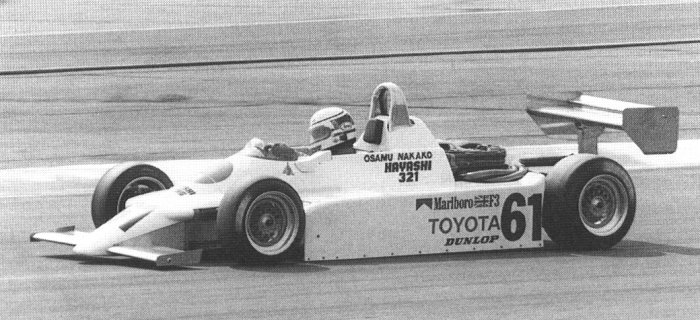
Osamu
Nakako racing the 321 in the UK.
|
|
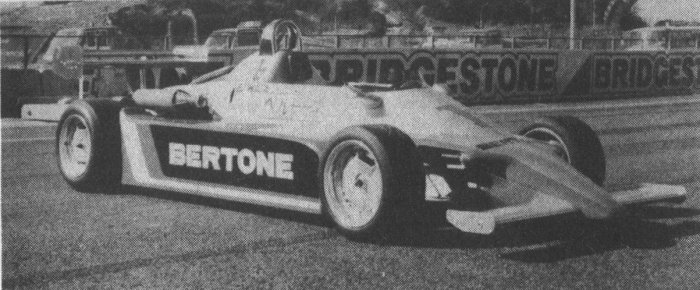
The
321 was introduced for 1982 and was an evolution of the 320.
One car raced in Japan although the 320 kept racing and got
the better results. A 321 appeared briefly in the UK driven
by Japanese Champion Osamu Nakako but an accident at Silverstone
saw it disappear again before it could make a real impact.
|
|
| |
 |
| The
321 continued into 1983 taking the runner-up spot in the Championship
for Aguri Suzuki in what was a very weak year for Japanese F3. |
| |
 |
 |
|
|
|
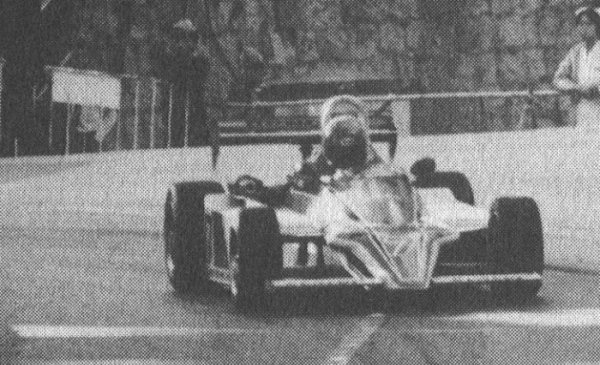
Eje
Elgh at Macau in the 322.
|
|
The
322 was the new car for 1984 as the new flat bottom regulations
came into effect, it was basically the 321 with its ground effect
bits and pieces removed. It was however successful with Syuuji
Hyoudou winning a race and taking three second places on his
way to taking the top spot in the All Japan series. Its debut
appearence seems to have been at the end of November 1983 at
the Macau GP when it must still heve been using ground effect
details. Driven by the under-rated Eje Elgh it proved very competitive
against the cream of the European cars and drivers finishing
fourth on aggregate. |
|
| |
 |
 |
|
|
|
A
stripped down 330, the asymmetric sidepods can be
clearly seen as can the pushrod front suspension.
|
|
The
330 was not dissimilar to the Ralt RT30 inasmuch as it used
the similar asymmetrical sidepod design with a reduced right
hand pod that housed the oil radiator. The chassis was aluminium
with a carbon-fibre top section, the front suspension used a
pushrod, while the rear had a rocker arm.
The car won a race in the 1985 All Japan Championship and several
other good places saw Syuuji Hyoudou finish third in the final
standings.
|
|
| |
 |
| The
1986 331 would be Hayashi's last F3 chassis and it was based on the
330, however it was not competitive, the singleton chassis only doing
the first three races of the season and not qualifying in the top
12. |
| |
| Drivers |
|
| |
|
| 1980 |
Osamu Nakako, Kengo Nakamoto. |
| |
|
| 1981 |
Iwata Eiji, Osamu Nakako, Kengo Nakamoto. |
| |
|
| 1982 |
321
Osamu Nakako, Hitoshi Ogawa.
320
Iwata Eiji, Kenji Itani, Hitoshi Ogawa, Aguri Suzuki, Tooru
Takahashi.
|
| |
|
| 1983 |
322
Eje Elgh.
321
Kouichi Akagi, Aguri Suzuki.
320
Takamasa Nakagawa, Eiji Yamada, Tomiko Yoshikawa.
|
| |
|
| 1984 |
322
Kouichi Akagi, Syuuji Hyoudou.
320
Takamasa Nakagawa, Tomiko Yoshikawa.
|
| |
|
| 1985 |
330
Kouichi Akagi, Kazuo Emi, Syuuji Hyoudou, Osamu Nakajima,
Makoto Nakayama.
322
Ukyou Katayama, Tadao Yamauchi.
320
Hideki Ogawa.
|
| |
|
| 1986 |
331
Syuuroku Sasaki.
330
Osamu Nakajima, Fumiko Shinoda.
320
Syuuji Hashimoto.
|
| |
|
| 1987 |
320
Tsuneyoshi Mon'nai. |
| |
|
| 1988 |
320
Tsuneyoshi Mon'nai. |
|
|