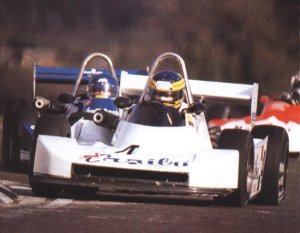
Argo
Three manufacturers of the Classic F3 era, Argo, GRD and Modus, had two important things in common; firstly they were all based in Norfolk and secondly they all has Swiss Jo Marquart as their designer. Arguably they had a third thing in common, they were nearly very successful but for one reason or another they never quite fulfilled their potential.
After Modus had failed Marquart began work on the first Argo in a domestic garage and he was joined by John Peterson an American cofounder of the British Novamotor agency and former mechanic Nick Jordan. The first JM1 chassis was completed in February 1977 and showed a lot of promise. Until the advent of the full ground effects F3 car Argos, especially the JM6, would still be a competitive proposition. However by 1981 when the Ralt RT3 was dominating racing Argo’s two attempts to emulate the Ralt, the JM8 and the JM10, would prove to be disasters and Argo moved away from F3 until a return in 1990.
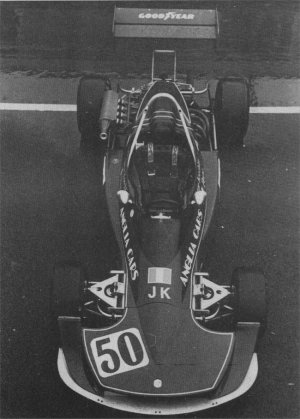
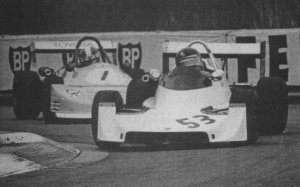
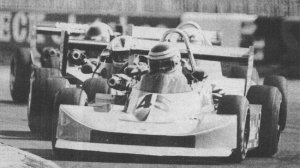
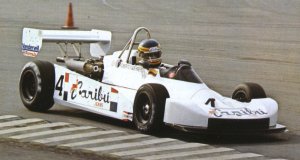
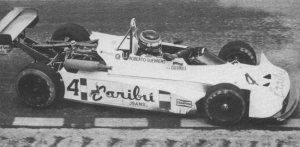
1977
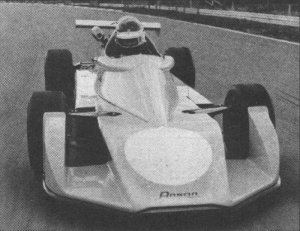
Unsurprisingly the JM1 was very similar to the last of the F3 Modus line although the bodywork was reduced giving a lower, smoother shape. Front suspension was by double wishbones with outboard coil springs and dampers, top link/bottom wishbone set up was fitted at the rear. Most noticeable feature was the full width nose with a deep cockpit surround reminiscent of the Ralt RT1. Stefan Johansson gave the marque its first victory at Anderstorp in August and David Kennedy would have a brace of 2nds in the European Championship.
1978
Up until a week before the beginning of the season there was no deal for the works team so when David Kennedy came up with some money the previous years JM1 was wheeled out with no modifications or testing. Not surprisingly results were poor and Kennedy withdrew part way through the year. Stefan Johansson continued with his previous years example and managed some good results.
1979
 A new car was needed for 1979 and the JM3 was the answer, it consisted of a slim monocoque with wide sidepods and one-piece bodywork. Racing Team Holland ran a pair without success so Roberto Guerrero became the focus of development. Towards the end of the season a revised car with stiffer suspension, monocoque and harder dampers was tried with some signs of improvement.
1980
The JM6 was a successful development of the previous year’s JM3. For this year cars were only raced in the UK and by the summer they were very much the car to beat. By year end Guerrero had won five races and finished second in the Championship whilst Tassin had two victories and finished fourth in the series. Front suspension was by wishbones with outboard coil springs and dampers. Rear suspension was by a top link with a lower wishbone with a toe-in link, a single radius rod was fitted. Rear brakes were inboard whilst coil springs and dampers were outboard.
1981
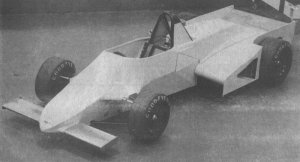
The JM8 was displayed to a waiting world in December 1980, it was intended to incorporate the best of the JM6 in a ground effect package. It had a narrower monocoque with larger sidepods housing the radiators and the suspension was inboard all round. It was claimed this would improve straight line speed whilst retaining “proven cornering abilities”.
The aluminium tub was fitted with a tubular frame at the rear to take the engine/gearbox package. A cast magnesium oil tank that doubled as an adaptor plate was situated between the engine and gearbox. Suspension was inboard front and rear with top rocker arms and lower links and wishbones, uprights were buried in the wheels to reduce drag. Outboard Lockheed brakes were fitted all round.
Sadly the car was a total disaster, early testing was promising but once it hit the race tracks it was nowhere. Tierry Tassin quickly abandoned it for a Ralt RT3 and works driver Jon Beekhuis reverted to a JM6. Just about everybody who bought one dumped it. A revamped version was bought out at the end of the season but there was no improvement.
1982
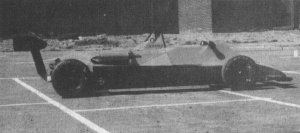
The JM10 was a completely new design consisting of an aluminium tub that extended to the rear to allow for semi-stressed engine location rather than the more usual subframe. Suspension was inboard with wide sidepods to maximize ground-effect. The entire programme was late and a testing accident at Silverstone delayed it even more, after a single race it was withdrawn for further development and not seen again. Several cars appeared in Germany without any signs of running at the front of the field.
1990
The JM10 was a completely new design consisting of an aluminium tub that extended to the rear to allow for semi-stressed engine location rather than the more usual subframe. Suspension was inboard with wide sidepods to maximize ground-effect. The entire programme was late and a testing accident at Silverstone delayed it even more, after a single race it was withdrawn for further development and not seen again. Several cars appeared in Germany without any signs of running at the front of the field.
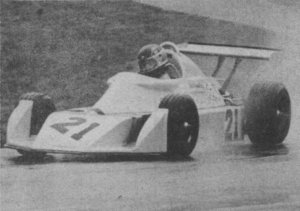
Drivers-
1977 JM1
Christian Debais, Ulf Granberg, Ruedi Gygax, Bruno Huber, Stefan Johansson, David Kennedy, Jorge Koechlin, Danny Sullivan.
1978
JM1
Janito Campos, Armin Conrad, Bruno Eichmann, Norbert Hütter, Stefan Johansson, David Kennedy, Dieter Kern, Fredy Schnarwiler, Leon Walger, Bernd Wicks.
1979
JM1
Armin Conrad, Jörg Reto, Jean-Yves Simeni.
JM3
Bruno Eichmann, Roberto Guerrero, Bruno Huber, Rob Leeuwenberg, Arie Luyendijk.
1980
JM3
Bruno Huber.
JM6
Bruno Eichman, Roberto Guerrero, David Sears, Thierry Tassin.
?
Edy Kobelt.
1981
JM3
Bruno Huber, Marcus Simeon.
JM6
Jan Ridell.
JM8
Jon Beekhuis, Enrique Benamo, John Booth, Paul Hutson, Victor Rosso, David Sturdy, Tierry Tassin.
?
Josef Binder, Beat Blatter, Armin Conrad.
1982
JM10
Arie Luyendijk, Jan Thoelke, Marcel Wettstein.
JM6
Bruno Huber, Uwe Teuscher, Jan Thoelke.
1983
JM10
Justin Sünkel, Marcel Wettstein.
JM8
Bruno Huber.
JM3
Franz Meier.
?
Josef Binder, Georges A. Hedinger.
1984
JM10
Rainer Fischer, Justin Sünkel, Marcel Wettstein.
JM8
Bruno Huber.
JM3
Franz Meier.
1985
JM10
Justin Sünkel.
JM8
Norbert Gapp.
JM1
Bruno Huber.
1986
JM10
Justin Sünkel.
1990 JM18
Eric Cheli.